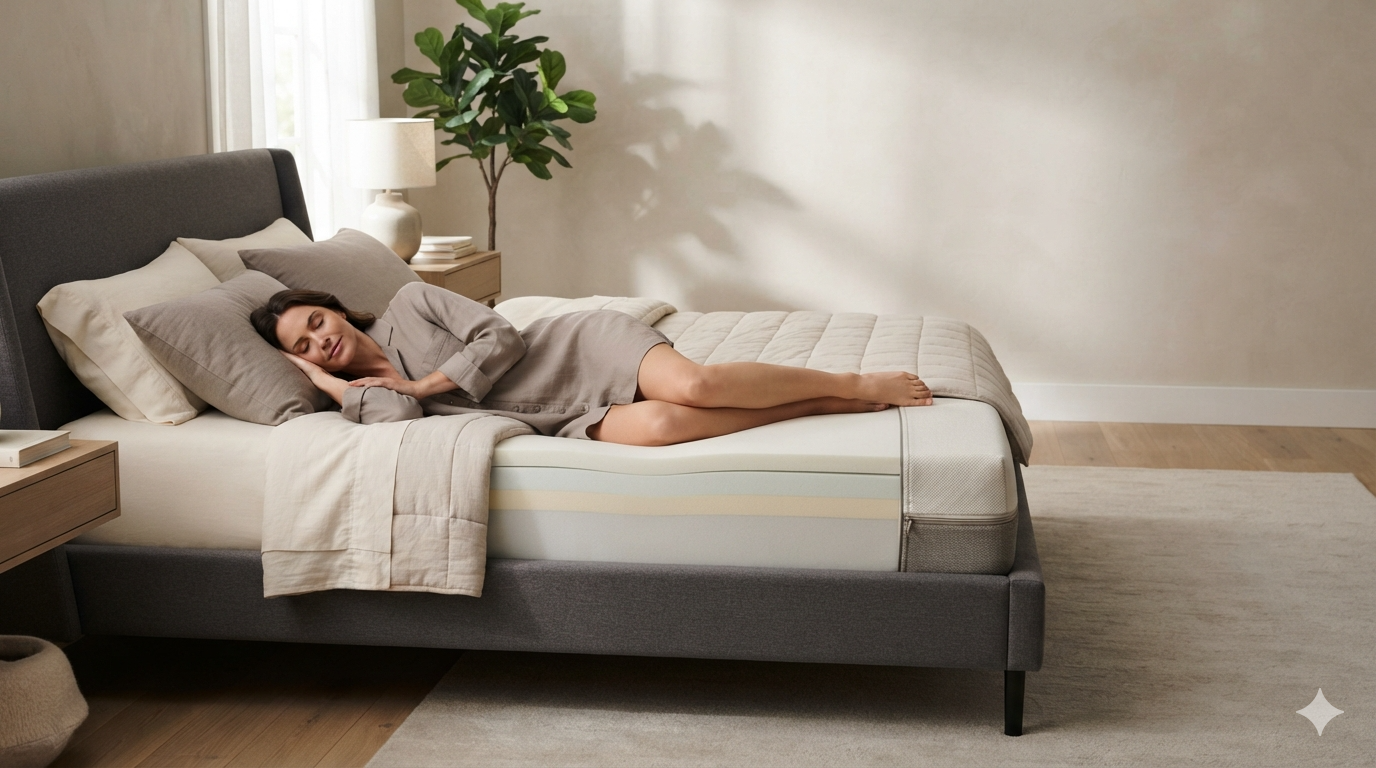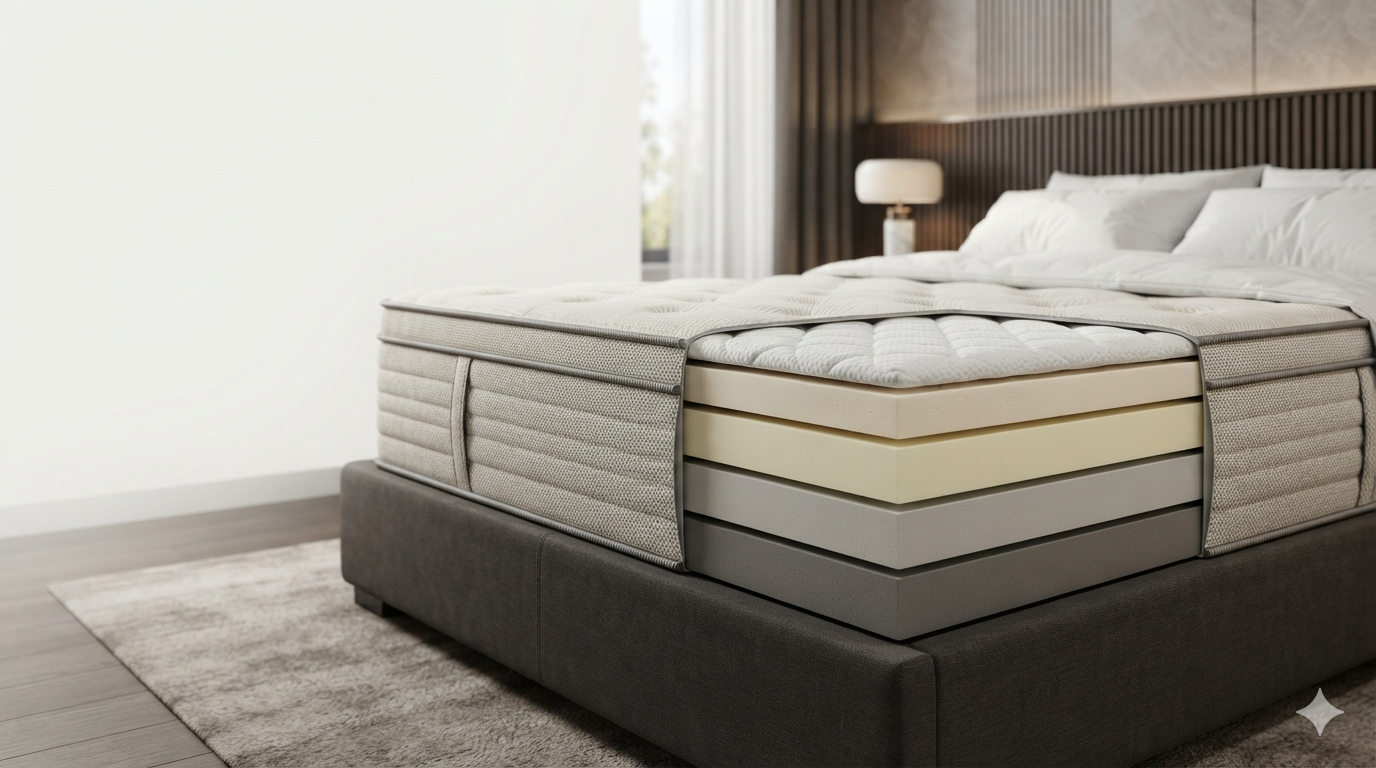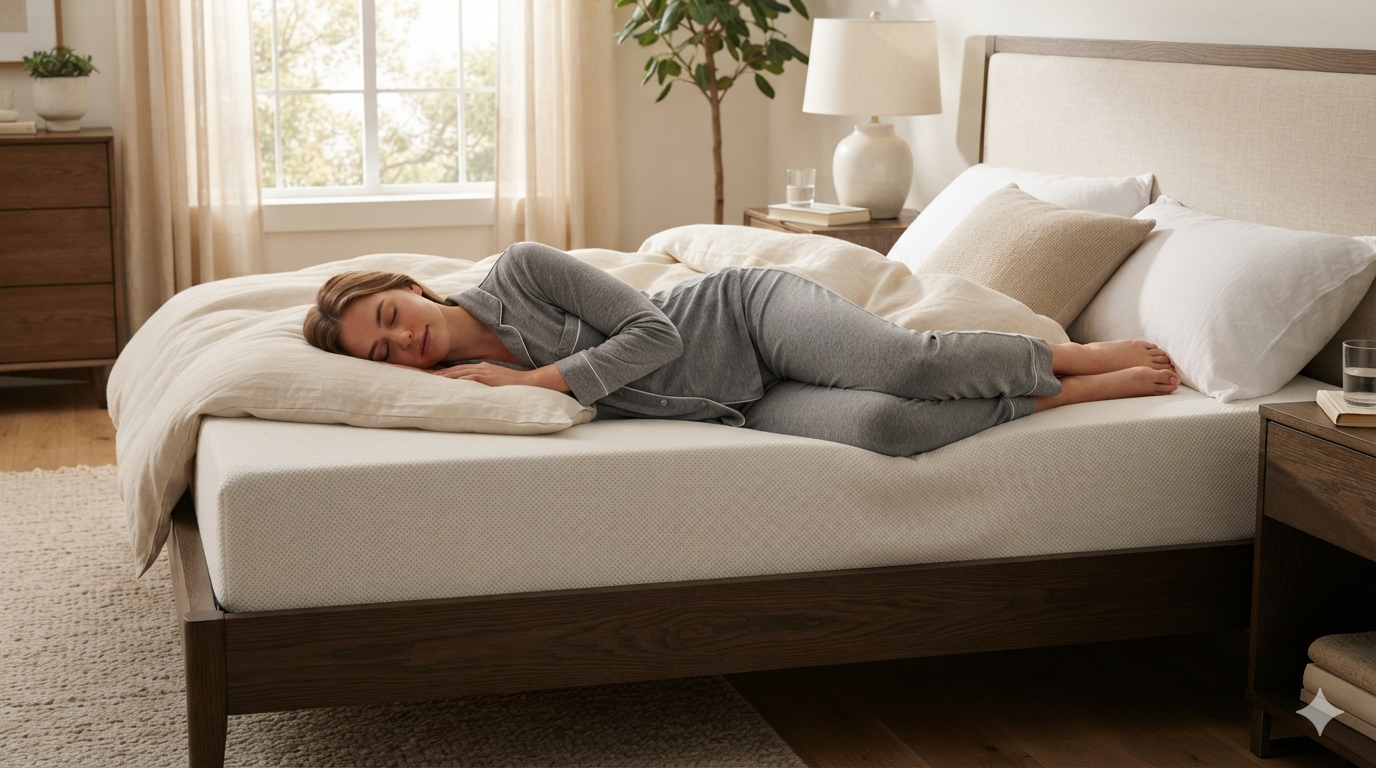
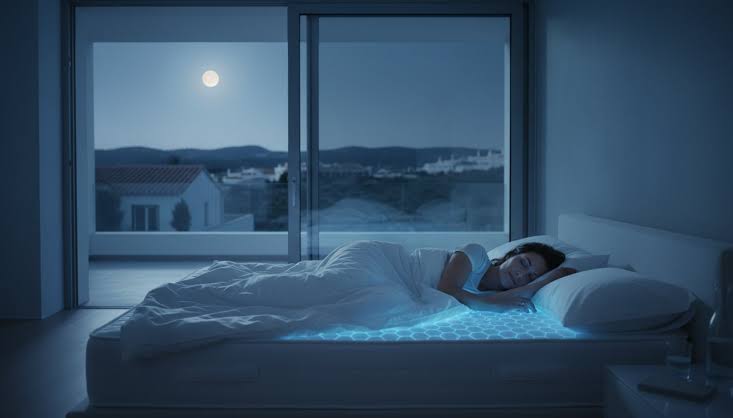
You spent good money on a "cooling" memory foam mattress. The product page promised gel-infused foam, breathable covers, and temperature regulation. And yet here you are — waking up at 3am drenched in sweat, flipping your pillow for the fourth time, wondering what went wrong. If this sounds familiar, you're not alone, and you're definitely not imagining it. Finding a genuinely effective cooling foam mattress in 2026 is harder than it should be, mostly because the word "cooling" has been stretched so thin by marketing that it barely means anything anymore.
I've spent years testing sleep products, speaking with hot sleepers across wildly different climates, and digging into the actual material science behind what keeps people cool at night. This article is my honest attempt to cut through the noise and help you make a decision you won't regret come July.
Key Takeaways
- Gel foam alone does not solve heat retention — it's a temporary band-aid at best
- Open-cell foam and hybrid construction are the most reliable long-term cooling solutions
- Your bedding can undo every cooling feature your mattress has — this is massively underestimated
- Ideal sleep temperature is 16–20°C; overheating above this disrupts REM and deep sleep directly
- Phase-change materials (PCM) offer the most advanced passive cooling currently available in foam
- Always use trial periods — cooling performance should be evaluated across at least 3–4 weeks
Table of Contents
- Why Most People Still Wake Up Sweating on Memory Foam
- Sleep Temperature Science Explained Simply
- What Is a Cooling Foam Mattress?
- Best Cooling Foam Mattress Types Based on Real Sleep Needs
- Cooling Technologies Compared
- Honest Mistakes People Make When Buying Cooling Mattresses
- Step-by-Step Guide: How to Choose the Best Cooling Foam Mattress
- Cooling Foam Mattress vs Hybrid Mattress
- Real-Life Use Cases
- Bedroom Cooling System Optimization
- Advanced Cooling Mattress Science
- AI Tools and Smart Sleep Optimization
- Pros and Cons of Cooling Foam Mattresses
- FAQ — Featured Snippet Optimized Answers
- Final Buying Decision Framework
Why Most People Still Wake Up Sweating on Memory Foam (Even After Buying "Cooling" Mattresses)
The frustration is real. You did your research, read the reviews, saw "cooling gel" in the product description, and paid more than you planned. But three months in, you're still waking up in a heat pocket somewhere around 2–4am. So what actually went wrong?
In my experience, the most common issue is that buyers confuse marketing language with actual thermal performance. The word "cooling" on a mattress label can mean anything from "we added a thin gel layer to the top inch of foam" to "this mattress uses phase-change materials engineered to actively regulate temperature." Those are not remotely the same thing, but they're marketed identically.
What most people get wrong is thinking gel foam alone solves heat retention. Gel does absorb heat — briefly. But once that gel layer reaches thermal saturation (usually within 20–30 minutes of contact), it stops working. You've essentially traded a slow heat buildup for a fast one.
Signs your current mattress is thermally failing you:
- Waking up consistently between 2–4am feeling hot or clammy
- Damp sheets, pillow sweat, or moisture along your back and neck
- Tossing and turning more than twice per night without obvious reason
- Feeling unrested even after a full 7–8 hours
- The center of your mattress feeling noticeably warmer than the edges
From a sleep science standpoint, this matters more than most people realize. Your body needs to drop its core temperature by roughly 1–2°C to initiate deep sleep stages. When your mattress traps heat and pushes that temperature back up, it directly fragments your sleep architecture — particularly REM sleep, which is where cognitive recovery, mood regulation, and memory consolidation happen. A mattress that overheats you isn't just uncomfortable; it's functionally degrading your sleep quality every single night.
Sleep Temperature Science Explained Simply (Why Your Body Heat Controls Deep Sleep)
Why Body Temperature Affects Sleep Quality
Your circadian rhythm and your thermoregulation system are tightly linked. In the hours before sleep, your body begins actively pushing heat outward through blood vessel dilation in the hands and feet — this is why warm feet can actually help you fall asleep faster. Core body temperature drops by 1–2°C over the first few hours of sleep, and that drop is a biological prerequisite for deep, restorative rest.
If your sleep surface is trapping that radiated heat and reflecting it back, your body can't complete this thermal handoff. You stay warmer than your biology wants, sleep stages become shallow, and you're more likely to wake partially or fully.
How Overheating Destroys REM Sleep Cycles
REM sleep is particularly temperature-sensitive. During REM, your body actually loses its ability to thermoregulate — you become temporarily dependent on your environment to maintain an appropriate temperature. If your mattress is radiating stored heat back at you during this window, REM cycles get cut short.
The downstream effects are real: impaired memory consolidation, slower physical recovery, reduced immune function, and the kind of groggy, heavy feeling that no amount of coffee fully fixes. For athletes and anyone doing demanding cognitive work, this isn't a small issue.
Night Sweats vs Normal Heat Buildup
There's an important distinction worth making here. True night sweats — soaking the sheets regardless of room temperature — can be a medical issue related to hormones, medications, or conditions like menopause or thyroid dysfunction. That warrants a doctor's conversation, not just a new mattress.
Environmental heat buildup from a poor mattress is different: it's temperature-dependent, gets worse in summer or humid climates, and directly correlates with your sleep surface. If you sleep cool at a hotel but sweat at home, the mattress is almost certainly the variable.
This Is Where Things Get Real
Imagine living in a humid tropical climate — think Dhaka in June, where ambient humidity sits above 80% and nighttime temperatures rarely drop below 28°C even with a ceiling fan running. In that environment, a standard memory foam mattress with a thin gel layer isn't cooling anything. The foam absorbs ambient humidity, traps body heat, and essentially turns into a warm, damp sponge under you. I've heard this exact scenario described by readers in South and Southeast Asia repeatedly, and the solution isn't just "buy cooling foam" — it's understanding the full thermal system from the mattress surface to the room itself.
Quick answer — What is the ideal sleep temperature? Research consistently points to 16–20°C (60–68°F) as the optimal range for sleep quality. At higher temperatures, sleep onset takes longer and deep sleep stages are reduced. Airflow matters as much as temperature: a slightly warmer room with good air circulation often outperforms a still room at the "ideal" temperature.
What Is a Cooling Foam Mattress? (And Why Most Brands Mislead You)
Basic Definition for Beginners
A cooling foam mattress is any foam-based sleep surface designed with materials or construction methods that reduce heat retention and improve airflow. The key word is "designed" — not just labeled. A genuine cooling foam mattress addresses heat at the material level, the structural level, or both.
Gel-Infused Foam — Does It Actually Work?
Partially, and temporarily. Gel beads or gel swirled through the foam do absorb heat — it's not a lie. But they reach saturation within the first 20–40 minutes of contact and stop drawing heat away. For someone who sleeps cool overall, this is enough. For a genuinely hot sleeper in a warm room, it's a stopgap that won't last the night.
Open-Cell Foam Technology
This is where things get more genuinely useful. Traditional memory foam has a closed-cell structure — essentially a dense network of sealed air pockets that trap heat inside the foam. Open-cell foam punctures those walls, creating an interconnected channel network that allows air to circulate through the foam itself. It sleeps meaningfully cooler and doesn't rely on a heat-absorption mechanism that can saturate.
Copper-Infused Foam
Copper is a genuine heat conductor, and copper-infused foam does pull heat away from the body surface more efficiently than standard or gel foam. It also carries real antimicrobial properties, which reduces odor buildup over time. The Nectar Premier Copper uses this effectively. It's not magic, but it's a legitimate step beyond basic gel.
Phase-Change Materials (PCM)
PCM is the most technically impressive passive cooling technology currently in consumer mattresses. These materials are engineered to absorb heat as they transition from solid to liquid state (at a set temperature threshold), effectively pulling excess body heat into a phase transition rather than letting it accumulate. When the body cools slightly, the PCM releases that stored heat back. It's a continuous cycle rather than a one-time absorption. Brooklyn Bedding's Aurora Luxe uses PCM in its cover, and it's one of the few mattresses that actually delivers on its cooling claims for genuinely hot sleepers.
Breathable Covers and Zoned Airflow Systems
The cover is the first point of contact and hugely underestimated. Tencel, bamboo, and moisture-wicking performance fabrics pull sweat away from the skin and allow surface-level evaporation. Zoned airflow systems — channels or cutouts built into the foam layers — create vertical airflow paths that allow heat to escape downward rather than building up at the surface.
Important note: cooling performance varies significantly based on body weight, room temperature, humidity, and bedding. No mattress performs identically across all environments. Anyone claiming otherwise is selling you something.
Also read: Memory Foam Mattress Guide 2026: What Most People Get Wrong Before Buying One
Best Cooling Foam Mattress Types Based on Real Sleep Needs (Not Marketing Claims)
Best Cooling Mattress for Hot Sleepers
Prioritize open-cell foam construction or a hybrid with a PCM cover. Brooklyn Bedding Aurora Luxe and the Bear Elite Hybrid consistently outperform pure gel-foam options for genuinely hot sleepers. Look for verified airflow channels, not just gel layer mentions.
Best Cooling Foam Mattress for Couples
The challenge here is balancing motion isolation (where foam excels) with heat dissipation (where foam struggles). The Casper Wave Hybrid or Helix Midnight Luxe offer a reasonable compromise — hybrid construction improves airflow while foam comfort layers still absorb movement between partners.
Best Cooling Mattress for Side Sleepers
Side sleepers need pressure relief at the shoulder and hip while staying cool. Medium to medium-soft foam with an open-cell or copper-infused comfort layer works well. The Nectar Premier Copper is a solid choice — it addresses both the pressure and heat concerns without sacrificing lumbar support.
Best Cooling Mattress for Back Pain
Medium-firm cooling foam with zoned lumbar support is the target. Overheating and back pain are a miserable combination because heat disrupts the restorative sleep your muscles need to recover. The Saatva Classic hybrid or Tempur-Pedic ADAPT with cooling cover handles both well.
Best Cooling Mattress for Heavy Sleepers
Higher body weight compresses foam more deeply, which directly reduces airflow through the foam structure. Heavier sleepers need either a hybrid (for coil-based airflow underneath) or high-density open-cell foam with reinforced support layers. Standard gel foam compresses too much under higher weights and traps heat more aggressively.
Best Affordable Cooling Foam Mattress
The Linenspa Hybrid and Zinus Green Tea Cooling Gel are entry points that won't break the bank. They won't outperform premium options in a humid summer, but with breathable cotton bedding and a cool room, they're functional for light-to-moderate hot sleepers.
Best Luxury Cooling Foam Mattress
At the premium end, the Brooklyn Bedding Aurora Luxe (PCM cover + TitanFlex foam), the Tempur-Pedic LuxeBreeze, and the Eight Sleep Pod cover system represent the current ceiling of cooling performance. These are engineered cooling systems, not marketing labels — and the price difference from budget options reflects real material science investment.

Cooling Technologies Compared (What Actually Works vs Marketing Noise)
Gel Foam vs Copper Foam
Gel absorbs heat temporarily; copper conducts heat away continuously. For short sleepers or cool environments, gel is adequate. For hot sleepers or warmer climates, copper-infused foam is a meaningfully better choice and doesn't have a saturation ceiling in the same way.
Open-Cell Foam vs Traditional Memory Foam
Traditional foam traps heat in sealed air pockets. Open-cell foam allows air to move through the structure. This is a structural difference, not a surface treatment — and structural differences last for the life of the mattress, unlike gel layers that may compress and degrade.
Cooling Foam vs Hybrid Mattresses
Hybrids generally sleep cooler because the coil base creates a natural air channel beneath the foam comfort layers. Heat travels downward and disperses rather than accumulating. For hot sleepers who aren't ready to give up foam's pressure relief, a hybrid with a quality foam top layer is often the best of both worlds.
Latex vs Cooling Foam
Natural latex is naturally breathable, springy, and doesn't retain heat the way memory foam does. It's also incredibly durable. The downsides are cost and weight. For hot sleepers with the budget, a latex or latex-hybrid mattress often outperforms even premium cooling foam on long-term thermal consistency.
Smart Cooling Mattresses vs Traditional Foam
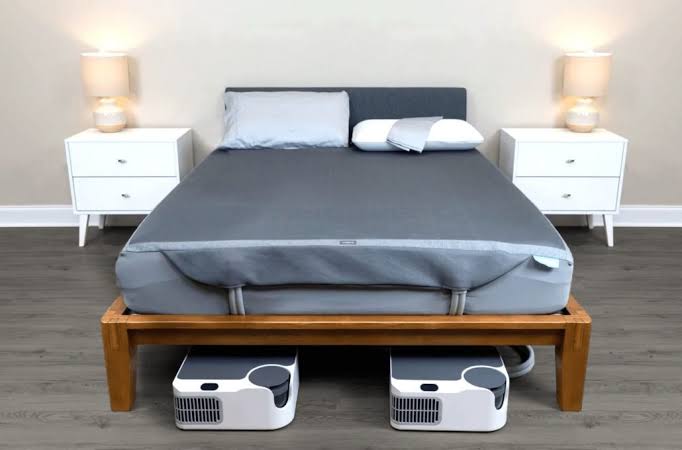
Active cooling systems — like the Eight Sleep Pod or the Sleep Number Climate360 — use water circulation or air channels with temperature sensors to actively maintain a set sleep temperature. These are in a completely different category from passive cooling foam. They work. They're also significantly more expensive and require power and maintenance. For extreme hot sleepers in warm climates, they may be the only solution that genuinely works year-round.
Cooling Technology Comparison Table
| Technology | Cooling Level | Durability | Price Range | Best For |
| Gel-Infused Foam | Moderate (temporary) | Good | Budget–Mid | Light hot sleepers, cool climates |
| Copper-Infused Foam | Good (continuous) | Very Good | Mid | Hot sleepers, antimicrobial needs |
| Open-Cell Foam | Good (structural) | Very Good | Mid | Consistent airflow, most sleepers |
| Phase-Change Material (PCM) | Excellent | Excellent | Premium | Severe hot sleepers, humid climates |
| Hybrid (Coil + Foam) | Very Good | Excellent | Mid–Premium | Hot sleepers wanting pressure relief |
| Active Smart Cooling | Excellent (active) | Excellent | Luxury | Extreme hot sleepers, couples |
| Natural Latex | Very Good | Excellent (10–15 yrs) | Premium | Eco-conscious, long-term buyers |
Honest Mistakes People Make When Buying Cooling Mattresses
Buying Thick Foam With No Airflow System
A 12-inch all-foam mattress with no ventilation channels is essentially a giant heat sponge. Thickness alone means nothing without airflow architecture. Always check whether the foam layers include channeling, open-cell structure, or a coil base beneath.
Ignoring Bedding — The Biggest Hidden Factor
This is the mistake I see most often, and it genuinely drives me a little crazy because it's so fixable. You can put the most advanced PCM cooling mattress money can buy under polyester sheets and flannel duvet, and you will still wake up overheating. Bedding sits between your skin and the mattress — it controls the microclimate far more directly than the mattress itself.
Choosing Wrong Firmness Level
Softer mattresses allow the body to sink deeper into the foam, which reduces airflow around the torso and increases surface contact area. More body surface against the foam means more heat transfer into the mattress. Medium-firm is the sweet spot for most hot sleepers because it limits that sink-in depth while still providing pressure relief.
Using Heat-Trapping Mattress Protectors
Standard vinyl or thick polyester mattress protectors are thermal barriers that negate every cooling feature in the mattress beneath them. If you need a protector (and most people should use one), invest in a Tencel or bamboo moisture-wicking version specifically designed to work with cooling mattresses.
Ignoring Body Weight and Sink Depth
Heavier sleepers compress foam significantly more than lighter ones, which changes airflow dramatically. A mattress that sleeps cool for a 130-pound person may trap substantial heat for a 250-pound person. Weight-appropriate mattress selection isn't just about support — it directly affects thermal performance.
Forgetting Trial Periods
In my experience, a meaningful number of people return cooling mattresses after two weeks — before giving the system time to work, and often because they haven't adjusted their bedding yet. Use the full trial period. Test across different seasons if possible. And change