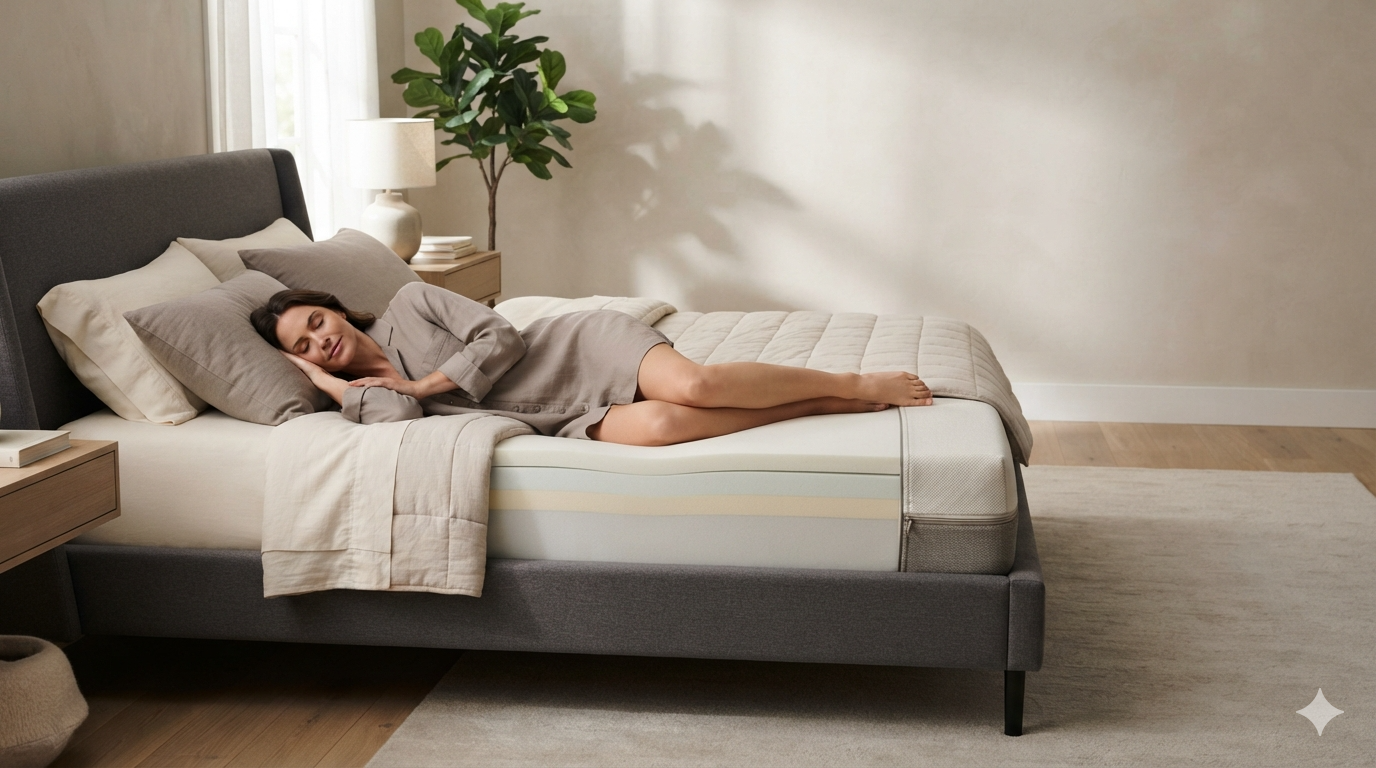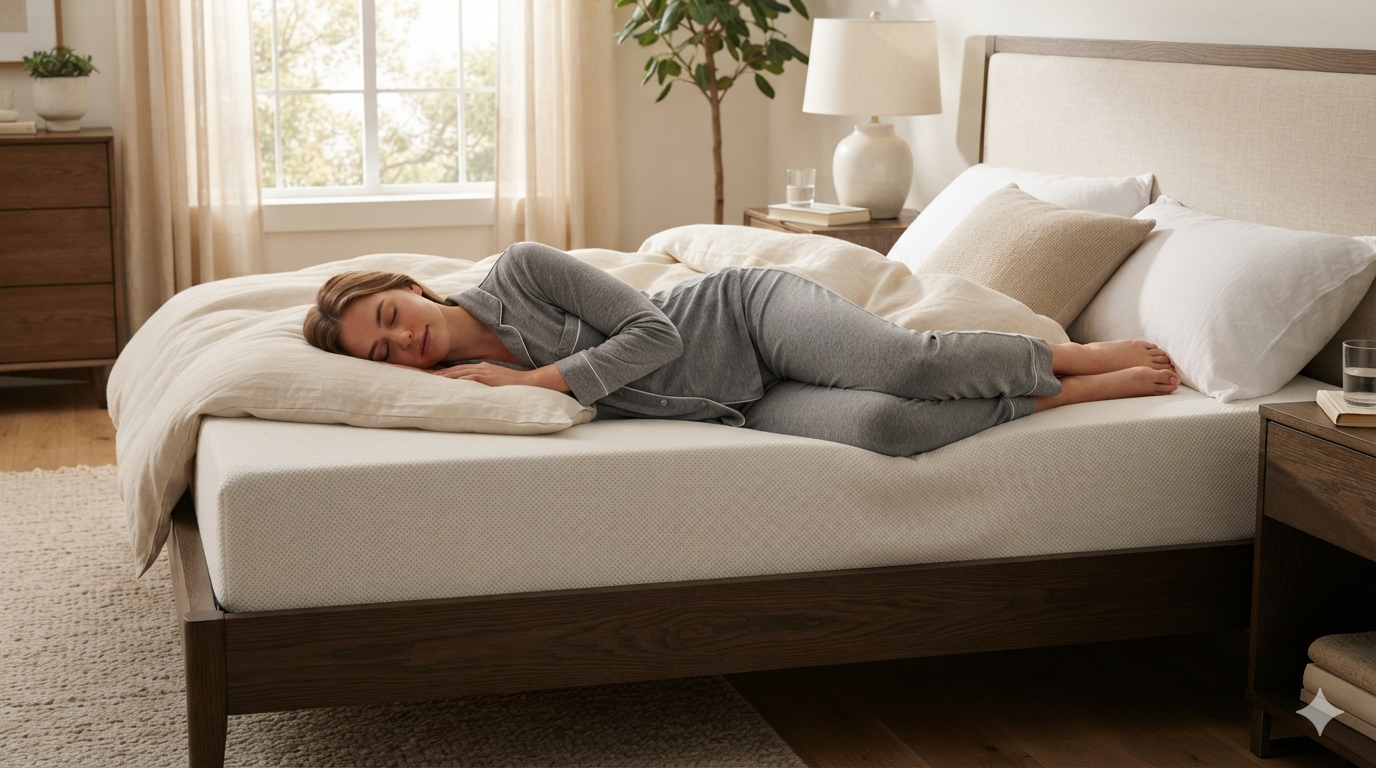
Let me be honest with you. I spent three weeks researching memory foam mattresses before my last purchase — read dozens of reviews, watched comparison videos, even made a spreadsheet. And I still got it wrong the first time. The mattress I bought was too soft for my sleep position, trapped heat like a sauna, and started sagging within 18 months. Sound familiar? You're not alone. Most people walk into this decision thinking it's simple, and mattress brands don't exactly make it easier with their confusing terminology and overhyped marketing. This guide exists to fix that. Whether you're shopping for a memory foam mattress for the first time or replacing one that let you down, I'm going to give you the real information that most reviews skip entirely.
Key Takeaways
- Firmness level matters more than brand name — match it to your sleep position and body weight
- Traditional memory foam traps heat; look for open-cell or gel-infused foam if you sleep warm
- Foam density (measured in PCF) is the single biggest predictor of how long a mattress lasts
- Always check for CertiPUR-US certification and confirm the mattress is fiberglass-free
- A 100-night sleep trial is the minimum acceptable — don't buy without one
- Hybrid mattresses outperform pure memory foam for hot sleepers and couples who need bounce
Table of Contents
- What a Memory Foam Mattress Actually Does for Your Body
- Honestly, I Made This Mistake Too — Choosing the Wrong Firmness Level
- Memory Foam vs Hybrid vs Latex — Which One Is Actually Better?
- I've Seen This Happen Many Times — Buying a Mattress That Sleeps Too Hot
- The Best Memory Foam Mattress Based on Your Sleep Problem
- Most People Ignore This Part — Foam Density and Mattress Lifespan
- Memory Foam Mattress Safety — The Questions Buyers Are Finally Asking
- Step-by-Step Guide: How to Choose the Right Memory Foam Mattress in 2026
- The Biggest Memory Foam Mattress Buying Mistakes
- AI Tools and Smart Sleep Technology Changing the Industry
- Quick Answers to the Most Searched Questions
- Real-World Buying Scenarios Most Reviews Never Talk About
- The Final Buying Checklist Smart Shoppers Use
What a Memory Foam Mattress Actually Does for Your Body While You Sleep
The Simple Explanation Most Mattress Brands Never Give
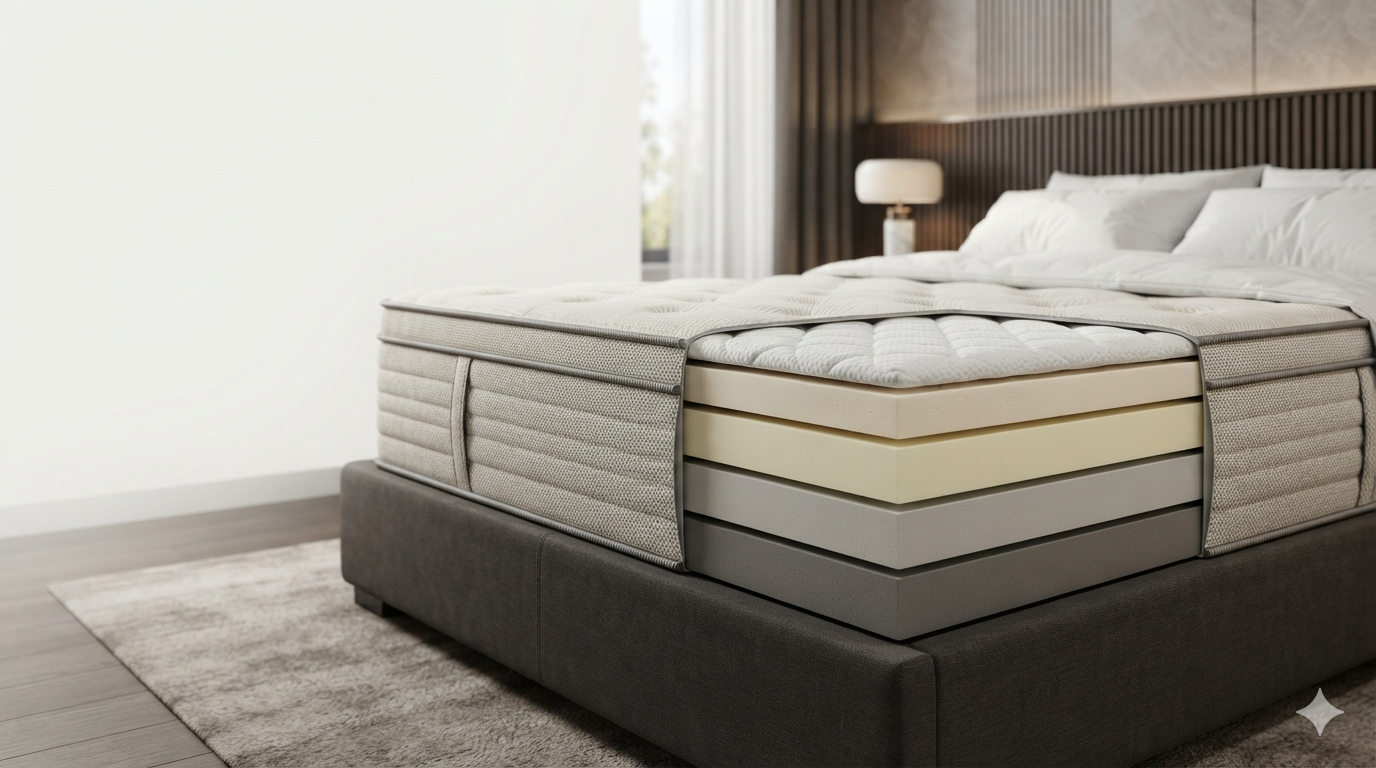
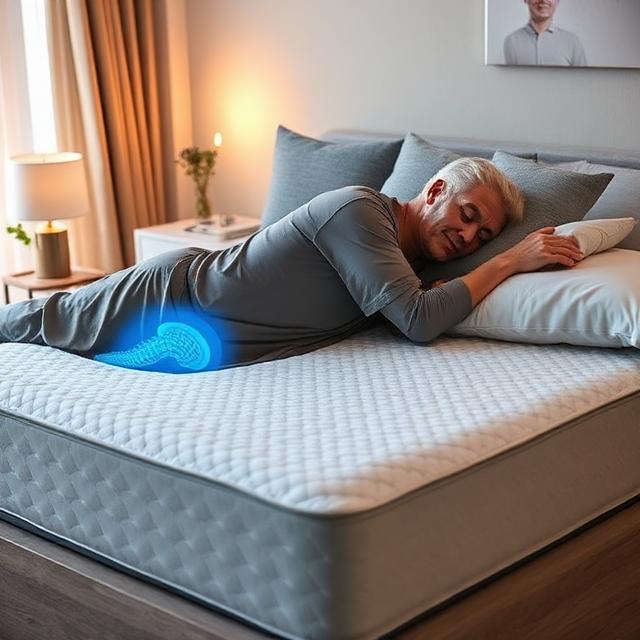
A memory foam mattress is made from viscoelastic polyurethane foam — a material that responds to both heat and pressure. When you lie down, the foam softens where your body makes contact and firms up everywhere else. The result is a surface that molds precisely to your shape instead of pushing back uniformly like a traditional spring mattress.
That contouring effect does two important things: it distributes your body weight evenly across the surface (pressure relief), and it keeps your spine in a neutral alignment rather than letting heavier parts like your hips sink too deep. Motion isolation is a natural side effect — because the foam absorbs energy locally, movement on one side of the bed barely registers on the other.
Quick definition: A memory foam mattress uses viscoelastic foam to conform to your body shape, relieve pressure points, support spinal alignment, and reduce motion transfer between sleep partners.
In My Experience, People Expect "Soft" — But Support Is What Matters
Here's where most buyers go wrong immediately. They equate memory foam with "soft and squishy" and assume that's a good thing. It's not always. There's a critical difference between sinkage and ergonomic support.
Sinkage happens when the foam is too soft or too low-density — your heavier body parts drop too far, your spine curves unnaturally, and you wake up with a stiff lower back. Proper support means the mattress contours closely enough to relieve pressure but still keeps your hips and shoulders roughly level with your lumbar spine.
Cheap foam — typically anything under 3 PCF density — compresses too quickly and loses its shape within a year. I've heard from countless people who bought budget mattresses online and were back to tossing and turning by month eight. The support layer underneath the comfort foam matters just as much as the top layer you feel first.
How Memory Foam Changed Modern Sleep Technology
The material was originally developed by NASA in the 1960s to absorb impact and improve safety in aircraft seats. Swedish company Tempur-Pedic commercialized it in the early 1990s, and for about a decade, a quality memory foam mattress cost thousands of dollars and was genuinely out of reach for most buyers.
Since then, manufacturing advances have driven costs down dramatically. Today's market includes gel-infused foam (which pulls heat away from the body), copper-infused foam (marketed for antimicrobial properties), and open-cell foam structures that allow more airflow than traditional closed-cell designs. Hybrid mattresses combine a memory foam comfort layer with an innerspring or pocketed coil support system — giving you contouring pressure relief with better bounce and airflow than pure foam alone.
Sleep researchers at institutions like the National Sleep Foundation have noted that proper pressure relief can meaningfully reduce nighttime movement and improve deep sleep duration — particularly for side sleepers and people with chronic joint pain.
Honestly, I Made This Mistake Too — Choosing the Wrong Firmness Level
Soft vs Medium vs Firm Memory Foam Mattress
Quick answer: Side sleepers generally need soft to medium (3–5 out of 10). Back sleepers do best on medium to medium-firm (5–7). Stomach sleepers need firm support (7–9) to prevent lumbar hyperextension.
Body weight modifies these recommendations significantly. A 130-pound side sleeper and a 220-pound side sleeper will experience the same mattress very differently. Heavier sleepers compress foam more deeply, which means a mattress that feels medium-firm at 150 pounds can feel uncomfortably soft at 250 pounds.
Why Heavy Sleepers Need Different Foam Density
Foam density — measured in pounds per cubic foot (PCF) — determines how much the material compresses under sustained weight. For sleepers over 230 pounds, a high-density support core (1.8 PCF or higher for the base layer) is non-negotiable. Without it, deep compression occurs, the foam bottoms out, and you're essentially sleeping on the foundation rather than the mattress itself.
Sagging is the most common complaint among heavier sleepers, and it almost always traces back to a weak support core rather than a failed comfort layer. If you're above average weight, prioritize mattresses that explicitly list support layer density specs — brands that hide these numbers usually have something to hide.
This Is Where Things Get Real for Couples
Two people sharing a bed often have completely different firmness needs, different temperature preferences, and different sleep positions. Memory foam handles motion transfer better than almost any other mattress type — that part is genuinely excellent for couples. But edge support is where many pure foam mattresses struggle.
If one partner sits on the edge to put on shoes every morning, weak edge support causes the side to compress and eventually break down faster than the center. Look for reinforced edge foam or coil-based perimeter support if edge stability matters to you. Some mattresses now offer adjustable firmness zones on each side — worth the premium for couples with very different preferences.
Also read: Understanding European Bed Sizes: The Complete 2026 Guide for Expats & Homeowners
Memory Foam vs Hybrid vs Latex — Which One Is Actually Better?
What Most People Get Wrong Is Comparing Only Price
A $400 memory foam mattress and an $1,100 hybrid might look dramatically different in price upfront. But if the $400 mattress needs replacing in two years and the hybrid lasts eight, the math flips completely. Long-term cost per year of comfortable sleep is the right metric, not sticker price.
Memory Foam vs Hybrid Mattress
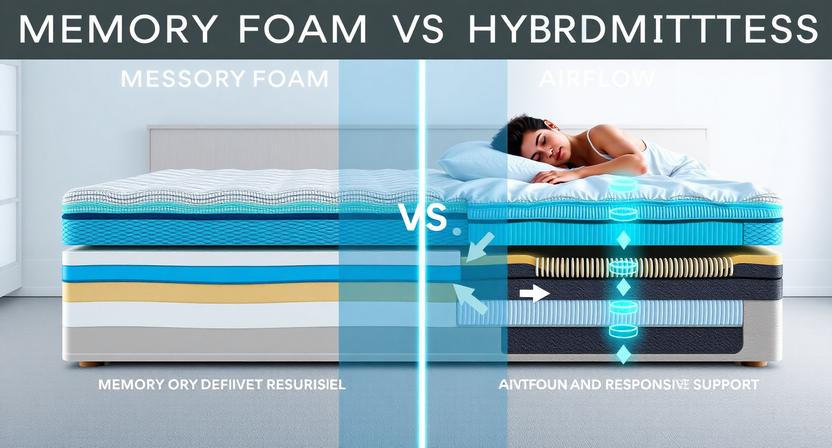
Hybrid mattresses win on cooling and bounce. The coil layer allows airflow that pure foam simply cannot replicate. They also feel more responsive — easier to move around on, which many combination sleepers and active couples prefer. Motion isolation is slightly weaker than pure foam but still significantly better than traditional innerspring.
Pure memory foam wins on motion isolation, initial price point, and that classic "hug" feeling that many sleepers love. For light sleepers who are easily disturbed, a quality memory foam mattress still edges out most hybrids on movement absorption.
Memory Foam vs Latex Mattress
Natural latex is more responsive (it springs back quickly rather than slowly releasing), more durable over time, and inherently more breathable than traditional memory foam. It's also the better choice for people with chemical sensitivities, as natural latex involves far fewer synthetic compounds than polyurethane foam.
The downsides: latex costs significantly more, and that bouncy feel isn't for everyone — some sleepers find it less cradling than memory foam. Synthetic latex blends split the difference in price but sacrifice some of the durability and eco-friendly credentials of 100% natural latex.
Cheap Foam vs Premium Foam
The differences are real and measurable. Low-density foam (under 3 PCF) off-gasses more strongly, breaks down faster, and provides weaker support. Premium foam (3.5–5 PCF for comfort layers) holds its shape longer, contains fewer volatile organic compounds, and maintains consistent pressure relief over years rather than months.
| Feature | Memory Foam | Hybrid | Latex |
| Motion Isolation | Excellent | Good | Moderate |
| Cooling | Poor–Moderate | Good–Excellent | Good |
| Durability | Moderate (density-dependent) | Good | Excellent |
| Price Range | $300–$2,000+ | $600–$3,000+ | $800–$4,000+ |
| Back Pain Relief | Excellent | Good | Good |
| Lifespan | 6–10 years | 7–10 years | 10–15 years |
| Couples Compatibility | Excellent | Very Good | Moderate |

I've Seen This Happen Many Times — Buying a Mattress That Sleeps Too Hot
Why Traditional Memory Foam Retains Heat
Traditional memory foam is a closed-cell material. The foam cells trap air rather than allowing it to flow through, which means body heat accumulates in the surface layer throughout the night. The same heat-responsiveness that makes foam contour to your body also makes it hold warmth longer than you'd like.
For about 30% of sleepers — particularly those who naturally run warm, those going through hormonal changes, or those in warmer climates — this is a serious comfort problem that no amount of fan usage fully solves.
Cooling Gel Memory Foam Explained Simply
Quick answer: Yes, some memory foam mattresses do sleep hot — but modern cooling technologies like gel infusion, open-cell structures, and phase-change covers significantly reduce this problem in mid-range and premium options.
Gel-infused foam incorporates gel beads or gel layers that absorb and disperse heat rather than trapping it. Copper-infused foam adds conductive metal particles that pull heat away from the sleep surface. Open-cell foam structures break down the cell walls between foam pockets, allowing air to circulate more freely through the material — this is arguably the most effective passive cooling method available.
Breathable covers made from Tencel, phase-change materials, or moisture-wicking fabrics add another layer of temperature regulation at the surface. The honest truth: no foam mattress is as cool as a well-designed hybrid, but a quality gel-infused open-cell foam mattress is a significant improvement over traditional foam for warm sleepers.
How to Make a Memory Foam Mattress Cooler
- Add a cooling mattress topper (gel foam or wool) to increase surface airflow
- Switch to moisture-wicking bedding — bamboo, Tencel, and linen all outperform cotton for heat dissipation
- Keep bedroom temperature between 60–67°F (15–19°C) — the clinically recommended range for optimal sleep
- Use a slatted bed frame rather than a solid platform to improve airflow underneath the mattress
- Avoid thick mattress protectors that block ventilation
Watch out for marketing language like "cooling foam" or "sleep cool technology" with no specifics. If a brand can't explain whether their foam is open-cell, gel-infused, or copper-infused — and at what density — the claim is probably surface-level at best.
The Best Memory Foam Mattress Based on Your Sleep Problem
Best for Back Pain and Spinal Alignment
A medium-firm memory foam mattress (5–7 firmness) consistently performs best for back pain in clinical observations. The foam needs to be firm enough to prevent lumbar sinkage but soft enough in the shoulder and hip zones to maintain neutral spinal alignment. Zoned pressure relief — where different areas of the mattress have different firmness levels — is genuinely valuable here, not just marketing language.
Look for orthopedic-grade support with a high-density base layer (1.8 PCF or higher) and a comfort layer that's at least 2–3 inches thick. Chiropractors frequently recommend this configuration for patients with chronic lower back pain and herniated disc issues.
Best for Side Sleepers With Shoulder Pain
Side sleepers put significant pressure on the shoulder and hip contact points. You need a softer surface (3–5 firmness) with deep contouring capability to allow the shoulder to sink in slightly without the spine curving. A mattress that's too firm for a side sleeper is one of the most common causes of new or worsened shoulder pain.
Best for Hot Sleepers
A cooling hybrid — memory foam comfort layer over pocketed coils — is the best solution for consistently warm sleepers. The coil layer allows far more airflow than any foam-only design. If you're committed to pure foam, look specifically for open-cell gel foam with a Tencel or phase-change cover, and pair it with a slatted platform bed frame.
Best for Couples
Prioritize motion isolation above everything else. Quality memory foam still leads the industry here. Add strong edge support (reinforced foam perimeter or coil edges) so both partners have full usable sleep surface, and consider a mattress with dual-zone firmness if your preferences differ significantly.
Best Budget Memory Foam Mattress
In the $400–$700 range, focus on: CertiPUR-US certification (non-negotiable), a foam density of at least 3 PCF for the comfort layer, and a 100-night trial period. Skip: advanced cooling claims (they're often superficial at this price point), and luxury branding. What matters most at this budget is basic support quality and certification compliance.
Best Luxury Memory Foam Mattress
At $1,500 and above, expect: multi-zone pressure relief, proprietary cooling systems with documented open-cell structure, smart sleep integration compatibility, and warranties of 10–25 years. Premium options from brands like Tempur-Pedic and Purple use advanced support layer engineering and genuine heat-dissipating technologies that justify the premium for demanding sleepers.
Real-life use cases worth noting:
- Athletes recovering from muscle soreness — medium-soft foam with deep contouring helps reduce overnight inflammation and improves muscle recovery quality
- Seniors needing joint support — softer comfort layer with firm base; prioritize ease of getting in and out (avoid mattresses that sink too deeply)
- Students in apartments — mattress-in-a-box foam options offer practical compression delivery and affordable quality in the $400–$600 range
- Office workers with chronic back pain — medium-firm zoned support; pair with an ergonomic pillow for full spinal benefit
Also read: Bedroom Design Ideas for Comfort: The Sleep Specialist's 2026 Guide
Most People Ignore This Part — Foam Density and Mattress Lifespan
What Mattress Density Actually Means
Density is measured in pounds per cubic foot (PCF) and tells you how much material is packed into each cubic foot of foam. It is not the same as firmness — a high-density foam can be soft or firm. What density predicts is durability and support quality over time.
- Low density (under 3 PCF): breaks down quickly, softer feel initially, not ideal for long-term use
- Medium density (3–4 PCF): good balance of comfort and durability, suitable for average sleepers
- High density (4–5 PCF): longer lifespan, better sustained support, higher cost
Why Some Memory Foam Mattresses Sag Quickly
Sagging almost always comes from one of three problems: cheap low-density foam that can't sustain compression recovery, an inadequate support core that bottoms out under weight, or an improper foundation — using a memory foam mattress on a box spring with wide gaps, for example, causes uneven support that accelerates breakdown.
How Long a Memory Foam Mattress Should Last
A well-made memory foam mattress with a density of 3.5 PCF or higher should