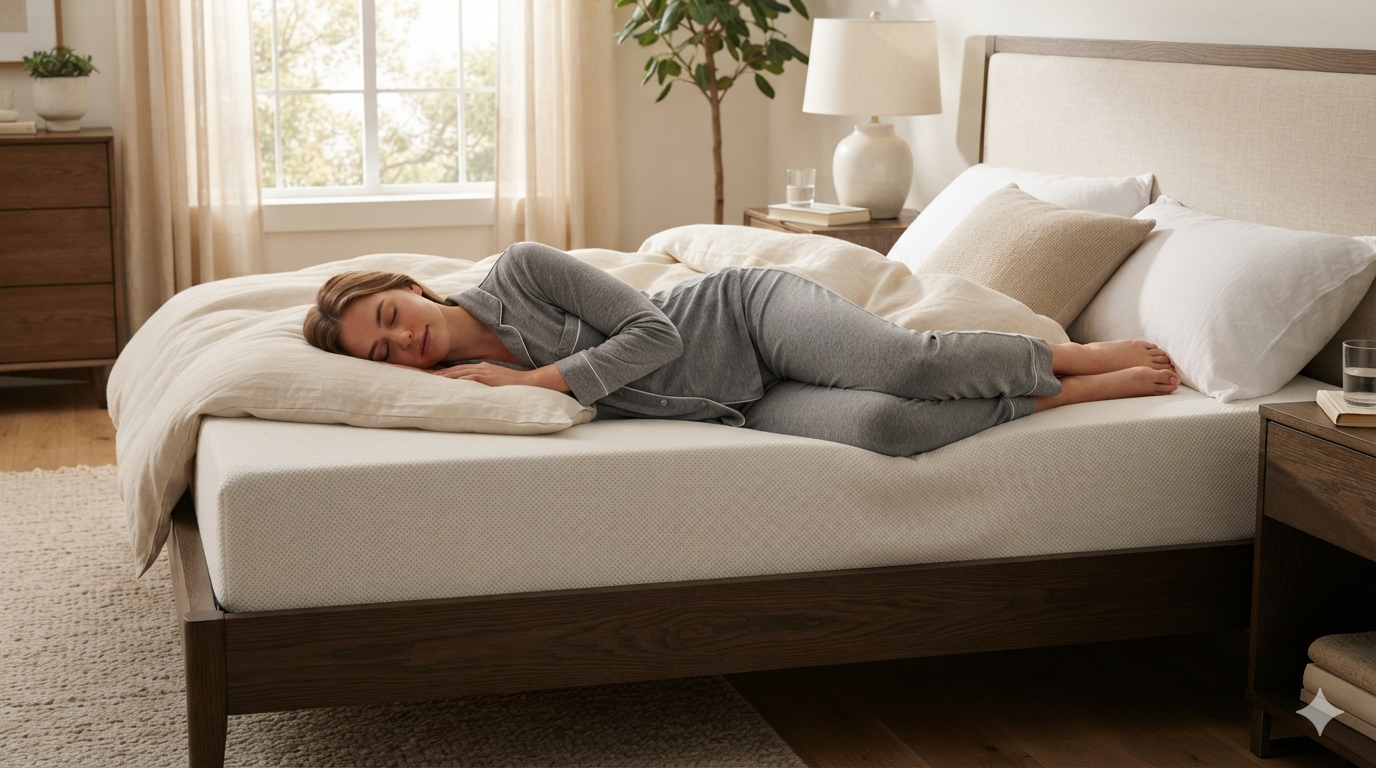
If you've spent more than one night tossing, flipping your pillow to the "cool side," or waking up with a stiff shoulder, you already know that not every foam mattress delivers on its promise. Finding the right sleep comfort foam mattress isn't about grabbing the softest option in the showroom or the one with the biggest discount sticker — it's about understanding what actually happens underneath your body while you sleep. This guide breaks comfort down into the real, measurable things that matter: pressure relief, support, firmness, cooling and how the layers underneath you are actually built.
Key Takeaways
- Comfort is a mix of pressure relief, support, firmness, contouring, cooling, responsiveness, motion isolation and edge support — not just softness.
- The most comfortable foam mattress for you depends on your sleep position, body weight and whether you share the bed.
- Foam density and firmness are two different things — don't confuse them when comparing products.
- A sleep comfort foam mattress that feels amazing for five minutes in a showroom can feel completely different after 30 nights.
- Trial periods, warranty terms and return policies matter as much as the foam specs themselves.
Table of Contents
- What Is a Sleep Comfort Foam Mattress?
- What Actually Makes a Foam Mattress Comfortable?
- Memory Foam vs Comfort Foam: The Real Difference
- How a Foam Mattress Is Built
- Choosing Firmness for Your Sleep Position
- How Foam Density Affects Comfort and Durability
- Why Pressure Relief Can Make or Break Your Sleep
- Why Memory Foam Feels Hot — and How to Stay Cooler
- Comfort vs Support vs Cooling: The Trade-Offs
- Foam vs Springs vs Hybrid vs Latex
- The Right Foam Mattress for Real-Life Sleepers
- Common Foam Mattress Buying Mistakes
- How to Choose a Comfortable Foam Mattress, Step by Step
- A Transparent Sleep Comfort Score
- How to Properly Test a Foam Mattress
- How Long Does a Foam Mattress Last?
- Diagnose an Uncomfortable Foam Mattress
- Can You Fix an Uncomfortable Mattress?
- Mattress-in-a-Box: What to Expect
- Bed Bases, Adjustable Beds and Accessories
- Price vs Performance
- Buying Checklist
- Using AI Tools to Choose a Mattress
- When Foam May NOT Be the Right Choice
- FAQ
- Pros and Cons at a Glance
- Final Decision Framework
What Is a Sleep Comfort Foam Mattress—and What Does "Comfort" Actually Mean?
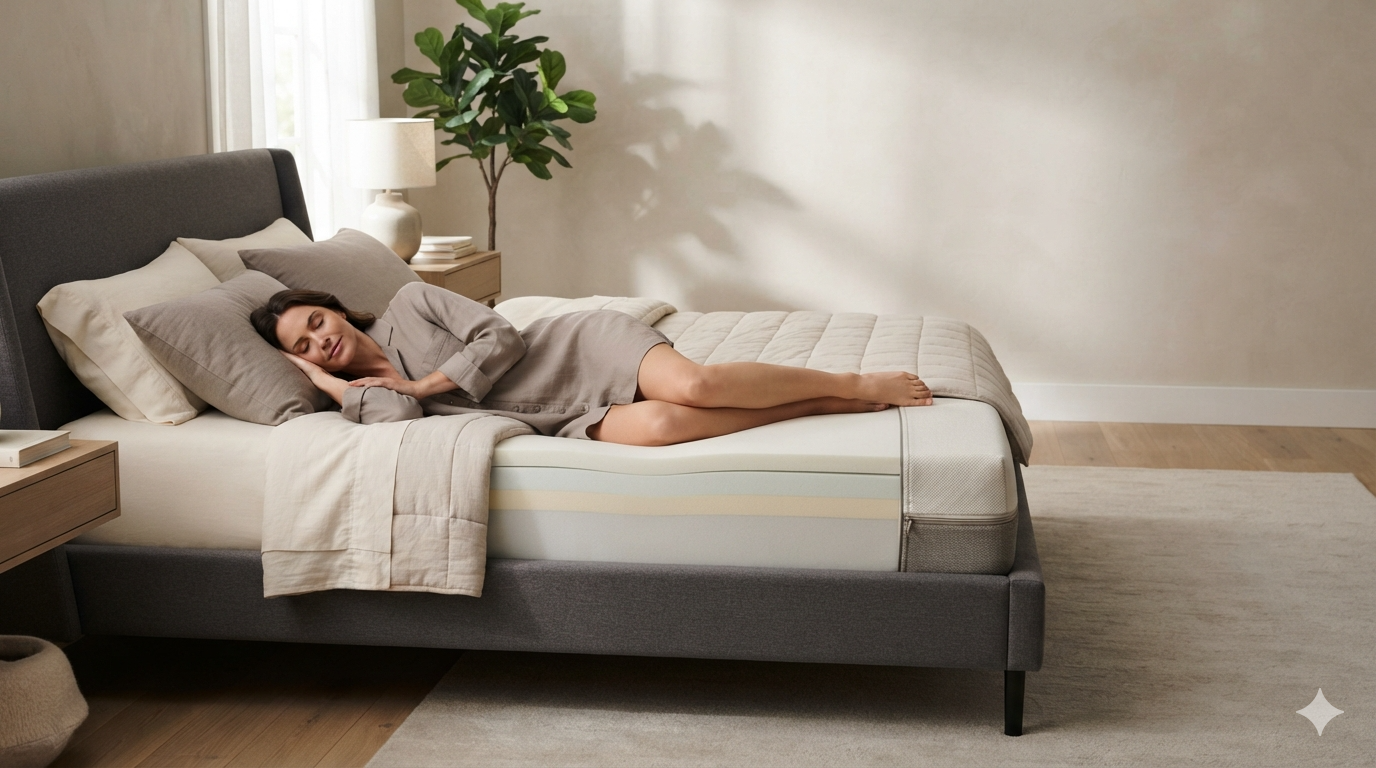
A sleep comfort foam mattress combines cushioning foam layers with a supportive base to relieve pressure, keep your spine aligned and adapt to your body shape. Some mattresses are all-foam from top to bottom, while others use foam only in the comfort layers, sitting on top of coils or a firmer support core.
Comfort itself is not one thing. It's the combination of pressure relief, support, firmness, contouring, temperature regulation, responsiveness, motion isolation and edge support working together. That's why a mattress rated "medium" by one brand can feel completely different from a "medium" made by another — and why two people sharing the exact same bed can genuinely disagree about how good it feels.
What Most People Get Wrong About Mattress Comfort
What most people get wrong is assuming softer automatically means more comfortable. In reality, too much sinkage makes it harder to change positions during the night, and a surface that's too firm creates pressure buildup around the shoulders and hips. Real comfort sits in the balance between cushioning on top and stability underneath — not at either extreme.
Why Comfort Needs to Be Evaluated by Performance, Not Adjectives
Instead of relying on vague first-hand claims, the fairest way to judge a mattress is by testing specific, repeatable factors: how quickly it responds when you shift weight, whether it isolates movement from a partner, how it feels after 10 minutes versus after a full night, and whether the surface temperature changes over time. Any genuine review should document the model tested, the firmness level, and the sleeper's position and body-weight category rather than offering vague praise.
What Actually Makes a Foam Mattress Comfortable?

A comfortable foam mattress isn't one feature — it's several measurable characteristics working together. Here's how each one contributes:
Pressure Relief
Foam distributes body weight across a wider surface instead of concentrating it on the shoulders, hips, knees and lower back. Side sleepers usually notice this the most, since hips and shoulders carry the bulk of the load in that position.
Support and Spinal Alignment
Support comes from the core underneath the cushioning, not the softness on top. A plush surface can still sit on a firm, stable support layer — cushioning and support are two separate jobs. (This guide won't claim any mattress can treat a medical back condition — it can't.)
Firmness
Firmness is usually described as soft, medium, medium-firm or firm, but these ratings vary between manufacturers, so a "medium-firm" from one brand can feel softer than another's "medium." Body weight also changes how firm a mattress feels underneath you.
Responsiveness
Slow-moving memory foam contours deeply but takes longer to spring back, while faster-response foam makes it easier to switch positions — a bigger factor for restless and combination sleepers than most people realize.
Motion Isolation
Foam absorbs movement rather than transferring it, which is why couples often prioritize it. The trade-off: mattresses built for maximum motion isolation are usually the slowest to respond.
Edge Support
Edge stability matters when you sit on the side of the bed or sleep near the edge. All-foam designs vary a lot here, and it's a bigger consideration for couples and heavier sleepers.
Memory Foam vs Comfort Foam: What Is the Real Difference?
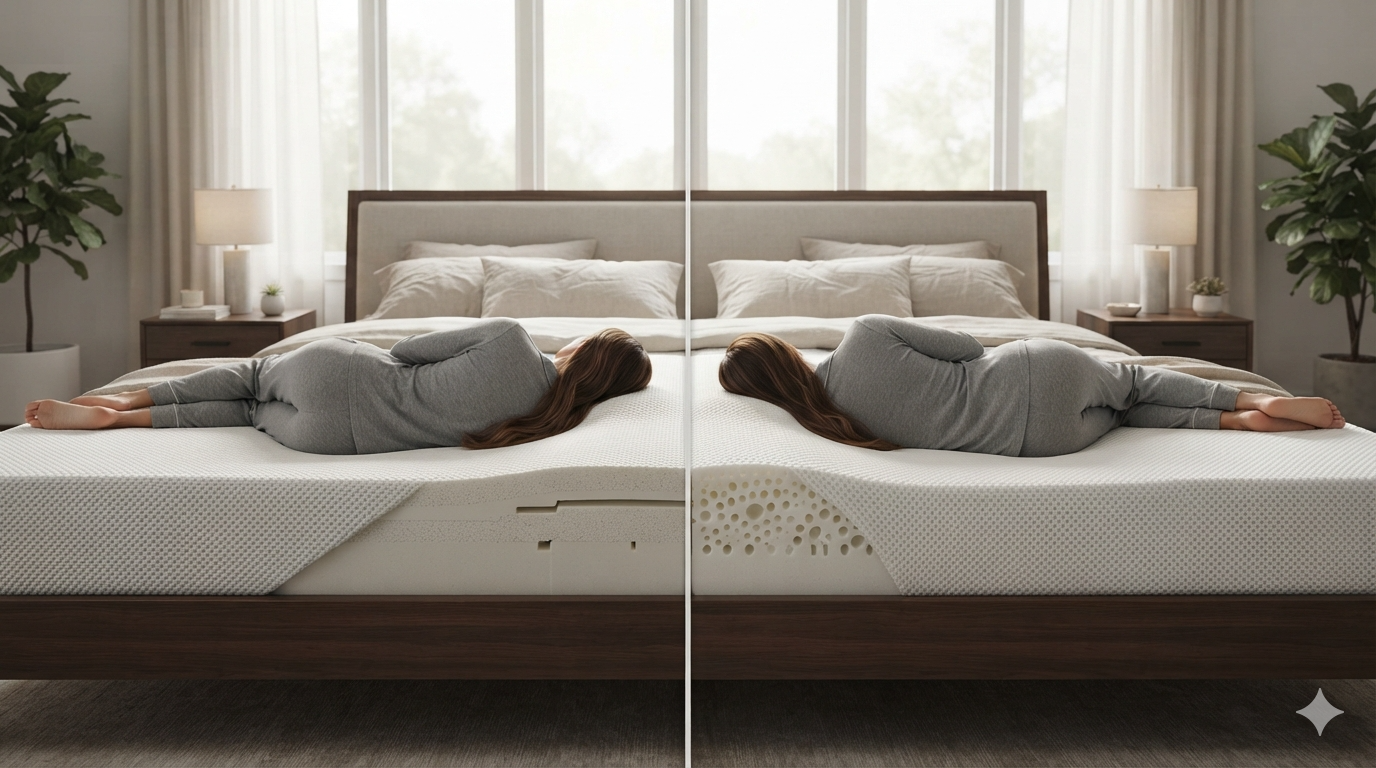
"Comfort foam" is a broad term for whatever cushioning foam sits in the top layers — it isn't one specific material. Here's how the main types actually differ:
Memory Foam
Slow-responding and strongly contouring, memory foam offers excellent pressure relief and motion isolation, though denser versions can retain more heat. It tends to suit side sleepers and anyone who prefers a hugging, cradled feel.
Polyfoam
Usually faster-responding than memory foam, polyfoam is used in both comfort layers and support structures. Quality varies enormously depending on density and formulation, so "polyfoam" alone tells you very little.
High-Resilience Foam
Built for quicker responsiveness and easier movement, high-resilience foam tends to suit combination sleepers who shift positions frequently through the night.
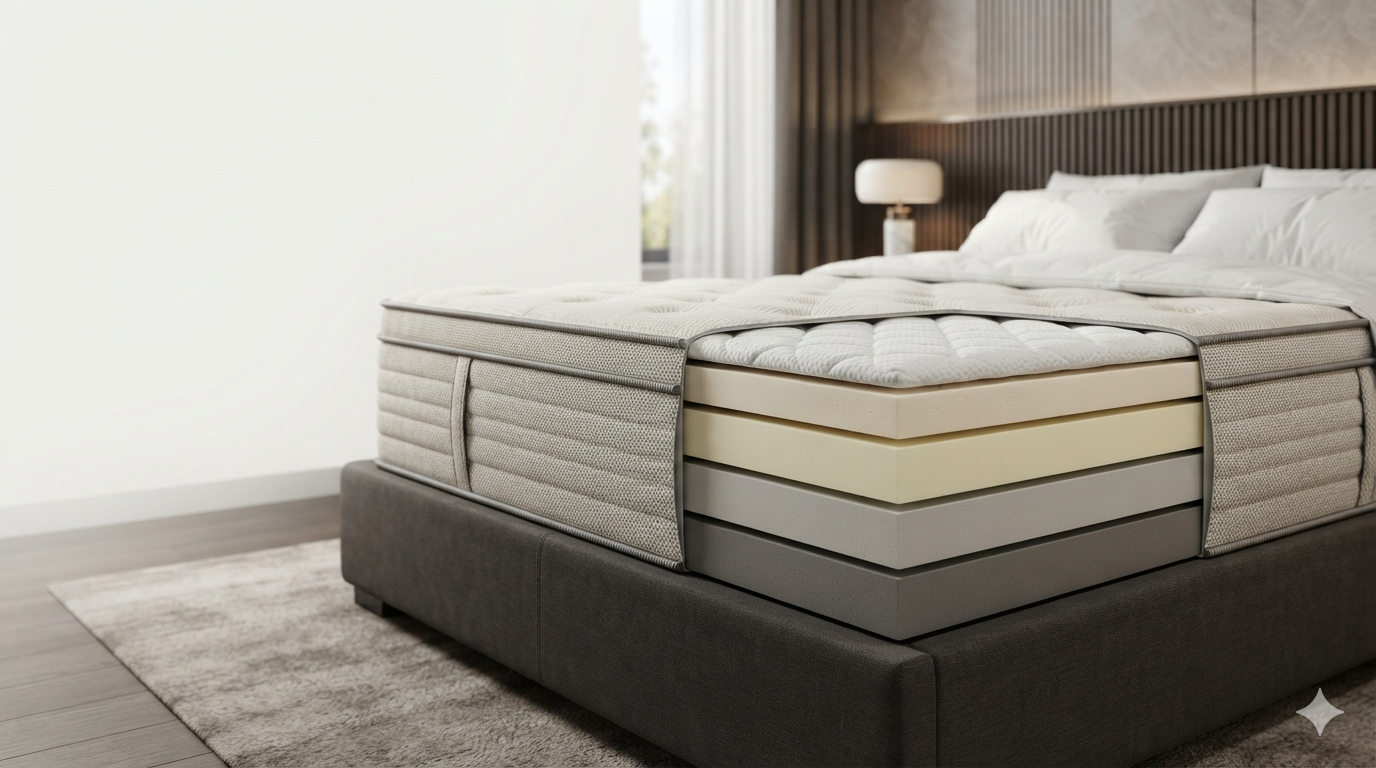
How a Foam Mattress Is Built: Comfort Layer vs Support Core
Every foam mattress is built in layers, and understanding them matters more than reading marketing copy.
- Comfort layer — the top cushioning that provides initial softness, pressure relief and body contouring.
- Transition layer — bridges the soft top layer and the firmer base, distributing weight and influencing sinkage.
- Support core — the structural foundation that maintains alignment and drives long-term durability.
"Premium foam" on its own isn't a technical specification. Before buying, check the actual foam type, layer thickness, density (where disclosed), warranty and trial period — vague terms like "luxury foam" should never substitute for real numbers.
How to Choose the Right Foam Mattress Firmness for Your Sleeping Position
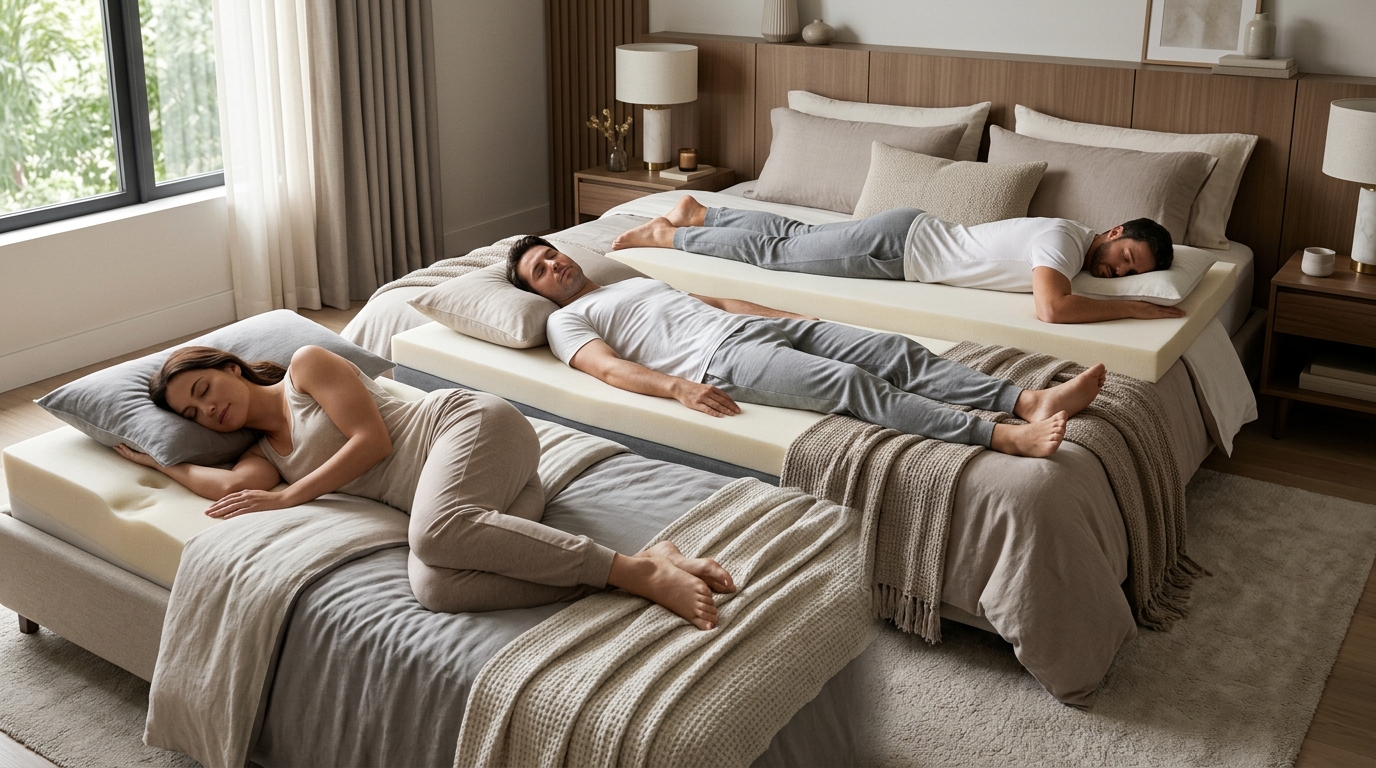
Your sleep position is one of the best starting points for choosing a sleep comfort foam mattress that actually works for you.
Side Sleepers
Prioritize shoulder and hip pressure relief. Overly firm foam creates pressure points fast, but too much sinkage restricts movement — aim for the middle ground.
Back Sleepers
Look for a balance of cushioning and support that avoids excessive sinkage around the pelvis. Medium to medium-firm constructions are commonly favored here, though personal preference still rules.
Stomach Sleepers
Limiting hip sinkage matters most. Overly soft foam can let the midsection drop too low, which many stomach sleepers find uncomfortable over time.
Combination Sleepers
Responsiveness is the priority. Very slow-moving memory foam can make turning over harder, so a faster-response comfort layer is usually a better fit.
How Body Weight Changes the Feel
Lightweight sleepers often experience a mattress as firmer than its official rating suggests, while heavier sleepers compress deeper into the same layers. The same "medium-firm" label simply won't feel identical to every body — support-core quality and weight capacity matter more as body weight increases.
How Foam Density Affects Comfort, Feel and Durability
Density measures how much material is packed into a given volume — it is not the same as firmness. A mattress can be dense and soft, or low-density and firm.
Low-Density vs High-Density Foam
Higher-density foam generally holds its shape longer, but it can also trap more heat and cost more. Density alone shouldn't be your only buying metric.
Does Higher Density Always Mean Better Comfort?
Not necessarily. "Higher" doesn't automatically mean "better" — density needs to be evaluated together with foam type, construction and your own temperature and firmness preferences.
Why Pressure Relief Can Make or Break Sleep Comfort
Pressure relief affects the shoulders, hips, lower back and knees most directly, and contouring foam responds to your specific body shape rather than pushing back uniformly.
Why Your Foam Mattress May Be Creating Pressure Points
- The mattress is too firm for your body weight
- The comfort layer is too thin
- Poor overall construction quality
- Wrong firmness for your sleep position
- A mismatch between body type and mattress design
Why Does Memory Foam Feel Hot—and Can a Foam Mattress Stay Cooler?
Heat retention comes down to foam density, open-cell structure, gel infusion, ventilation, the breathability of the cover, and your bedroom temperature. "Cooling foam" is a design goal, not a guarantee of a cold surface.
Open-Cell Foam vs Standard Foam
Open-cell structures are designed to improve airflow through the foam, which can help — without promising a dramatically colder sleeping surface on its own.
Gel-Infused Foam
Gel infusion is designed to draw heat away from the body, but the technology and its effectiveness vary a lot between different constructions.
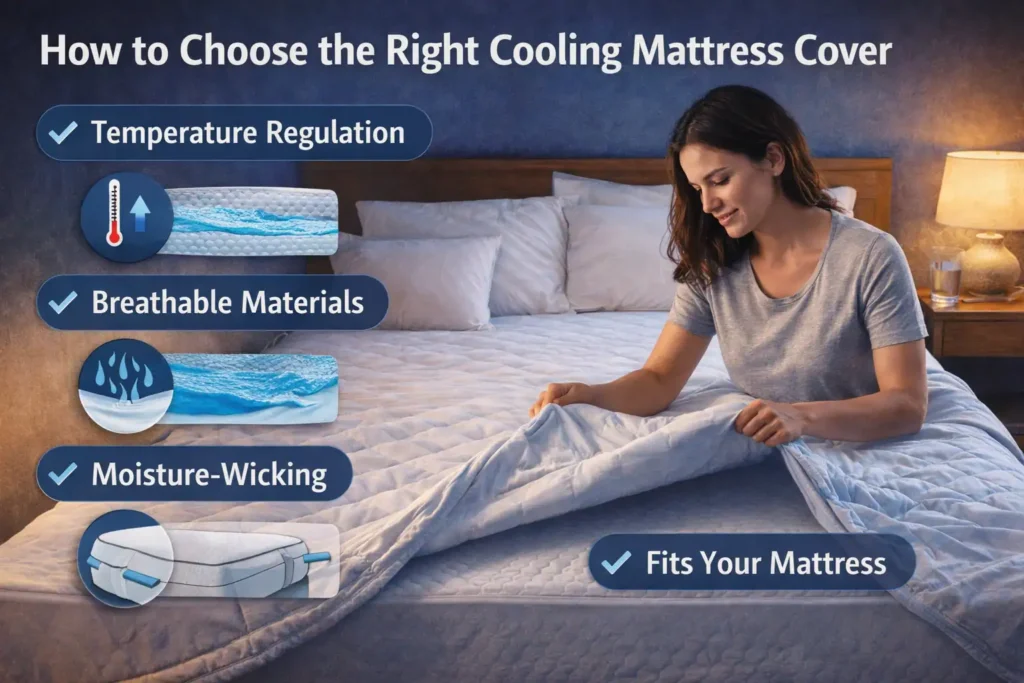
Cooling Covers and Breathable Materials
The cover influences how the surface feels in the first few minutes, but the entire mattress construction — not just the top layer — determines how it performs over a full night.
"This Is Where Things Get Real": Comfort vs Support vs Cooling
Mattress design is a series of trade-offs. Dense contouring foam can improve pressure relief but retain more heat. Faster-response or ventilated foam often improves movement and airflow but sacrifices some hugging contour. Hybrid builds add airflow through coils, at the cost of some motion isolation.
- Comfort vs responsiveness — slow memory foam vs faster foam vs hybrid builds, each suited to different sleeper profiles.
- Comfort vs cooling — dense foam vs open-cell foam vs gel infusion vs ventilation vs bedroom environment.
- Comfort vs support — too soft causes excessive sinkage; too firm leaves pressure points unresolved. Balanced construction is the goal.
Foam Mattress Comparison: Which Construction Is Best for Your Needs?
| Construction | Pressure Relief | Support | Cooling | Motion Isolation | Responsiveness | Edge Support | Best For |
| Memory Foam | High | Medium-High | Low-Medium | High | Low | Low-Medium | Side sleepers, couples |
| Traditional Polyfoam | Medium | Varies | Medium | Medium | Medium | Low-Medium | Budget buyers |
| Foam Hybrid | Medium-High | High | Medium-High | Medium | High | High | Hot and combination sleepers |
| Latex | Medium-High | High | Medium-High | Medium | High | Medium | Bounce-lovers, eco buyers |
| Pocket Springs | Medium | High | High | Low | High | High | Traditional-feel fans |
Foam and pocket springs differ mainly in airflow, bounce and motion transfer, with springs generally offering stronger edge support. A foam-and-coil hybrid mattress blends support, cooling and responsiveness, making it attractive to combination and hot sleepers. Latex, meanwhile, offers faster bounce and different pressure-relief characteristics than memory foam, with generally better temperature regulation.
The Most Comfortable Foam Mattress for Different Real-Life Sleepers
For Couples
Focus on motion isolation, solid edge support, and how the mattress handles two different firmness preferences and weights sharing the same surface.
For Hot Sleepers
Look for airflow, open-cell foam, cooling covers, gel infusion — and remember the bedroom itself plays a role too.
For Restless Sleepers
Prioritize responsiveness and ease of movement; avoid mattresses with excessive sinkage that make repositioning a chore.
For Heavier Sleepers
The support core, weight capacity, edge support and durability matter more than softness alone.
For Lightweight Sleepers
Pressure relief and surface cushioning matter most, since a lighter body won't compress the foam as deeply — the mattress can feel firmer than its rating suggests.
Soft-Preference and Firm-Preference Sleepers
If you like it soft, make sure there's real support underneath the plush layer, not just cushioning. If you like it firm, firm doesn't have to mean uncomfortable — check that pressure is still distributed properly.
"Honestly, I Made This Mistake Too": Common Foam Mattress Buying Mistakes
- Only testing softness, never support
- Choosing by thickness alone
- Assuming higher density automatically means better
- Confusing density with firmness
- Ignoring the support core entirely
- Ignoring sleep position and body weight
- Buying purely on marketing claims
- Ignoring heat management
- Testing in-store for only five minutes
- Skipping the return policy fine print
- Assuming all memory foam feels the same
How to Choose a Comfortable Foam Mattress, Step by Step
- Step 1 — Identify your main sleep position (side, back, stomach or combination)
- Step 2 — Factor in your body weight, since it changes perceived firmness
- Step 3 — Decide your preferred feel: plush, balanced, firm, responsive or contouring
- Step 4 — Evaluate foam type, layer thickness, density and support core
- Step 5 — Score pressure relief and support separately, not as one number
- Step 6 — Evaluate cooling: cover, foam structure, ventilation, bedroom environment
- Step 7 — Check motion isolation and responsiveness, especially if sharing the bed
- Step 8 — Check durability, warranty length and body-impression terms
- Step 9 — Compare trial length, return conditions and collection fees
- Step 10 — Compare total value: price, materials, lifespan, warranty and delivery together
Build Your Own Transparent Sleep Comfort Score
Rather than calling a mattress simply "comfortable," score each factor out of 10: pressure relief, support, cooling, motion isolation, responsiveness, edge support, durability and value. The mattress with the highest overall score isn't automatically the right one for you — score it again from your specific angle (side sleeper, couple, hot sleeper, combination sleeper) since the "best" answer changes depending on who's asking.
How to Test a Foam Mattress Properly
Sitting on a mattress for two minutes in a showroom tells you almost nothing. Where a sleep trial is available, use it — test shoulder pressure, hip pressure, lower-back support, ease of movement, partner disturbance, heat build-up, edge stability and how you actually feel in the morning, not just when you first lie down.
How Long Does a Foam Mattress Last?
Most foam mattresses last somewhere between 7 and 10 years, depending on foam quality, density, body weight, usage and the base it sits on. Foam sags due to material fatigue, poor-quality foam, excessive load, or inadequate support underneath — normal body impressions are different from problematic sagging. To extend the life of a foam mattress, use the correct bed base, rotate it if the manufacturer allows, add a suitable protector, and avoid folding it improperly.
Is Your Foam Mattress Uncomfortable? Diagnose the Problem Before Replacing It
Why Is My Foam Mattress Too Firm?
It could be a normal adjustment period, the wrong firmness for your body, a cold room temporarily stiffening the foam, or a comfort layer that's simply too thin.
Why Is My Foam Mattress Too Soft?
Usually excessive sinkage, higher body weight than the foam was designed for, foam breaking down over time, or a construction mismatch from the start.
Why Am I Sinking Too Deeply?
A very soft comfort layer combined with slow-response memory foam and insufficient support underneath is the usual culprit.
Why Can I Feel My Partner Moving?
Poor motion isolation, a highly responsive (bouncier) foam type, or a lighter-weight construction not built to absorb movement.
Why Does My Foam Mattress Feel Hot?
Dense foam, poor airflow, a warm bedroom, heavy bedding, or a non-breathable cover material can all contribute.
Can You Make an Uncomfortable Foam Mattress More Comfortable?
A mattress topper can change surface firmness and improve pressure relief, but it can also worsen heat retention or sinkage if you pick the wrong material — match the topper to the actual problem. Check slat spacing and center support on your bed base, since a weak base can undermine even a good mattress. Breathable bedding and better bedroom ventilation help with temperature, but they can't fully offset foam that's fundamentally heat-retentive by design.
Mattress-in-a-Box: What You Should Know Before Buying
Compressed foam mattresses expand after unboxing, though the time it takes varies by manufacturer — some reach full expansion within hours, others take a couple of days. A temporary odor from new foam ("off-gassing") is common and typically fades with ventilation; it's worth checking the manufacturer's specific safety information rather than assuming.
Foam Mattress Compatibility: Bed Bases, Adjustable Beds and Accessories
Check slat spacing and center support on slatted bases, and confirm compatibility before pairing a foam mattress with an adjustable bed — not every model is designed to flex. For protectors, weigh breathability against waterproofing based on your priorities, and only add a topper when it solves a specific problem rather than as a default fix.
Price vs Performance: How Much Should You Spend?
Budget foam mattresses use simpler construction and involve some compromises but can suit light users and guest rooms. Mid-range models generally offer better materials and more balanced construction, often the sweet spot for value. Premium mattresses bring advanced foam formulations and better covers — but a higher price tag doesn't automatically guarantee better comfort for you specifically.
Sleep Comfort Foam Mattress Buying Checklist
- Sleep position identified
- Body-weight category considered
- Preferred firmness identified
- Foam type and comfort layer checked
- Support core evaluated
- Pressure relief and cooling considered separately
- Motion isolation and responsiveness checked
- Edge support checked
- Warranty, trial period and return conditions checked
- Bed-base compatibility confirmed
AI Tools That Can Help You Choose a Foam Mattress in 2026
AI tools are useful for organizing specifications and comparing foam types, layer thickness, firmness, cooling features, trial length and warranty side by side — but they can only repeat the accuracy of whatever retailer data you feed them. Give an AI assistant your sleep position, body-weight category, preferred firmness, temperature preference and partner requirements to generate a shortlist, then independently verify every technical spec yourself. AI is strong at fast comparison and pattern recognition; it can't replace actual tactile testing, real-world heat perception or long-term durability observations — those still come from a human sleeping on the bed.
When a Foam Mattress May NOT Be the Best Choice
If you prioritize bounce and airflow, a hybrid with coil support may suit you better. If you prefer a faster, more responsive feel, latex is worth considering. And if you simply prefer a traditional mattress feel with individual coil response, pocket springs remain a solid option. A trustworthy guide should be honest about when the product it's discussing isn't the right fit — and foam genuinely isn't for everyone.
FAQ: Sleep Comfort Foam Mattress Questions People Actually Ask
What is the most comfortable type of foam mattress?
There isn't one universal answer — it depends on your sleep position, body weight and preferred firmness. Memory foam suits deep contouring; faster-response foam suits movement.
What makes a foam mattress comfortable?
Pressure relief, support, appropriate firmness, temperature management and responsiveness that matches how you sleep — together, not individually.
Is memory foam the most comfortable mattress?
It's highly comfortable for many side sleepers and couples, but not universally — some sleepers find it too slow-moving or too warm.
What foam density is best for comfort?
There's no single "best" number — density needs to be evaluated alongside firmness and overall construction, not on its own.
Is a soft or firm foam mattress more comfortable?
It depends entirely on your sleep position and body weight — neither is universally better.
What firmness is best for side sleepers?
A soft-to-medium feel that prioritizes shoulder and hip pressure relief usually works best, within personal preference.
Is foam good for back sleepers?
Yes, provided it balances cushioning with firm underlying support to avoid excessive sinkage.
Are foam mattresses good for couples?
Often, yes — largely due to strong motion isolation, though edge support and differing firmness preferences still need checking.
Does memory foam reduce partner movement?
Generally yes, since it absorbs motion rather than transferring it across the surface.
Why does my foam mattress feel too firm?
It may be an adjustment period, the wrong firmness for your weight, or too thin a comfort layer.
Why does my foam mattress feel too soft?
Usually excessive sinkage from body weight or foam that has started breaking down.
Why does memory foam get hot?
Dense foam structure combined with limited airflow traps body heat against the surface.
How can I make a foam mattress cooler?
Breathable bedding, better bedroom ventilation and a suitable mattress protector can help, though they won't fully offset heat-retentive foam.
How thick should a comfortable foam mattress be?
Total thickness alone isn't enough — the composition of the layers underneath matters more than the overall height.
How long does a foam mattress last?
Typically 7–10 years, depending on foam quality, usage and support-base compatibility.
Pros and Cons of Foam Mattresses at a Glance
Pros
- Strong pressure relief
- Excellent motion isolation in many builds
- Wide range of firmness options
- Good body contouring
- Often strong value for the price
Cons
- Some constructions retain heat
- Slow-response foam can make movement harder
- Edge support varies significantly
- Quality varies a lot between formulations
- Comfort is genuinely subjective
Final Decision Framework: Is a Sleep Comfort Foam Mattress Right for You?
- Want strong contouring and motion isolation → memory foam
- Want faster movement → responsive foam
- Sleep hot → breathable, open-cell construction or a hybrid
- Sleep with a partner → prioritize motion isolation and edge support
- Prefer bounce → responsive foam, latex or hybrid
- Need pressure relief above all → focus on comfort-layer construction and correct firmness
There's no single "most comfortable" sleep comfort foam mattress that works for everyone — only the one that matches your sleep position, body weight, temperature preference and how you actually use your bed. Score the factors that matter to you, take advantage of a real trial period, and give yourself at least a few weeks before deciding whether it's genuinely right. That's a far more reliable test than five minutes in a showroom — and it's how you end up with a mattress you're still happy with a year from now.