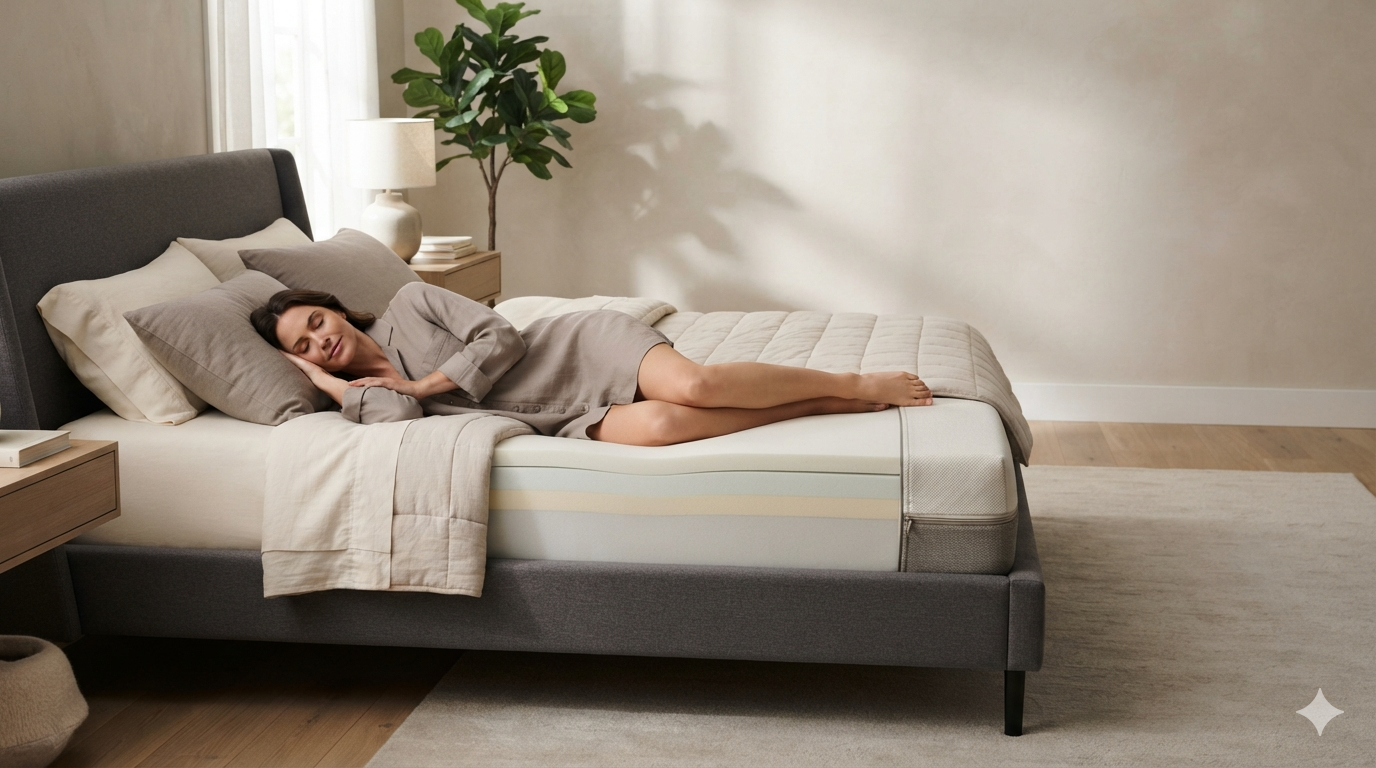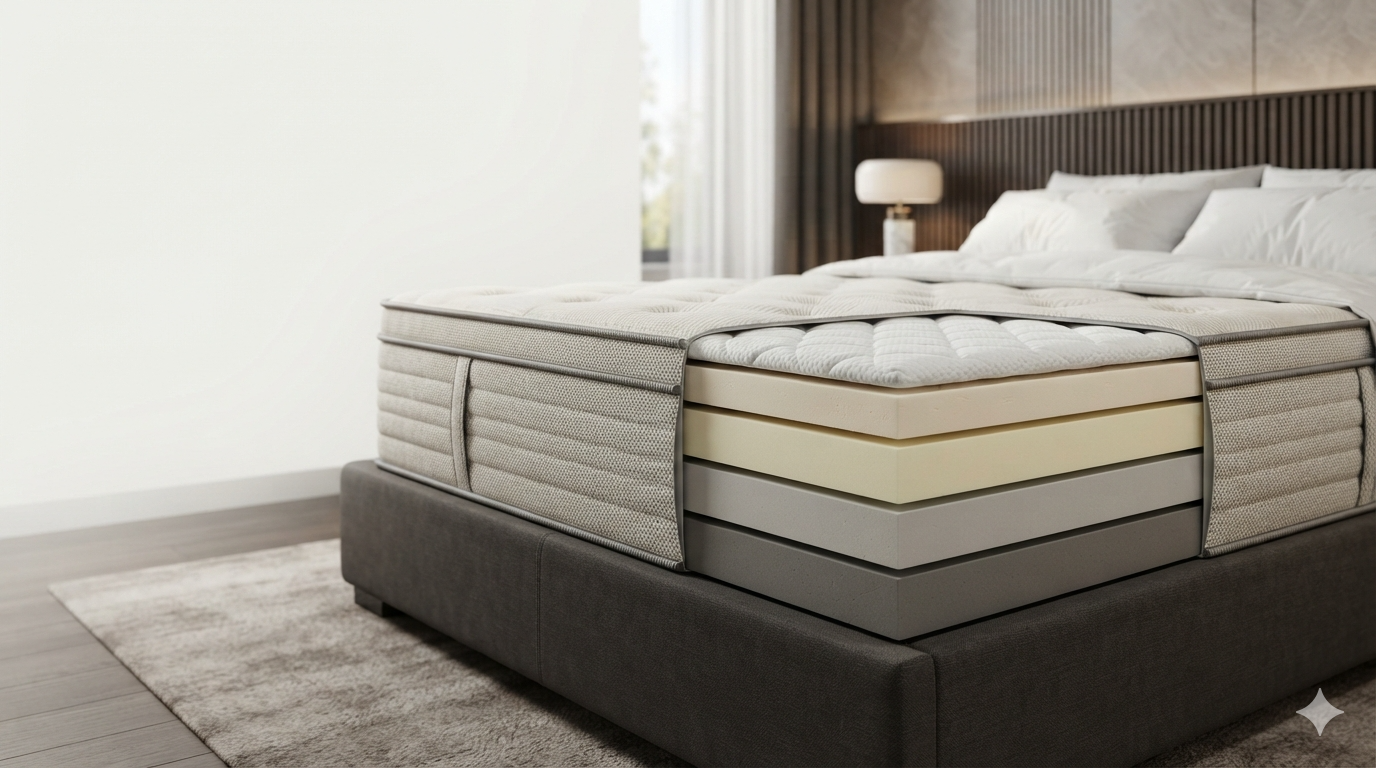

You wake up stiff, roll out of bed like a rusty gate, and wonder whether the mattress is the culprit. So you search for the best organic foam mattress for back pain, hoping for a clean, simple answer. Instead you get ten tabs of marketing claims, vague "eco" badges and prices that make you wince.
I get it. This guide cuts through that noise. It is written for UK expats and locals shopping in the Algarve, but the advice works anywhere. One honest note first: no mattress cures back pain. A good one can make sleeping more comfortable, and that is worth chasing.
Last updated: October 2026. Product details change often, so treat every price, trial and warranty here as a starting point and confirm it with the brand.
Key Takeaways
- "Organic foam" usually means natural latex. Conventional memory foam is generally synthetic.
- Medium-firm is a sensible starting point for many people, but personal comfort and body weight matter more than the label.
- GOLS, GOTS, GREENGUARD Gold and CertiPUR-US each prove something different. Only some prove "organic".
- Compare seven things: support, pressure relief, firmness fit, material transparency, certifications, durability and cost, and trial terms.
- Persistent or worsening back pain needs a medical assessment, not just a new mattress.
Table of Contents
- What Is the Best Organic Foam Mattress for Back Pain?
- What Is an Organic Foam Mattress, and What Is Actually Organic?
- How Mattress Support and Pressure Relief Affect Back Comfort
- The Best Organic Foam Mattress Options to Compare
- What Most Reviews Miss About Certifications and Value
- A Step-by-Step Guide to Choosing the Right Mattress
- Beginner Mistakes That Lead to the Wrong Purchase
- Real-Life Scenarios: Which Organic Mattress Might Suit You?
- Tools and Methods for a More Confident Decision
- What to Do If Your Mattress Makes Your Back Feel Worse
- Frequently Asked Questions
- Your Final Buying Checklist
What Is the Best Organic Foam Mattress for Back Pain?
The best organic foam mattress for back pain is usually a medium-firm, certified natural latex mattress, either all-latex or a latex hybrid, that keeps your spine comfortably aligned while cushioning shoulders and hips. No mattress treats back pain, so match firmness and construction to your body, then test it at home.
Natural latex is the main "organic foam" to investigate. Conventional memory foam is generally petroleum-based polyurethane. The right pick depends on your sleeping position, weight, comfort preference and how the mattress is built.
The Quick Answer: Which Mattress Features Matter Most?
Here is the short list I would use if I were shopping tomorrow:
- Even support that lets your spine rest in a comfortable, neutral line.
- Enough give at the shoulders and hips.
- A firmness level that suits your body, not a generic "orthopaedic" label.
- Material and certification claims you can verify.
- A home trial with clear, affordable return conditions.
What Most People Get Wrong About Mattress Firmness
What most people get wrong is assuming the firmest mattress is the safest choice for a sore back. It is not. A surface that is too hard can push on your shoulders and hips. One that is too soft can let your midsection sag.
The research backs this up. A well-known randomised trial in The Lancet (Kovacs et al., 2003) compared firm and medium-firm mattresses in 313 adults with chronic non-specific low back pain. The medium-firm group reported better outcomes at 90 days. It is one study of one group, so it is a clue, not a guarantee.
Also separate "feels firm" from "supports well". A mattress can feel firm on top and still let your hips drop. Picture two sleepers: a lighter side sleeper who needs a softer comfort layer for the shoulder, and a heavier back sleeper who needs more resistance under the hips. Same bed, opposite verdicts.
What Is an Organic Foam Mattress, and What Is Actually Organic?
An organic foam mattress is one whose foam is made from certified organic raw material, in practice natural latex from rubber trees, rather than petroleum-based foam. The word "organic" applies only to specific, certified components, so a mattress can contain organic parts without being fully organic.
Think of a mattress as separate ingredients: foam layers, cover, quilting, adhesives and the support core. Each can be natural, organic, blended or synthetic. A certified organic latex layer sitting under a polyester cover is still a mixed-material mattress.
Natural Latex vs Organic Latex vs Memory Foam
- Natural latex: made from rubber tree sap. It can be natural without any organic certification.
- Certified organic latex: natural latex from farms and processing that meet an organic standard, usually GOLS.
- Conventional memory foam: polyurethane with added chemicals. I would not call it organic without verified evidence.
- Polyurethane foam: the standard synthetic foam in most budget mattresses.
| Feature | Organic or natural latex | Conventional memory foam |
| Raw material | Rubber tree sap | Synthetic polyurethane |
| Feel | Bouncy, responsive, lifts you gently | Slow, hugging, deep contour |
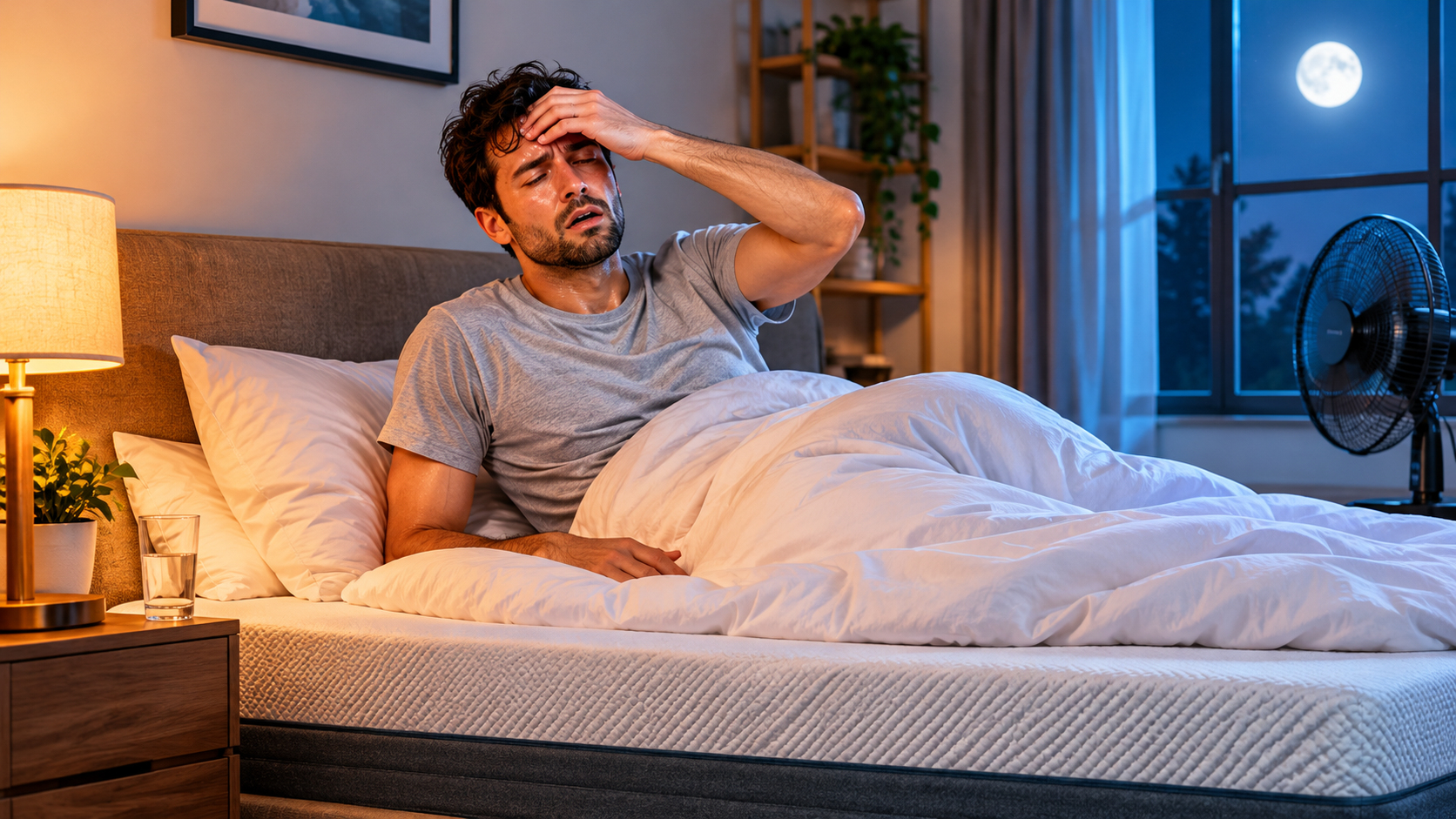
| Heat | Often sleeps cooler, depends on design | Can retain more heat |
| Motion isolation | Moderate to good | Usually very good |
| Changing position | Easier | Can feel "stuck" |
How to Check GOLS, GOTS, GREENGUARD Gold, and CertiPUR-US
Most people ignore this part, and it is where marketing does its best work. Each label covers something different:
- GOLS (Global Organic Latex Standard): organic latex supply-chain and product requirements. It covers the latex, not the whole bed.
- GOTS (Global Organic Textile Standard): organic textile processing and supply chain, relevant to covers, wool and cotton.
- GREENGUARD Gold: chemical emissions and indoor air quality. It does not prove a product is organic.
- CertiPUR-US: qualifying polyurethane foam characteristics. It is not an organic certification.
Ask which exact model and component the certificate covers, then check the certifier's public database. Some brands certify the finished product, others only the latex or the cover. Brands such as Avocado state that finished-product GOTS certification can be checked in the GOTS database, which is the kind of transparency to look for.
How Mattress Support and Pressure Relief Affect Back Comfort
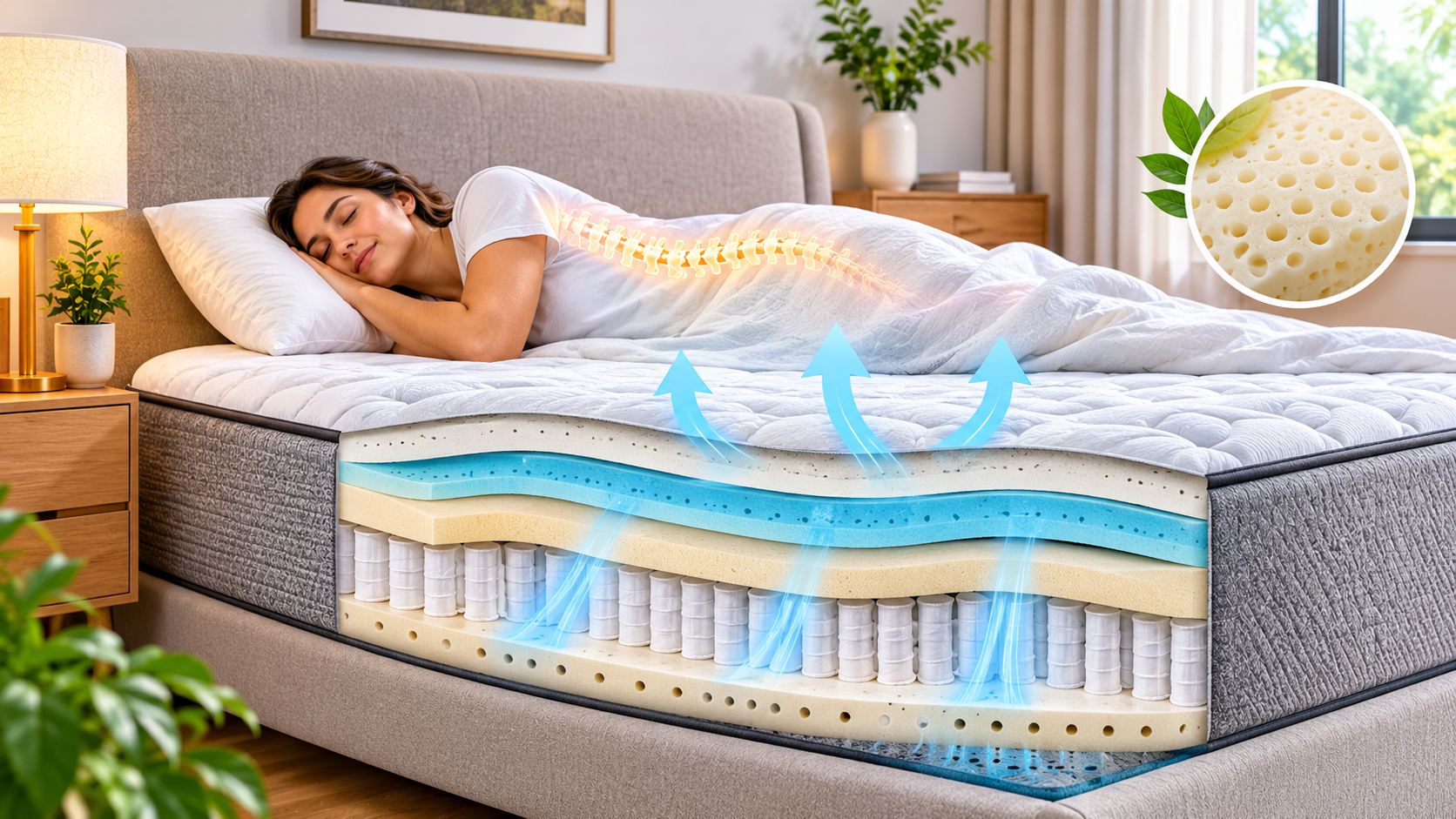
Support is about keeping your spine in a comfortable position. Pressure relief is about the surface cushioning your shoulders, hips and heels. You need both. This is about comfort, not treatment: bodies respond differently, and the same mattress can feel great to one person and awful to another.
Why the Right Firmness Matters More Than a Label
Transparency matters here. I have not lab-tested these mattresses, and I will not pretend otherwise. What I did was read current specifications, certification claims, trial terms and independent reviews side by side, then compare the construction details.
The pattern is consistent. Brands describe the same firmness in different words, and a "medium" from one maker can feel nothing like another's. Where I cite a spec, treat it as the brand's or a reviewer's statement, not my own test result.
Best Firmness for Side, Back, and Stomach Sleepers
- Side sleepers: look for cushioning at the shoulders and hips so your spine stays level.
- Back sleepers: check for comfortable support and make sure your hips do not sink excessively.
- Stomach sleepers: avoid surfaces that let your midsection dip too far.
- Combination sleepers: prioritise easy movement and pressure relief in every position.
These are starting points, not medical prescriptions.
How Body Weight Changes the Feel of a Mattress
A lighter person may find a "medium-firm" mattress feels firm because they barely compress the top layer. A heavier person may push through the comfort layer and feel the core. That is why the same bed gets opposite reviews.
Before buying, check:
- Total thickness and comfort-layer depth.
- Whether the manufacturer gives weight guidance.
- Whether firmness can be adjusted or exchanged.
- Whether you and a partner weigh very differently.
The Best Organic Foam Mattress Options to Compare
I chose these five because they are well-known brands with published construction and certification details. They are comparison starting points, not rankings. Do not assume every model from a brand shares the same materials, because they do not.
Also, these are mostly US brands with US pricing. Before falling in love with one, confirm delivery to Portugal or the UK, import costs and how returns work from abroad.
Mattress Comparison Table
| Product | Type and firmness | Certifications (as stated by brand or reviewers) | Feel and temperature | Trial and warranty (as reported) | Price from (USD, approx.) | Best for and main limitation |
| Avocado Green | Latex hybrid, gentle-firm | GOLS latex, GOTS, GREENGUARD Gold | Bouncy, breathable | Up to 365 nights, 25 years | 1,399 | Back and stomach sleepers. Firm side may not suit petite side sleepers. |
| Naturepedic Serenade | Latex hybrid, firm, cushion-firm or plush | GOTS, GOLS latex, GREENGUARD | Contouring, moderate bounce | 100 nights, 25 years in recent listings | 1,399 | Sleepers wanting firmness choice. Older reviews cite shorter terms, so verify. |
| PlushBeds Botanical Bliss | All-latex, medium or medium-firm | Organic latex, wool and cotton claims | Cool-ish, good motion isolation reported | 100 nights with 30-night break-in, 25 years | 2,849 MSRP, often discounted | Customisable layers. Very heavy and not cheap. |
| Sleep On Latex Pure Green | All-latex, 8", medium or firm | GOLS latex, GOTS cover | Buoyant, breathable | Check current trial, 10-year warranty | Check current | Simple all-latex value. Shorter warranty than rivals. |
| Saatva Latex Hybrid | Latex hybrid, medium-firm only | GOLS on latex only, GREENGUARD Gold | Responsive, zoned lumbar coils | Saatva states 365 nights, lifetime warranty | 1,595 MSRP | Bounce lovers. Only the latex is GOLS-certified. |
Trial and warranty terms differ between sources and change with promotions. Edge support, available sizes and return fees also vary by model, so read the current terms page before ordering.
Pros and Cons of Natural Latex Mattresses
Pros:
- Responsive and resilient, so changing position is easier.
- Often durable, with plenty of certified organic options.
- Generally breathable compared with dense foam.
Cons:
- High upfront cost.
- Heavy, so turning or moving it is a chore.
- Feels different from memory foam, which some people dislike.
- A concern if you have a latex allergy.
Performance depends on the whole design, not the latex alone.
Organic Latex vs Memory Foam vs Organic Hybrid
- All-latex: buoyant, easy to move on, heavier, no coils.
- Memory foam: deep contouring and quiet motion, but slower response and potentially warmer.
- Organic hybrid: latex over coils, usually more bounce, airflow and edge support.
There is no universal winner without comparable evidence. Side sleepers who love a hug may lean towards contouring foam. Back sleepers who dislike sinking often prefer responsive latex.
What Most Mattress Reviews Miss About Certifications and Value
Honestly, many reviews blur verified facts and brand marketing. A certification, a warranty and a return policy are three separate promises. Judge them separately.
A long warranty usually covers defects such as sagging beyond a set depth. It does not cover your body deciding the mattress no longer suits you. Only the trial period protects you there.
How to Calculate Long-Term Mattress Value
Add up the purchase price, delivery, setup, return shipping if you send it back, and likely replacement cost. Divide by the years you expect to use it. That gives you a cost per year.
Hypothetical example, with assumed figures only: Mattress A costs £2,200 with free delivery and is assumed to last 12 years, about £183 per year. Mattress B costs £1,400 plus £120 delivery and is assumed to last 7 years, about £217 per year. These are illustrations, not verified lifespans.
Mattress Foundation, Thickness, and Layer Construction
- Check slat spacing, foundation compatibility and ventilation.
- Confirm weight limits, because latex is heavy.
- Ask whether adjustable beds are approved by the manufacturer.
- Understand the layers: comfort layers cushion, the support core keeps you level.
Thickness alone does not guarantee better support. A tall mattress on a poor base still sags.

A Step-by-Step Guide to Choosing the Right Mattress
Quick answer: choose by sleeping position, set a budget, verify materials, compare construction, then test at home. Here is the process in order.
- Step 1: Identify your sleeping position, pressure points and preferred firmness. Note whether you change position often.
- Step 2: Set a realistic budget and list non-negotiables. Include delivery, removal and return costs.
- Step 3: Verify materials. Ask for model-specific documentation and check what each certificate covers. Ask about adhesives and synthetic components.
- Step 4: Compare support, pressure relief and temperature by construction, not adjectives. Use independent testing where the method is transparent.
- Step 5: Test at home. Read trial conditions first, follow break-in advice, and track morning comfort, temperature and movement for several weeks. Return it inside the window if it does not suit you.
Beginner Mistakes That Lead to the Wrong Purchase
- Buying the firmest mattress because of back pain. Fix: try medium-firm and test at home.
- Assuming all natural latex is certified organic. Fix: ask for the certificate.
- Mixing up low-emission and organic labels. Fix: read what each certification covers.
- Ignoring the cover, adhesives and blended components.
- Trusting star ratings without checking the product version.
- Missing return fees, foundation rules and warranty exclusions.
- Expecting a mattress to diagnose or cure a medical condition.
This is where things get real: the expensive mistakes are rarely about foam. They are about skipped small print.
Real-Life Scenarios: Which Organic Mattress Might Suit You?
- Side sleeper with shoulder pressure: prioritise cushioning and alignment, perhaps a softer comfort layer.
- Back sleeper who hates sinking: look at responsive latex and medium-firm feel.
- Hot sleeper: compare breathable construction and covers. Warm Algarve summers make this a bigger deal.
- Couple with different preferences: investigate split firmness, motion isolation and trial policy.
- Eco-conscious buyer: verify component-level certifications and supply-chain claims.
- Budget-conscious shopper: compare total cost, returns and material transparency.
If you would rather feel a mattress in person than ship one from overseas, a local specialist helps. Also read: Best bed and mattress company in portugal
Tools and Methods for Making a More Confident Decision
- Certification databases: check current claims against the certifier's records.
- A comparison spreadsheet: price, materials, firmness, trial and warranty side by side.
- Manufacturer pages: current specs and exclusions.
- Independent testing: favour transparent methods and comparable measurements.
- A sleep diary in your phone notes: pain on waking, temperature, movement.
AI vs Human Mattress Advice
AI tools can organise specifications and draft comparison questions. They cannot verify a certificate for you, so check any AI-generated fact against primary documents.
Retail specialists can explain construction and let you feel the mattress. Healthcare professionals assess persistent or worrying back symptoms. Use all three for what each does best.
What to Do If Your Mattress Makes Your Back Feel Worse
First rule out the obvious: a worn foundation, loose slats, visible sagging or a mattress that is simply too old. Give a new mattress the manufacturer's break-in period before judging it.
A topper can fix a minor comfort mismatch. If the problem is poor support, a topper only masks it, and replacing the mattress may be more practical.
See a doctor if pain is persistent or worsening. Seek urgent assessment for new bladder or bowel problems, numbness in the saddle area, or progressive leg weakness.
Frequently Asked Questions About Organic Foam Mattresses
Is an organic latex mattress better than memory foam for back pain?
Neither is proven better. Latex is more responsive and easier to move on, while memory foam contours more deeply. Choose on feel, support and sleeping position.
Is medium-firm always best for lower back pain?
No. Medium-firm did well in one notable trial, but comfort and construction vary. Test it yourself.
Can an organic mattress contain synthetic materials?
Yes. Many include coils, adhesives or blended parts. Ask for a full materials disclosure.
How can I verify that a mattress is genuinely organic?
Ask for model-specific certificates, find the certificate number, check it in the certifier's database, and confirm whether it covers the latex, textiles or finished product.
How long does a natural latex mattress last?
It varies with construction, use, care and manufacturer guidance. Treat warranty length as a guide to defect cover, not a lifespan promise.
Is a mattress topper enough to improve comfort?
For surface softness, sometimes. It cannot repair inadequate underlying support.
Can natural latex help hot sleepers?
It can, thanks to its open structure, but the cover and overall design matter as much as the latex.
When should I seek professional advice for back pain?
When pain persists, worsens or comes with warning signs such as bladder or bowel changes, saddle numbness or leg weakness.
Is a firm mattress better for back pain?
Not automatically. Too much firmness can create pressure points.
Is memory foam ever organic?
I am not aware of a widely recognised organic certification for conventional memory foam, so treat such claims cautiously.
How long should I test a new mattress?
Give it several weeks, as your body adjusts. Just do not run past the trial window.
Your Final Buying Checklist: Choose Based on Evidence, Not Marketing
The best organic foam mattress for back pain is the one that suits your body, has claims you can verify and comes with a fair trial. Do this next:
- Confirm materials and certifications for your exact model.
- Match firmness and construction to your position and weight.
- Check foundation compatibility and size.
- Compare trial, return fees, warranty and total cost.
- Read credible testing, including its limitations.
- Book a doctor's visit if pain persists.
Transparency note: no brand paid for placement here, and the Portuguese retailer link above is a commercial recommendation, so weigh it accordingly. Spotted an error or outdated detail? Tell me and I will correct it.