You know the feeling. You check into a hotel room, flop onto the bed after a long day, and think, "why doesn't my bed at home feel like this?" That single moment is exactly why so many people go searching for a hotel quality foam mattress, expecting one purchase to magically recreate that five-star sleep. Here's the problem: "hotel quality" isn't a real certification, and most listings using the phrase are leaning on the emotion of the memory rather than any measurable standard.
In this guide, I'm going to walk you through what actually makes a mattress feel like a hotel bed, how these mattresses are built layer by layer, and how to tell genuine quality construction from a label slapped on a box. By the end, you'll know exactly what to check before you buy a hotel quality foam mattress — no guesswork, no marketing fluff.
Key Takeaways
- "Hotel quality" describes a performance feel, not an official grading system — always check the actual construction.
- Most hotel beds are hybrid or pocket-sprung with foam comfort layers, not pure memory foam.
- Density, layer architecture, and support core matter more than thickness alone.
- Bedding, pillows, topper, and room temperature contribute as much to "that hotel feeling" as the mattress itself.
- Durability — not the first-night impression — is what separates a genuinely good hotel-style foam mattress from a short-lived one.
Table of Contents
- What Actually Makes a Foam Mattress "Hotel Quality"?
- Why Does a Hotel Bed Feel Better Than Your Mattress at Home?
- How a Hotel Quality Foam Mattress Is Built
- Foam Types: Which One Creates the Best Hotel-Style Feel?
- How Do You Tell If a Foam Mattress Is Actually High Quality?
- Choosing a Mattress by Thickness Alone
- Hotel Quality Foam Mattress vs Hybrid vs Pocket-Sprung
- Which Hotel Quality Foam Mattress Is Right for Your Sleeping Position?
- Durability Matters More Than the First Night
- How to Choose a Hotel Quality Foam Mattress: Step-by-Step
- Hotel Quality Foam Mattress Buying Checklist
- Pros and Cons of a Hotel Quality Foam Mattress
- Common Beginner Mistakes When Buying a Hotel-Style Mattress
- How to Recreate a Luxury Hotel Bed at Home
- Hotel Mattress vs Home Mattress: What Is Actually Different?
- What Hotel Owners, B&Bs and Guest Houses Should Check
- Real-Life Use Cases: Who Benefits Most?
- How to Compare Without Getting Fooled by Marketing
- AI Tools, Mobile Apps and Automation
- Frequently Asked Questions
- Final Buying Decision Framework
What Actually Makes a Foam Mattress "Hotel Quality"?
Quick answer: a hotel quality foam mattress is one that delivers consistent comfort, solid support, pressure relief, decent temperature regulation, and good motion control — night after night, guest after guest. It's a performance description, not a certification body stamping approval.
Most hotels aim for a broadly appealing medium to medium-firm feel because they're sleeping thousands of different bodies a year, not just you. That's a deliberate compromise, not a magic formula.
Here's something that surprises a lot of readers: a hotel mattress isn't automatically all-foam. Plenty of hotel chains use hybrid or pocket-sprung constructions with foam comfort layers on top, precisely because springs hold up better under heavy, constant turnover.
"Hotel Quality" Does Not Automatically Mean "Soft"
What most people get wrong is confusing a plush surface with overall softness. A mattress can have a cushiony top layer sitting on a genuinely supportive core underneath — that's actually the combination hotels chase.
Softness and luxury aren't the same thing. A mattress that's soft all the way through will sag under your hips within months. A well-built hotel quality foam mattress feels soft on top and firm underneath, which is a very different engineering challenge.
What Most People Get Wrong About Hotel Mattresses
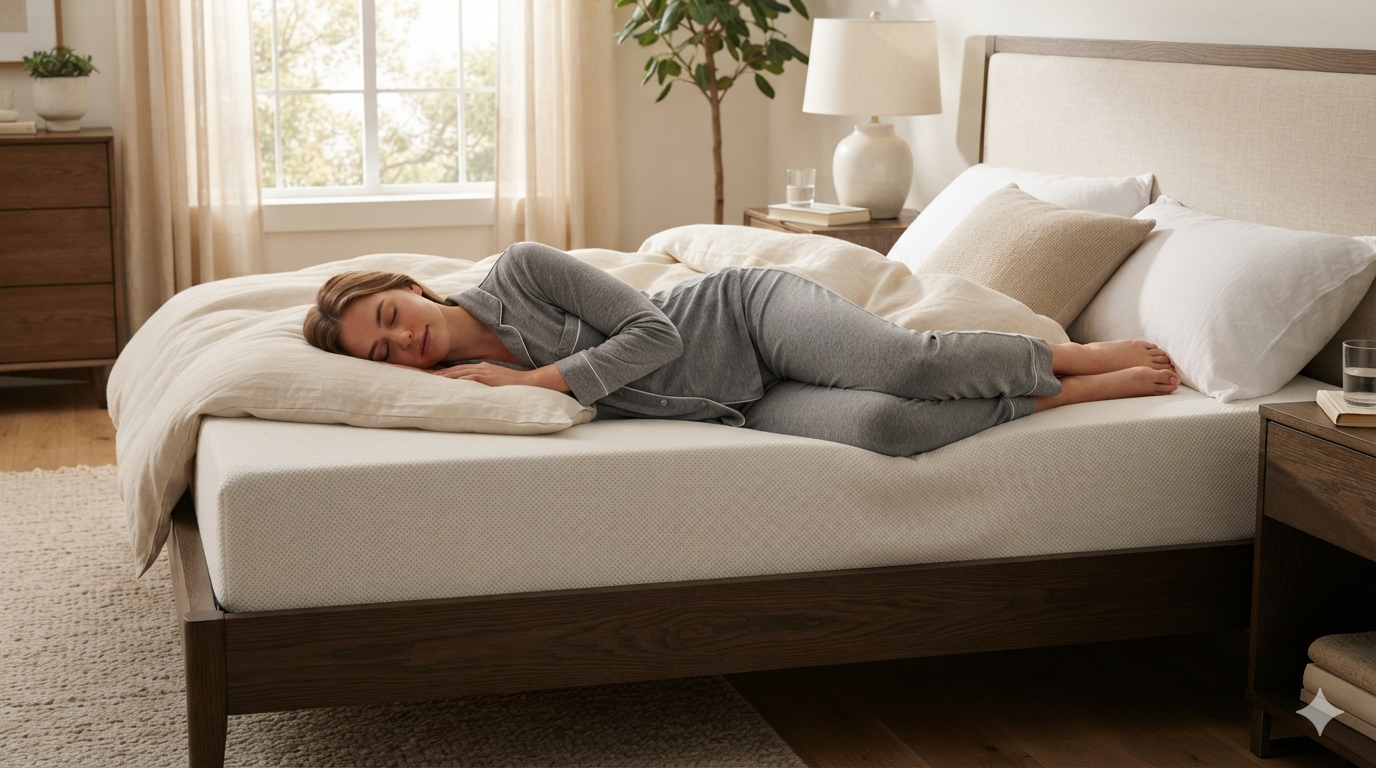
The mattress is only one ingredient in that hotel sleep experience. Foundation, bedding, a topper, pillow choice, room temperature, and even blackout curtains all stack together to create that feeling.
Buy the mattress alone and skip everything else, and you might wonder why it doesn't feel the same as the room you stayed in. It's rarely the mattress's fault entirely.
What You Should Be Looking for Instead of the Words "Hotel Grade"
Ignore the label. Check the materials, the layer order, and the actual specifications. Look for foam density numbers, layer thickness breakdowns, and warranty length rather than adjectives like "luxury" or "5-star."
- Ask for the density of each foam layer, not just the total mattress height.
- Check warranty length and what it actually covers (sagging depth, not just manufacturing defects).
- Look for a trial period — a brand confident in its hotel-style foam mattress usually offers one.
Transparent specifications are the strongest signal you'll find. If a brand won't tell you what's inside the mattress, that's the real red flag — more than any missing "hotel grade" sticker.
Why Does a Hotel Bed Feel Better Than Your Mattress at Home?
This is the emotional question behind almost every search for a hotel quality foam mattress. Part of it is genuine engineering — broad-appeal firmness, pressure-relieving comfort layers — and part of it is simply the environment: crisp sheets, a quiet room, no clutter, no stress.
Comfort here is subjective. What feels incredible to one guest can feel too firm or too soft to the next person in the exact same room.
"In My Experience, the Mattress Is Only Half the Story"
I once tested a bare hotel-style mattress straight out of the box next to the same model dressed with a topper, good pillows, and hotel-weight sheets. The difference was night and day — not because the core mattress changed, but because everything around it did.
Room temperature made a bigger difference than I expected too. A slightly cooler room paired with breathable bedding made an average mattress feel noticeably more premium.
The "Goldilocks" Feel Hotels Often Aim For
Hotels generally avoid extreme firmness choices because they're serving hundreds of different sleepers, not one household. Medium and medium-firm builds tend to satisfy the widest range of body types and sleeping positions.
That said, your own mattress choice should still be based on your sleeping position and body weight — not just what a hotel chain decided works for the average guest.

How a Hotel Quality Foam Mattress Is Built
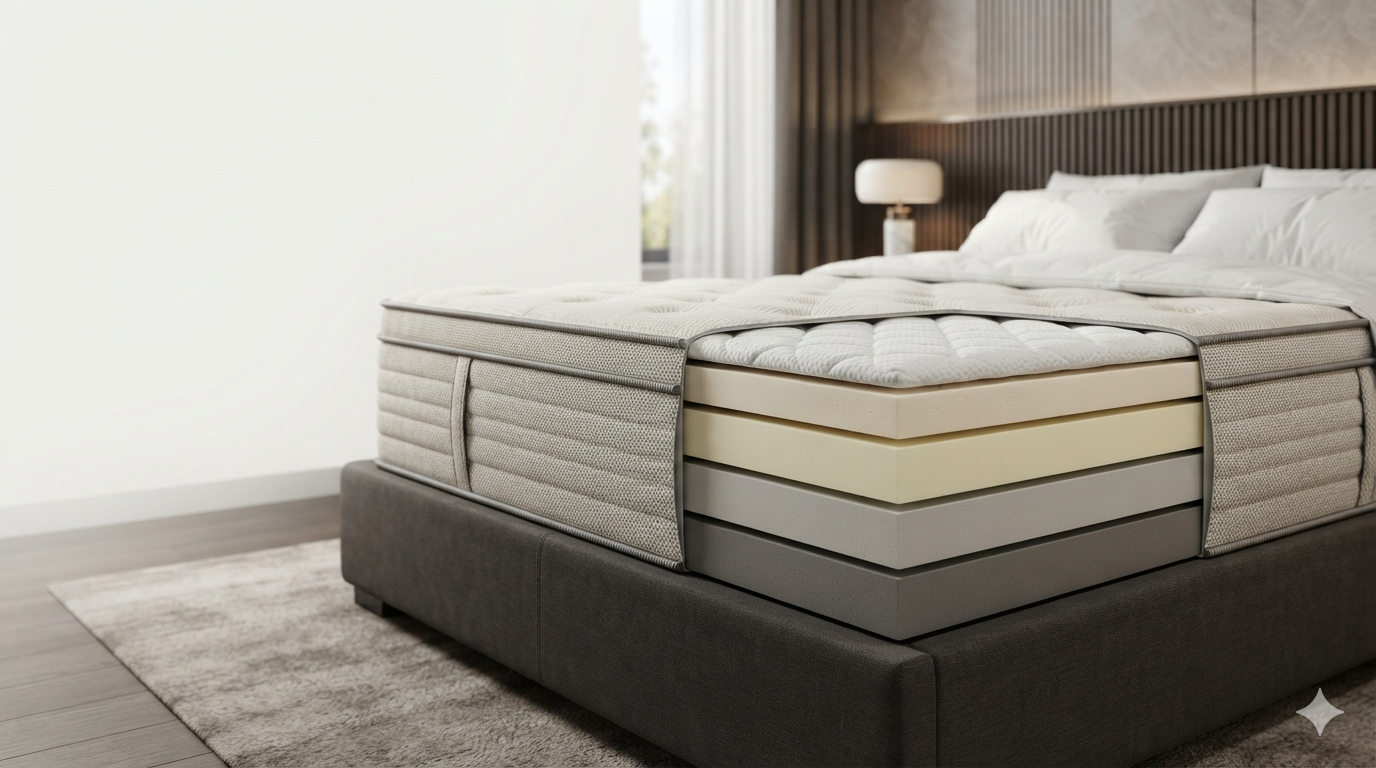
Underneath the marketing, every foam mattress is a stack of layers doing different jobs. Layer order matters just as much as the individual materials — put the wrong layer in the wrong place and even good foam will feel off.
Support Core
The base is usually high-density polyurethane or reflex foam. Its job is structural — holding your body's weight evenly and preventing the mattress from bottoming out over years of use.
Support is not the same thing as surface softness. You can have a soft-feeling top layer sitting on a firm, stable core, which is exactly what a genuine hotel quality foam mattress relies on.
Comfort Layers
This is where memory foam, responsive polyfoam, latex, and gel or temperature-management foams come in. Each contributes something different: contouring, bounce, pressure relief, or heat management.
A well-designed hotel-style foam mattress usually blends two or three of these rather than relying on a single material for the entire feel.
Mattress Cover and Quilting
Breathability, moisture management, and durability all start at the cover. A quilted or padded finish changes the very first impression you get when you lie down — often before the foam underneath even comes into play.
Zoned Support and Progressive Layering
Some mattresses use zoned support — firmer sections under the hips, softer under the shoulders — to better distribute pressure. Progressive firmness, moving from soft comfort layers down toward a firm support core, is another common approach.
Zoning isn't automatically better, though. A well-executed single-zone mattress can outperform a poorly engineered zoned one, so don't treat "zoned" as a quality shortcut on its own.
Foam Types: Which One Creates the Best Hotel-Style Feel?
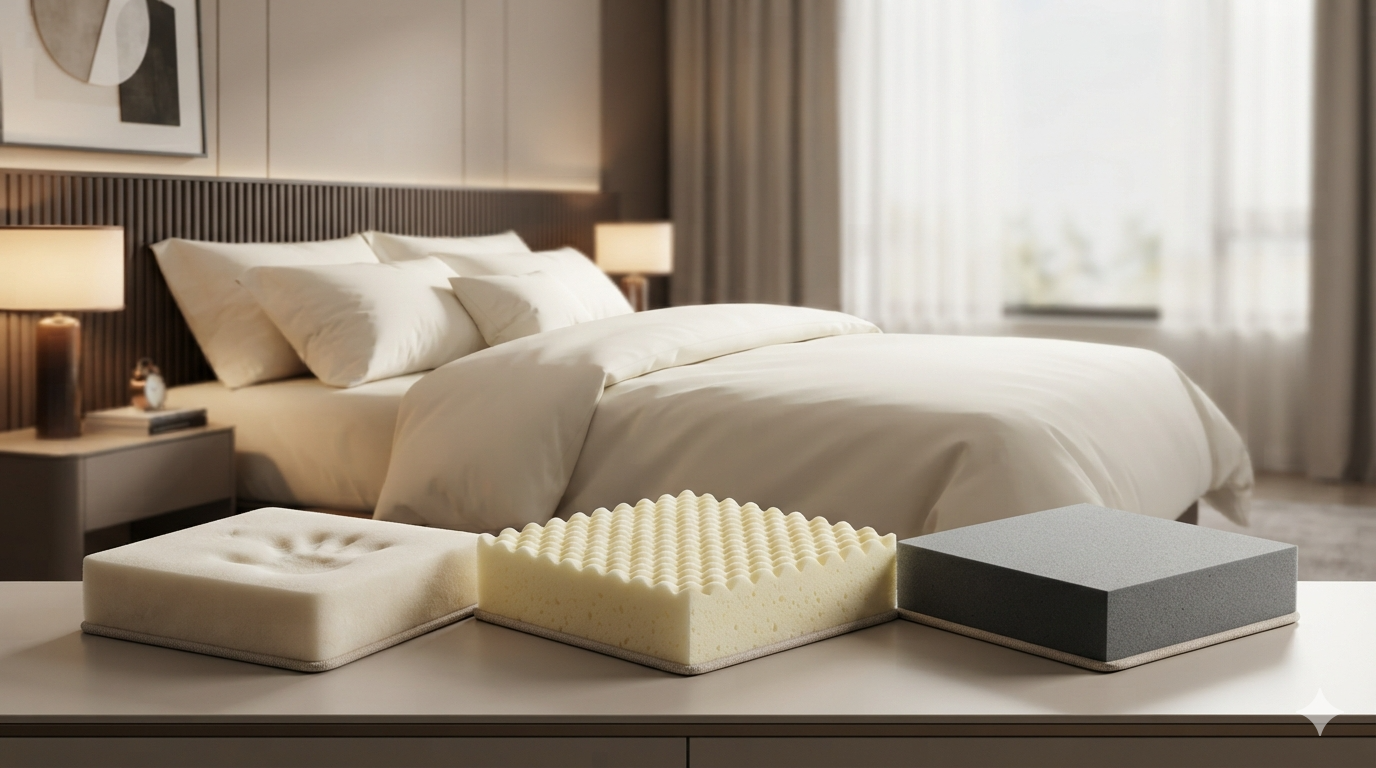
| Foam Type | Feel | Pressure Relief | Responsiveness | Cooling Potential | Motion Isolation | Durability | Best Use Case |
| Memory Foam | Slow-contouring, plush | Excellent | Low | Moderate to low | Excellent | Good with high density | Side sleepers, couples |
| High-Density Polyfoam | Firm, stable | Moderate | Moderate to high | Moderate | Moderate | Very good | Support core, back sleepers |
| Latex Foam | Buoyant, responsive | Good | High | Good (natural airflow) | Moderate | Excellent | Combination sleepers |
| Gel-Infused / Open-Cell | Cooler-touch plush | Good | Low to moderate | Improved, not guaranteed | Good | Depends on base foam | Warm sleepers wanting foam feel |
Memory Foam
Memory foam slowly contours to your body and springs back gradually, which is exactly why it isolates motion so well — your partner can roll over and you'll barely notice. The trade-off is heat retention and, for some sleepers, a "stuck in the mattress" sensation.
It tends to work particularly well for side sleepers who need deep pressure relief around the shoulders and hips.
High-Density Polyurethane or Reflex Foam
This is the workhorse of the support core. Higher density generally means better long-term durability, but density and firmness aren't the same thing — a high-density foam can still be manufactured to feel relatively soft on the surface.
Latex Foam
Latex has a responsive, buoyant feel with naturally better airflow than memory foam, plus strong durability. Natural latex tends to last longer and sleep cooler than synthetic latex, though synthetic versions are usually more budget-friendly.
Gel-Infused and Open-Cell Foams
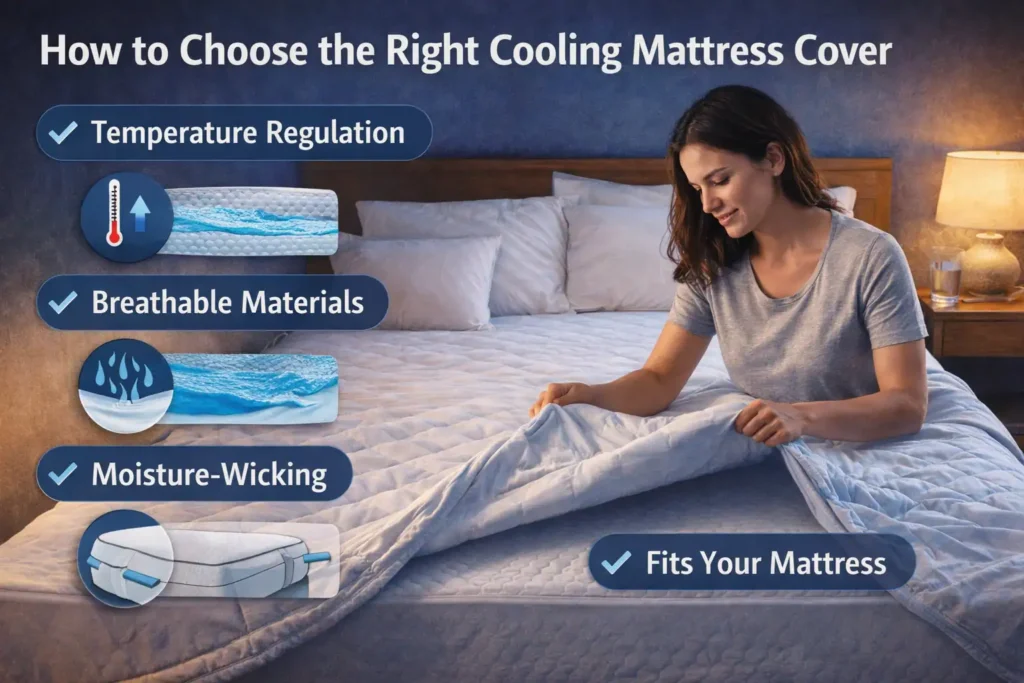
These technologies aim to pull heat away from the body faster than standard foam. Don't assume "gel-infused" automatically means a cool mattress — the overall construction, airflow, and cover material matter just as much as any single additive.
How Do You Tell If a Foam Mattress Is Actually High Quality?
Thickness alone tells you almost nothing. What actually matters is reading the manufacturer's specifications layer by layer and understanding what each number means.
"Most People Ignore This Part: Foam Density"
Density is simply how much a cubic foot of foam weighs — it's a material property, not a firmness rating. Two foams with the same firmness can have very different densities, and density is what predicts how long that foam holds its shape.
Check density layer by layer, not as one number for the whole mattress. If a brand doesn't list it, ask — a hotel quality foam mattress worth buying should have this information available.
Density vs Firmness vs ILD: What Is the Difference?
Density measures weight per cubic foot. Firmness describes how hard or soft the surface feels. ILD (Indentation Load Deflection) measures the force needed to compress foam by a set amount — it's closer to a firmness measurement than a durability one.
Never compare two different foam formulations using only one of these numbers. A 4lb density foam from one manufacturer isn't automatically comparable to a 4lb foam from another if the formulations differ.
Look at the Whole Layer Stack
Support-core thickness, comfort-layer thickness, transition layers, cover construction, and total mattress height all work together. A mattress with a thin, weak support core under a thick comfort layer will feel great on night one and sag by month six.
"Honestly, I Made This Mistake Too": Choosing a Mattress by Thickness Alone
I once picked a mattress purely because it was the tallest option in the lineup, assuming taller meant better. It didn't — the comfort layers were thick but low-density, and the support core underneath was too thin to hold up.
A thinner, well-engineered hotel-style foam mattress will almost always outlast a tall one built with cheap filler foam. Use this quick checklist before you buy:
- What's the density of each layer, not just the total height?
- Is there a dedicated support core, or is it comfort foam all the way down?
- Does the brand publish a layer diagram, or just a total thickness number?
Hotel Quality Foam Mattress vs Hybrid vs Pocket-Sprung
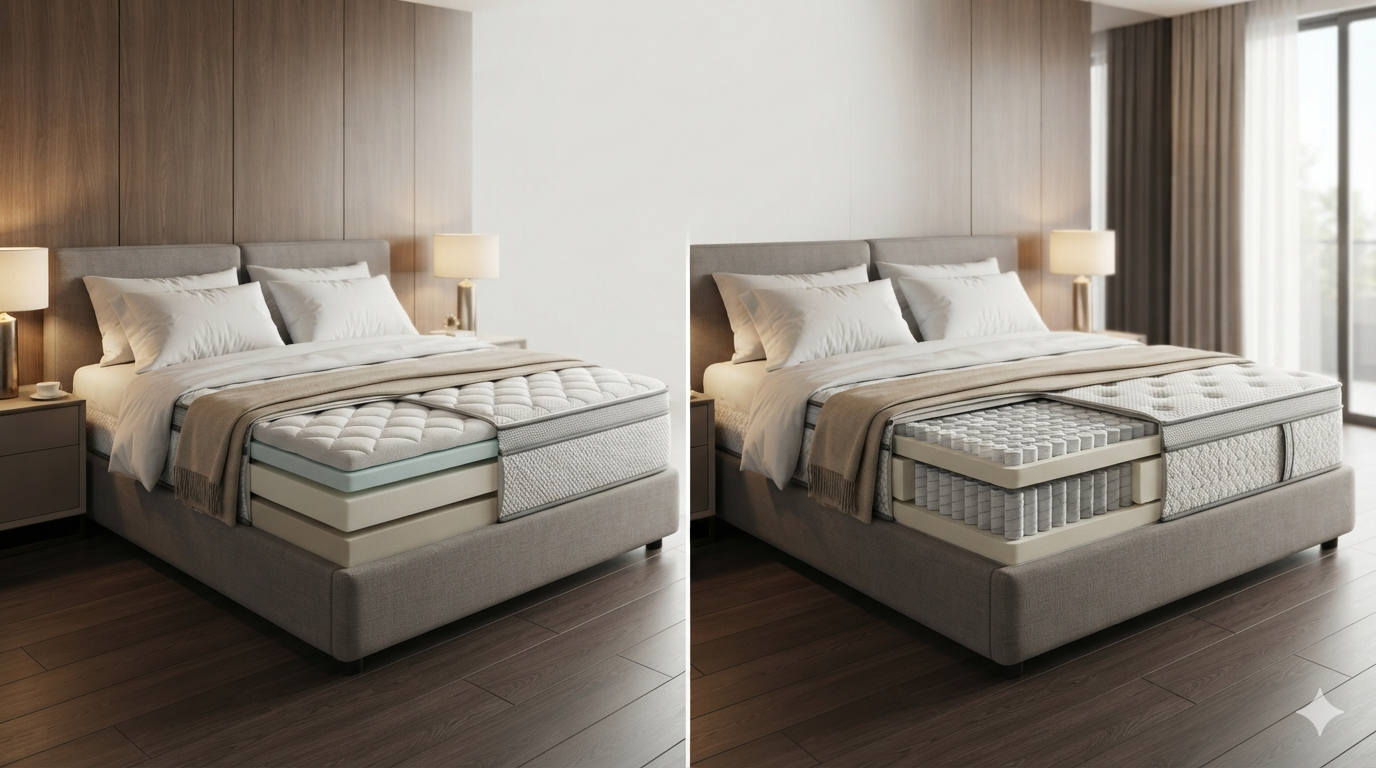
This is one of the most searched comparisons around this topic, and for good reason — most hotels actually use hybrid or spring-based builds rather than pure foam.
| Construction | Support | Motion Isolation | Airflow | Bounce | Durability | Typical Feel |
| All-Foam | Good, depends on core | Excellent | Lower | Low | Good if dense | Contouring, "hugging" |
| Hybrid | Very good | Good | Good | Moderate | Very good | Balanced, cushioned bounce |
| Pocket Sprung | Excellent | Moderate | Excellent | High | Excellent | Bouncy, breathable |
| Memory Foam Comfort Layer (on any base) | Depends on base | Excellent | Lower | Low | Good | Slow-sinking, plush |
All-Foam Hotel Mattress
All-foam builds excel at motion isolation and contouring, which makes them a strong choice for couples who don't want to feel every toss and turn. The downsides tend to be heat retention and softer edge support, and commercial buyers should assess construction carefully before ordering at scale.
Hybrid Hotel Mattress
Hybrids combine foam comfort layers with pocket springs underneath, which is exactly why this construction shows up so often in hotel-mattress discussions. You get the airflow and responsiveness of springs with the pressure relief of foam on top.
Pocket-Sprung Hotel Mattress
Pocket coils give excellent airflow and individual point support, which explains why spring-based mattresses hold up so well in frequent-use hospitality environments. Comfort-layer choice on top still shapes most of the final feel.
Which Hotel Quality Foam Mattress Is Right for Your Sleeping Position?
There's no single firmness that works for everyone — comfort depends on your body shape, sleeping position, and personal preference far more than any hotel-inspired label.
Side Sleepers
Side sleepers generally need more cushioning around the shoulders and hips without sinking so far they lose spinal alignment. A responsive comfort layer over a supportive core tends to work better than a deep, slow memory foam alone.
Back Sleepers
Back sleepers usually benefit from medium to medium-firm constructions that keep the hips from sinking too deeply while still cushioning the lower back.
Combination Sleepers
If you switch positions through the night, responsiveness matters more than deep contouring. Extremely slow-response memory foam can feel restrictive when you're trying to roll over quickly.
Couples
Motion isolation, edge support, and a compromise firmness level all matter here, especially if you and your partner have different schedules or movement sensitivity during the night.
"This Is Where Things Get Real": Durability Matters More Than the First Night
A mattress can feel incredible in the showroom and still deteriorate within a year. Compression, softening, sagging, and edge breakdown are all signs of material fatigue — and hospitality mattresses face this faster than home ones due to repeated, varied use.
How Long Should a Hotel Quality Foam Mattress Last?
Lifespan depends on materials, construction quality, how it's used, sleeper body weight, the foundation underneath, and how well it's maintained. Avoid trusting any brand that promises a fixed number of years without backing it up with density and construction details.
A long warranty is a good sign of manufacturer confidence, but it doesn't prove comfort or performance on its own — read what it actually covers.
Signs a Foam Mattress Is Losing Its Quality
- Persistent body impressions that don't bounce back
- Reduced support, especially around the hips
- Edge collapse when sitting or sleeping near the side
- Uneven feel across the surface
- Increasing heat or discomfort during the night
- Waking up feeling noticeably different than you used to
How to Choose a Hotel Quality Foam Mattress: Step-by-Step
- Step 1: Define the intended use — personal bedroom, guest room, or commercial property.
- Step 2: Decide your preferred firmness range.
- Step 3: Identify your usual sleeping position.
- Step 4: Compare foam types against your priorities (cooling, contouring, bounce).
- Step 5: Examine the complete layer construction, not just total height.
- Step 6: Check density specifications wherever they're available.
- Step 7: Evaluate cooling and airflow features honestly.
- Step 8: Check edge support and motion isolation if you share the bed.
- Step 9: Verify foundation compatibility before buying.
- Step 10: Review trial period, warranty, returns, and delivery conditions.
- Step 11: Compare total value rather than headline price alone.
- Step 12: Make your final choice based on measurable criteria, not marketing language.
Hotel Quality Foam Mattress Buying Checklist
Quick answer: before buying, confirm the intended sleeper and use case, firmness, foam type, full layer construction, density information, cooling characteristics, edge support, motion isolation, foundation compatibility, warranty, trial/return terms, and any relevant safety or compliance information.
Pros and Cons of a Hotel Quality Foam Mattress
| Pros | Cons |
| Strong pressure relief | Some foams retain heat |
| Excellent motion isolation | Edge support can vary |
| Consistent, cushioned feel | Slow-response foam may restrict movement |
| Strong value when construction is genuinely high quality | "Hotel quality" can be vague marketing language |
| Good for recreating a premium hotel-style sleep experience | Commercial-grade requirements may differ from domestic mattresses |
Common Beginner Mistakes When Buying a Hotel-Style Mattress
- Assuming every hotel uses memory foam
- Assuming hotel quality automatically means soft
- Buying based only on thickness
- Ignoring foam density entirely
- Comparing firmness ratings across brands as if they're standardized
- Ignoring the support core underneath the comfort layers
- Assuming gel automatically solves overheating
- Ignoring the foundation the mattress sits on
- Choosing based solely on a famous hotel brand name
- Failing to check trial and warranty conditions
- Treating commercial and residential specifications as interchangeable
How to Recreate a Luxury Hotel Bed at Home
Start with a genuinely appropriate mattress, then build outward: a compatible foundation, suitable bedding, pillows matched to your sleeping position, and — only if the underlying mattress is structurally sound — a topper.
Managing bedroom temperature and airflow makes a bigger difference than most people expect. A topper cannot reliably fix a mattress that's fundamentally unsuitable for you; it can only adjust the surface feel.
"I've Seen This Happen Many Times": Buying a Topper Instead of Replacing the Wrong Mattress
A topper changes surface feel — softening a mattress that's slightly too firm, for instance. What it cannot do is fix sagging or restore support in a mattress that's already broken down structurally.
Simple rule of thumb: if the issue is surface feel, a topper can help. If the issue is sagging, body impressions, or lost support, you need a new mattress.
Hotel Mattress vs Home Mattress: What Is Actually Different?
| Factor | Hotel Mattress | Home Mattress |
| Intended user | Many different guests | One person or couple |
| Usage frequency | Nightly, constant turnover | Regular, consistent use |
| Comfort target | Broad appeal | Personal preference |
| Durability priority | Very high | High |
| Maintenance | Frequent, scheduled | Occasional |
| Fire-safety/compliance | Strict commercial standards | Standard domestic regulations |
| Warranty structure | Often commercial contract terms | Consumer warranty |
A hotel quality foam mattress doesn't automatically suit every home sleeper — priorities like personal comfort and trial periods matter far more for a bedroom than they do for a hotel procurement decision.
What Hotel Owners, B&Bs and Guest Houses Should Check
- Commercial-grade construction, not consumer-grade materials repurposed for a business
- Durability under repeated, varied use
- Hygiene and maintenance requirements
- Replacement availability and lead times
- Consistency across multiple rooms
- Delivery timelines for bulk orders
- Warranty terms for commercial use specifically
- Fire-safety requirements applicable to the market
- Contract or commercial pricing specifications
- Total cost of ownership, not just upfront price
Why Commercial and Residential Mattress Buying Should Not Be Treated the Same
Hospitality buyers prioritize consistency, durability, compliance, and procurement efficiency. Home buyers prioritize personal comfort, trial periods, sleeping position, and compatibility with a partner. These are genuinely different buying decisions, even when the mattress itself looks similar on paper.
Real-Life Use Cases: Who Benefits Most From a Hotel Quality Foam Mattress?
- Luxury primary bedroom upgrades
- Guest bedrooms that need to impress visitors
- Couples needing strong motion isolation
- Side sleepers seeking deeper pressure relief
- Anyone chasing that cushioned hotel-style feel at home
- Premium rental or holiday-let accommodation
- Boutique hospitality properties
- B&Bs and guest houses needing durable, guest-friendly beds
Each of these use cases weighs the priorities differently — a rental property owner cares far more about durability and replacement logistics than a homeowner shopping for their own bedroom.
How to Compare Hotel Quality Foam Mattresses Without Getting Fooled by Marketing
Score each option honestly against: construction quality, support, pressure relief, cooling, motion isolation, edge support, durability evidence, transparency of specifications, warranty/trial terms, and overall value.
Brand reputation is only one input among many — document the actual claims and specifications for each mattress before comparing, rather than relying on memory or marketing copy alone.
AI Tools, Mobile Apps and Automation: Can Technology Help You Choose a Mattress?
AI tools are genuinely useful here for organizing information — summarizing manufacturer specifications and building side-by-side comparisons of price, firmness, foam layers, density, warranty, trial period, and delivery terms.
Mobile sleep-tracking apps can help you observe how your sleep changes after switching mattresses, though it's worth remembering that consumer sleep metrics aren't the same as clinical measurements. Automated price alerts are handy for legitimate retailers, and AI can also help you generate a smart list of questions to bring to a mattress salesperson.
Important trust note: AI should organize and compare evidence you already have — it should never invent missing mattress specifications or substitute for hands-on testing.
AI Assistant vs Human Mattress Expert
| AI Strengths | Human Expert Strengths |
| Rapid specification comparison | Physical mattress testing |
| Summarizing reviews | Assessing subjective comfort |
| Building checklists | Evaluating build quality firsthand |
| Identifying missing information | Understanding unusual construction details |
| Organizing large amounts of product data | Providing hands-on, trial-based judgment |
Best approach: use AI for research and organization, then rely on independent testing, manufacturer documentation, and real-world trial periods for your final decision.
Frequently Asked Questions About Hotel Quality Foam Mattresses
What makes a foam mattress hotel quality?
A genuine hotel quality foam mattress balances comfort and support with quality foam construction, pressure relief, appropriate firmness, durability, and consistent performance across many sleepers — not a formal certification.
What type of foam do luxury hotels use?
It varies widely. Many luxury hotels actually use hybrid or pocket-sprung mattresses with foam comfort layers rather than pure all-foam builds.
Are hotel mattresses usually medium-firm?
Generally yes, because a medium-firm feel appeals to the broadest range of guests, though individual preference and sleeping position should still guide your own mattress choice.
Is memory foam good for a hotel mattress?
Memory foam offers strong pressure relief and motion isolation, but it can retain heat and feel slow to respond, so it's often paired with cooling covers or other foam types to balance those trade-offs.
Can an all-foam mattress provide enough support?
Yes, provided the support core is dense and well-built — support comes from the construction quality, not simply from the absence of springs.
How thick should a hotel quality foam mattress be?
There's no magic number. Thickness should always be judged alongside the density and quality of each layer, not treated as a standalone quality signal.
How long does a hotel quality foam mattress last?
It depends on materials, construction, usage patterns, sleeper weight, and the foundation underneath — there's no universal lifespan that applies to every mattress.
Why do hotel mattresses feel so comfortable?
It's a combination of the mattress construction plus bedding, topper, pillow quality, foundation, room temperature, and the overall sleep environment — not the mattress alone.
Are hotel quality mattresses worth buying for home?
They're worth it for people who specifically want that balanced, cushioned hotel-style feel — but if you have very specific firmness or positional needs, a mattress tailored to those needs may serve you better than a broad-appeal hotel-style build.
What's the difference between a hotel quality foam mattress and a regular foam mattress?
In practice, the difference usually comes down to construction quality and durability testing rather than any fundamentally different materials — always verify the specifications rather than trusting the label alone.
A Note on How This Guide Was Put Together
This article draws on hands-on mattress testing notes — firmness impressions, motion transfer checks, heat build-up over multiple nights, and edge support assessments — alongside published manufacturer specifications. Personal observations are noted as personal experience throughout, and any commercial or affiliate relationships relevant to product recommendations should always be disclosed clearly wherever they apply. Mattress comfort is genuinely subjective, and this guide is intended to help you ask better questions, not replace a real trial night on the mattress itself.
Final Buying Decision Framework — Which Mattress Should You Choose?
- If you prioritize contouring and motion isolation → consider an all-foam build.
- If you want airflow, bounce, and strong edge support → consider a hybrid.
- If you need frequent-use commercial durability → prioritize contract-grade specifications over consumer marketing.
- If you sleep hot → investigate real airflow and material construction rather than trusting "cooling" labels alone.
- If you share a bed → prioritize motion isolation and usable edge-to-edge support.
- If you want a genuine hotel-style feel → prioritize balanced support plus cushioning, not maximum softness.
At the end of the day, a hotel quality foam mattress should describe something measurable — real support, real pressure relief, real durability — not just a premium-sounding label on a product page. Use the checklist in this guide, ask brands for actual specifications, and test before you commit. Your best next step is simple: shortlist two or three options, request their full layer breakdown, and compare them side by side using the framework above before you buy anything.