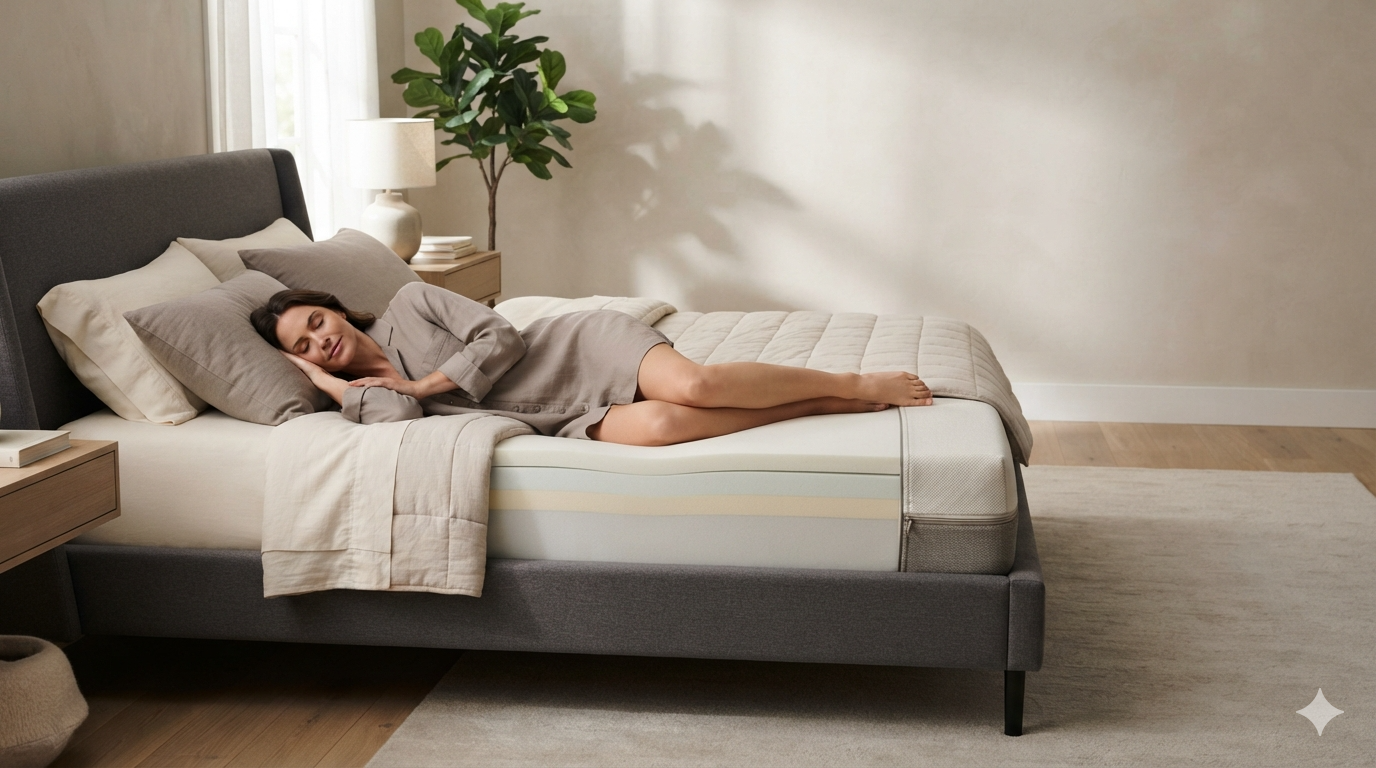
You wake up at 3am with a dead arm. You flip the pillow for the fourth time. Your partner rolls over and the whole bed moves. By 7am you feel like you've been negotiating with the bed rather than sleeping in it and somewhere in that fog you start wondering whether a foam mattress for better sleep is the fix everyone online says it is.
Honest answer from someone who has spent years watching people lie down on beds in a showroom: sometimes yes, sometimes no. It depends entirely on what's actually going wrong. This guide gives you the decision framework I use with customers, not a sales pitch.
Key Takeaways
- A suitable foam mattress may improve sleep comfort by reducing pressure points, absorbing partner movement and supporting your spine but the result depends on construction and on you.
- Firmness and support are not the same thing. The firmest bed in the shop is not automatically the healthiest one.
- Your sleeping position matters more than the brand name on the label.
- Heat is a construction issue, not a marketing word. Open-cell foams, breathable covers and hybrid builds behave differently from dense old-style memory foam.
- In the Algarve, bedroom temperature and ventilation can matter as much as the foam itself.
- A mattress is a comfort product, not a medical treatment. Persistent pain belongs with a healthcare professional.
Table of Contents
- Can a Foam Mattress Really Help You Sleep Better?
- What Actually Makes a Foam Mattress Comfortable?
- Honestly, I Made This Mistake Too: Choosing the Wrong Firmness
- Choose Your Foam Mattress Based on How You Actually Sleep
- One Mattress, Two Completely Different Sleepers
- Which Type of Foam Mattress Is Right for Better Sleep?
- Construction Matters More Than the Word "Foam"
- Why Does My Foam Mattress Feel Too Soft, Too Firm or Too Hot?
- Foam vs Pocket Sprung vs Hybrid: Which Fits Your Sleep Style?
- Your Bed Base Can Change How the Mattress Feels
- How to Choose a Foam Mattress for Better Sleep: A 10-Step Process
- In a Hot Climate, Foam Mattress Choice Gets More Complicated
- What Most People Get Wrong When Buying a Foam Mattress
- Real-Life Use Cases: Who May Benefit From a Foam Mattress?
- How to Test a Foam Mattress Without Fooling Yourself
- Mattress Toppers vs Replacing the Mattress
- Adjustment, Lifespan and Off-Gassing
- AI and Modern Mattress Shopping: How to Research Without Getting Misled
- Evidence vs Marketing: How to Judge "Better Sleep" Claims
- Pros and Cons of Foam Mattresses
- Quick Decision Guide
- Frequently Asked Questions
- The Bottom Line
Can a Foam Mattress Really Help You Sleep Better?
Quick answer: A suitable foam mattress may support better sleep by reducing pressure points, limiting partner movement and providing appropriate support but the effect depends on the mattress design and on the individual sleeper. It is not a guaranteed fix.
A mattress influences four things you actually feel at night: comfort, pressure distribution, how much you're disturbed by movement, and temperature. Change those four and your night can feel different. That's the realistic claim.
What a mattress does not do is treat a sleep disorder. If you snore heavily, wake gasping, or feel exhausted after eight uninterrupted hours, no foam layer fixes that. That's a conversation for your GP, not for a bed shop.
Mattress testing in 2026 whether done by review sites or by retailers like us keeps coming back to the same six criteria: pressure relief, temperature regulation, motion isolation, edge support, firmness and ease of movement. Those are the levers. Everything else is packaging.
Evidence box what research can and cannot establish:
- A 2023 field study of 25 adults reported improvements in several objective and self-reported sleep measures after participants switched to memory foam.
- The researchers themselves noted the need for more empirical research. Twenty-five people is a small sample and a field study is not a controlled trial.
- Earlier studies have produced mixed results depending on the mattresses used and the conditions tested.
- Reasonable conclusion: foam may help specific sleepers with specific complaints. Nobody has proven foam is universally better.
In My Experience, the Mattress Is Only One Part of the Sleep Problem
This is the part people don't want to hear when they've just spent a thousand euros. The bed sits inside a system pillow height, bedroom temperature, ventilation, bed base, bedding weight and your own comfort preferences all sit alongside it.
I've seen this happen many times. Someone replaces a sagging old mattress with a lovely medium-feel foam bed, keeps the same flat, collapsed pillow from 2014, keeps the bedroom shutters closed all day so the room holds 28°C, and then tells us the new mattress "doesn't work".
The mattress was fine. The neck angle was wrong and the room was a greenhouse. Change one variable at a time and you'll actually learn something.
What Most People Get Wrong About "Better Sleep"
- Better sleep does not mean the softest mattress. Soft feels wonderful for ninety seconds in a showroom and can leave your hips sunk by 4am.
- More expensive does not mean more supportive. Price reflects materials, brand and margin, not spinal alignment.
- Firmer does not mean healthier. That idea came from an era of terrible sagging beds and never really left.
- Memory foam does not automatically mean overheating. Older dense foams ran hot. Modern open-cell and hybrid builds behave very differently.
What Actually Makes a Foam Mattress Comfortable?
Five performance factors decide how a foam mattress feels: pressure relief, support, firmness, temperature regulation and motion isolation. The mistake is judging them one at a time.
They interact. A soft comfort layer with a weak support core sags. A firm support core under a thin comfort layer creates shoulder pressure. Cooling features matter more if the foam above them is dense and conforming. Read the whole build, not one spec.
Pressure Relief: Why Your Shoulders and Hips Matter
Foam contours to your body shape and spreads your weight over a wider area instead of concentrating it at two bony points. That's the entire mechanism behind a pressure relief mattress.
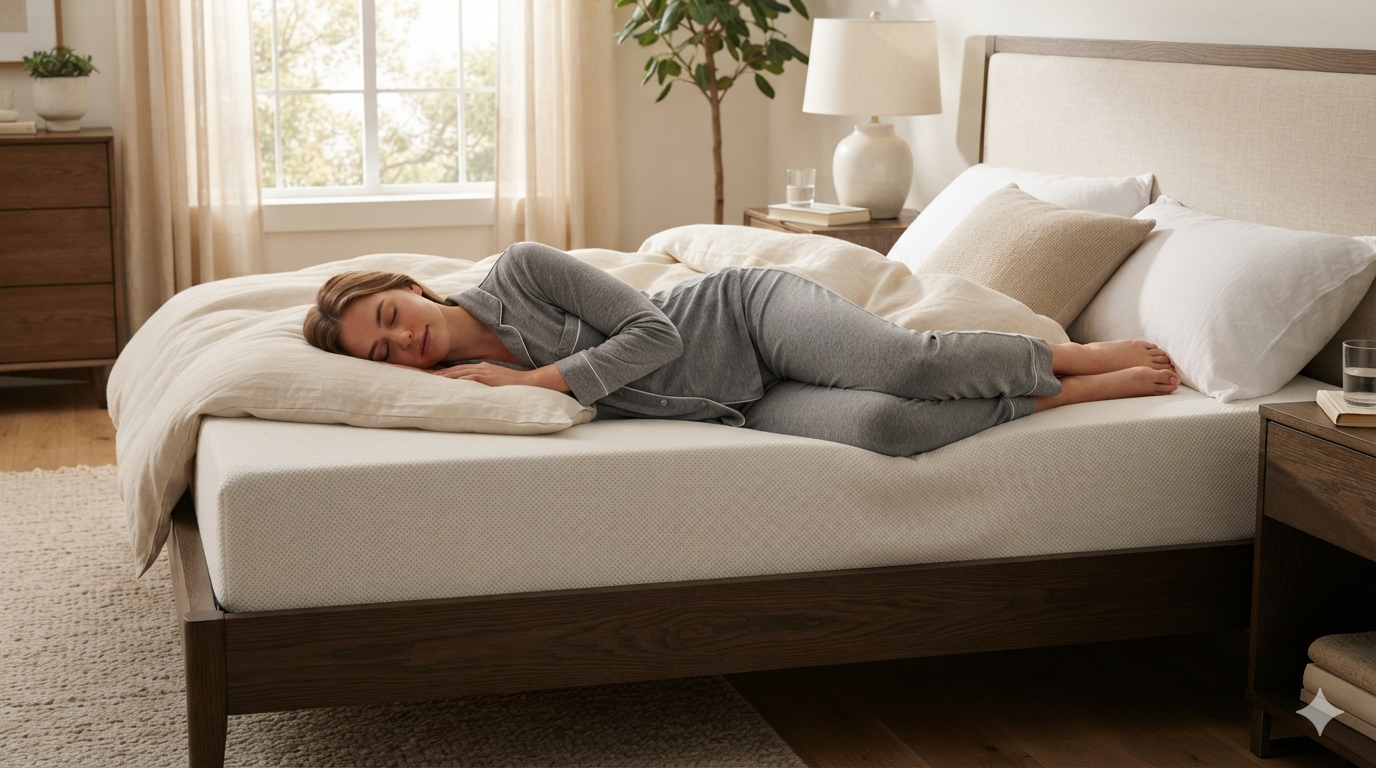
Side sleepers feel this most. Lying on your side puts your shoulder and hip into the mattress while your waist needs filling in. Too little give and you get that numb, aching shoulder. Too much give and your hips drop below your ribcage, which creates a different problem in your lower back.
Excellent pressure relief isn't maximum sinkage it's controlled sinkage with something firm underneath catching you.
Support: Softness and Support Are Not the Same Thing
Surface comfort is what your skin feels in the first ten seconds. Support is what holds your spine in line for seven hours. Two different jobs, two different layers.
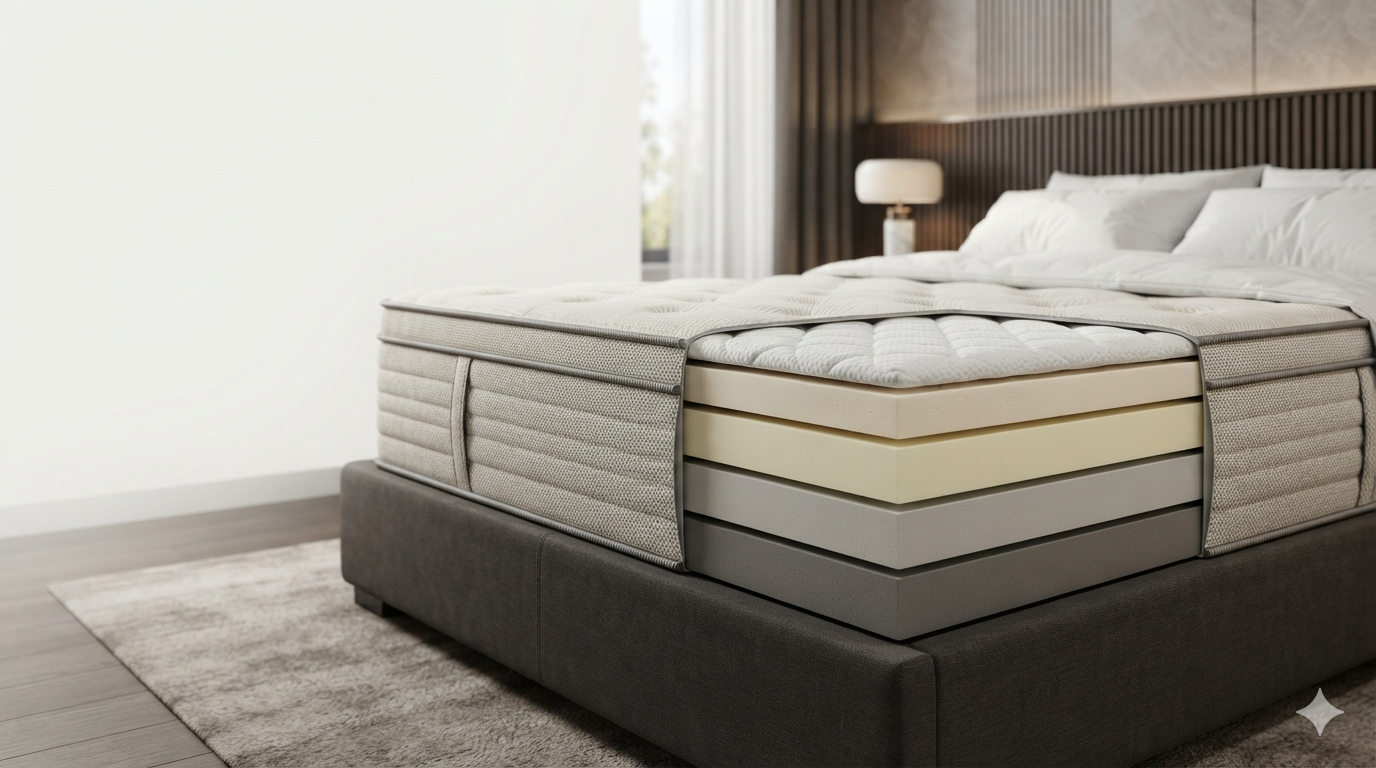
Most quality foam mattresses use three zones: a comfort layer (contouring), a transition layer (stops you bottoming out) and a support core (high-density foam or springs doing the structural work).
That's why a mattress can feel soft and still support you properly soft on top, serious underneath. A cheap bed skips the transition layer and puts thick soft foam straight onto a thin core. It feels lovely in the shop and hammocks within a year.
Motion Isolation: The Feature Couples Notice First
Foam absorbs movement rather than transmitting it. Press down on one side of a good all-foam bed and a glass of water on the other side barely registers.
Slow-response memory foam is usually the best performer here, which is why light sleepers and couples with different schedules often gravitate to it. If your partner gets up at 6am for work and you don't, this single feature can change your mornings. Motion isolation remains one of the headline criteria in 2026 mattress testing for exactly this reason.
Temperature Regulation: The Part Most People Ignore
Traditional dense memory foam hugs you, which means less air moves around your body and less heat escapes. That's physics, not a defect.
Manufacturers respond with open-cell foam structures, breathable knit covers, gel or graphite infusions, and hybrid builds where a spring unit creates an airflow channel under the foam.
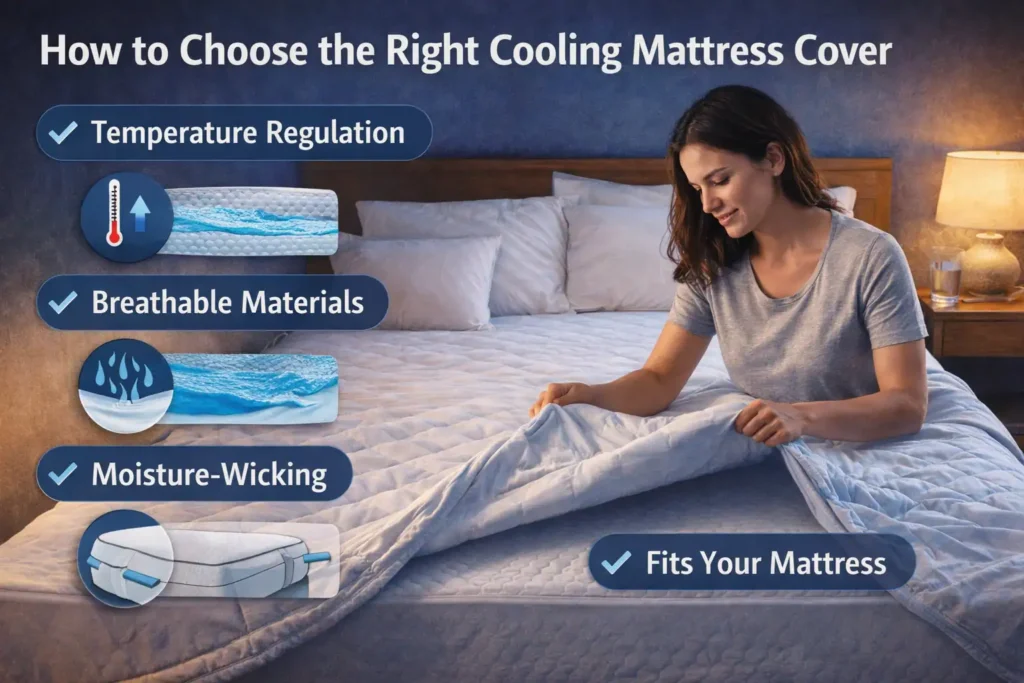
Treat "cooling" as a construction question. Ask what the cover is made of, whether the comfort foam is open-cell, and whether there's a spring layer. Don't accept the word on its own.
Honestly, I Made This Mistake Too: Choosing the Wrong Firmness
My first foam bed was too firm. I bought it because firm sounded responsible, and I spent six months blaming my pillow. Firmness is where most people go wrong, so it deserves proper attention.
Practical translations: soft means noticeable sink and a hugging feel. Medium gives some contour with clear pushback. Medium-firm means mild contour on a solid surface. Firm means you sit mostly on top of the bed.
And here's the catch firmness labels aren't measurements. A "medium-firm" at 60kg feels firmer than the same mattress at 100kg, because you're not pushing into the comfort layer the same way.
Is a Soft Foam Mattress Better for Sleep?
Softer contouring suits lighter sleepers and dedicated side sleepers who need their shoulder to disappear into the surface. It can genuinely relieve pressure that a firmer bed can't.
The risk is excessive sinkage. If your midsection drops, your spine bends, and stomach sleepers in particular will wake with a sore lower back. Side sleepers and stomach sleepers rarely want the same bed.
Is Medium-Firm the Safe Middle Ground?
Medium-firm appears in recommendations constantly because it's the widest-tolerance option, especially for back sleepers and mixed-position couples. It's a sensible default, not a universal best.
A heavier sleeper may experience a medium-firm mattress as medium. A lighter sleeper may find it firm. Same label, two experiences.
Why the Firmest Mattress Is Not Automatically the Best
Firmness describes surface feel. Support describes spinal alignment. A very firm bed with a weak core still fails you; a medium bed with an excellent core holds you perfectly.
Over-firm surfaces concentrate load at the shoulder and hip the opposite of pressure relief. Buying on a showroom label alone is how people end up with numb arms.

Choose Your Foam Mattress Based on How You Actually Sleep
Forget the marketing for a moment. How do you actually fall asleep, and how do you wake up? That single answer narrows the field faster than any spec sheet.
Foam Mattress for Side Sleepers
You need contouring at the shoulder and hip without your waist losing contact. Soft to medium usually works; medium-firm can suit heavier side sleepers.
Pillow height interacts directly here. A deeper-contouring mattress lets your shoulder drop, so you often need a slightly lower pillow than you'd expect. People upgrade the bed, keep the tall pillow and blame the mattress for their neck.
Foam Mattress for Back Sleepers
You want balanced support with controlled sinkage enough give to fill the lumbar curve, enough resistance to stop your hips dropping. Medium to medium-firm is the common landing zone.
If your hips sit lower than your ribs and shoulders, the comfort layer is too soft or the core is too weak.
Foam Mattress for Stomach Sleepers
Midsection sinkage is the enemy. Your hips need to stay level with your shoulders or your lower back arches all night.
Medium-firm to firm is typical, and honestly, an all-foam bed doesn't suit every stomach sleeper. Some do better with a supportive hybrid where the spring unit provides firmer pushback.
Foam Mattress for Combination Sleepers
If you change position five times a night, responsiveness beats deep contouring. Very slow-recovery memory foam can feel like wading through treacle when you turn.
Look for faster-response foam, latex, or a foam hybrid. You want the surface back under you before you've finished rolling.
I've Seen This Happen Many Times: One Mattress, Two Completely Different Sleepers
A 95kg back-sleeping husband and a 58kg side-sleeping wife walk in wanting one bed. This is the hardest brief in the shop and nobody warns you about it.
Four things carry the compromise: motion isolation, edge support, a firmness level that's tolerable for both, and size. Go bigger if you can a king or super king gives each person room to move without becoming a shared event. More space solves more arguments than any feature.
When Motion Isolation Matters More Than Bounce
Different schedules, a light sleeper, someone up in the night this is when deep-contouring foam earns its money. The trade-off is a slower, more enveloping feel.
When a More Responsive Mattress Makes More Sense
If one or both of you is a combination sleeper, or either of you hates the "stuck" sensation, a foam hybrid is usually the better compromise. You lose a little motion isolation and gain airflow, edge support and easier movement.
Which Type of Foam Mattress Is Right for Better Sleep?
"Foam" covers several very different materials. Here's what each one actually does.
Memory Foam
Viscoelastic foam that responds slowly to pressure and heat. Best-in-class contouring, pressure relief and motion isolation. Trade-offs: potential heat retention in denser formulations, and slower position changes.
Polyfoam
Polyurethane foam with a faster response and no hugging sensation. Formulation varies enormously it appears in comfort layers, transition layers and support cores at different densities. Bouncier feel, less deep contouring.
High-Density Foam
Density describes how much material is packed into a given volume. Higher density generally correlates with durability and structural stability, which is why support cores use it.
Crucially, density is not firmness. A high-density foam can feel soft. A low-density foam can feel firm and tends to lose its shape sooner.
Open-Cell Foam
An airflow-focused structure with interconnected cells, so air moves through the foam rather than being trapped. It's one of the more meaningful contributors to temperature management because it changes the material itself, not just the surface.
Gel- or Graphite-Infused Foam
Gel beads or graphite particles are added to help absorb or conduct heat away from the surface. They can help, particularly in the first part of the night.
Be realistic: an infusion in a dense, closed comfort layer under heavy bedding in a hot room will not deliver cool sleep. No infusion guarantees a cooler surface on its own.
Multi-Layer Foam
Most good foam mattresses are multi-layer: comfort, transition, support core. Reading the layer breakdown tells you far more than the product name ever will.
Foam Hybrid
Foam comfort layers over a pocket spring core. You get better airflow, more responsiveness and usually stronger edge support, at the cost of some motion isolation and that pure enveloping foam feel.
What Most People Miss: Construction Matters More Than the Word "Foam"
Two mattresses can both say "memory foam" and feel like completely different products. Seven variables decide it:
- Foam type memory foam, polyfoam, latex
- Density durability and stability
- Layer thickness how deep you sink before the next layer catches you
- Firmness surface feel
- Support-core design the structural foundation
- Cover material breathability and stretch
- Zoned support varied firmness along the length of the bed
Ignore the product name. Ask for the layer specification.
How Thick Should a Foam Mattress Be?
Quick answer: Most adult foam mattresses fall between roughly 20cm and 30cm, but thickness alone doesn't determine quality. A 30cm mattress with 25cm of soft foam and a thin core is worse than a well-built 22cm bed.
What matters is proportion: a comfort layer deep enough to contour, a transition layer to prevent bottoming out, and a substantial support core underneath.
Does Foam Density Affect Durability?
Generally, yes. Lower-density foams tend to compress and develop body impressions sooner; higher-density foams hold structure longer. But it varies by formulation and manufacturer, and no single density number works as a quality guarantee across brands.
What Is Zoned Foam Support?
Zoning means different firmness levels along the mattress often softer at the shoulders, firmer under the hips. Done well, it improves alignment for side sleepers. Done crudely, the zones don't line up with your body and you feel nothing at all.
Why Does My Foam Mattress Feel Too Soft, Too Firm or Too Hot?
This is where things get real most of these problems have a diagnosable cause.
Why Does My Foam Mattress Feel Too Soft?
- Check the firmness you actually ordered against what you needed
- Check the foundation sagging slats or an old divan let the mattress dip
- Allow for the break-in period; new foam softens slightly in the first weeks
- Consider body weight and position heavier sleepers sink further into the same bed
If it feels soft in one spot only, or the dip persists after you get up, that suggests unsuitable construction rather than break-in.
Why Does My Memory Foam Mattress Feel Too Hot?
Work down the list: dense comfort foam, bedroom temperature, heavy or synthetic bedding, a waterproof mattress protector (the most common culprit and the one nobody suspects), a non-breathable cover, poor ventilation, and finally the mattress construction itself.
Why Do I Feel "Stuck" in My Memory Foam Mattress?
Slow responsiveness plus deep contouring equals resistance when you turn. Some people love it; combination sleepers usually don't. Faster-response foam, latex or a hybrid solves it.
Why Am I Still Waking Up Uncomfortable on a New Mattress?
Give it two to four weeks your body adapts to a new surface. Then check the pillow, the firmness, the bed base and your sleeping position. And check your expectations: a new bed improves comfort, it doesn't reset your sleep debt.
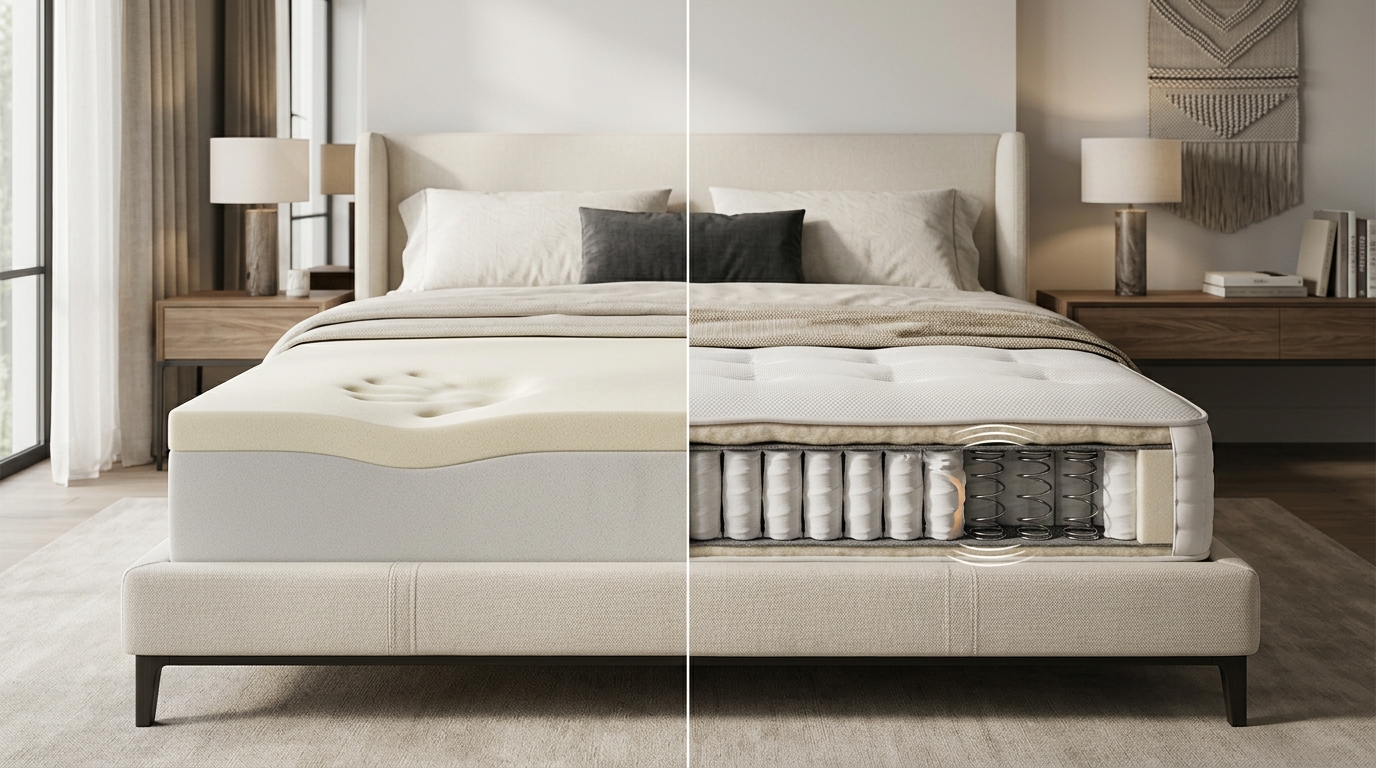
Foam Mattress vs Pocket Sprung vs Hybrid: Which Construction Fits Your Sleep Style?
| Construction | Feel | Pressure relief | Motion isolation | Airflow | Responsiveness | Edge support | Typical sleeper |
| All-foam (memory) | Hugging, slow | Excellent | Excellent | Lower | Lower | Varies, often weaker | Side sleepers, light sleepers, couples |
| Pocket sprung | Bouncy, on-top | Moderate | Moderate | Good | High | Usually strong | Back and stomach sleepers, hot sleepers |
| Foam hybrid | Contour with pushback | Good | Good | Good | Good | Usually strong | Combination sleepers, couples, warm rooms |
| Latex foam | Buoyant, springy | Good | Moderate | Good | High | Moderate to strong | Movers who want foam without the hug |
Memory Foam vs Pocket Springs
Contouring versus bounce. Memory foam wraps you and swallows movement; pocket springs push back and move air. If your main complaint is shoulder pressure, foam wins. If it's heat and feeling stuck, springs do.
Foam vs Hybrid
A hybrid keeps most of the foam comfort while adding airflow, edge support and easier movement. For couples in a warm climate who want foam feel without the heat, it's often the honest recommendation.
Memory Foam vs Latex Foam
Latex contours less deeply, responds instantly and generally sleeps cooler. It's typically more durable and typically more expensive. Memory foam still leads on pressure relief and motion isolation.
Most People Ignore This Part: Your Bed Base Can Change How the Mattress Feels
The same mattress on a solid platform and on wide-spaced slats is effectively two different beds. Foam needs even, continuous support it has no spring unit bridging the gaps.
On slatted frames, gaps of roughly 7cm or less are the usual guidance; wider gaps let foam bulge downward between slats and create uneven softness. Old sagging divans transfer their dip straight through.
Can You Put a Foam Mattress on Any Bed Frame?
- Are the slats spaced closely enough, and are they flat and unbroken?
- Is there a centre support rail on king and super king frames?
- Is the existing base sagging, or over roughly ten years old?
- Does the platform allow any ventilation underneath?
- Does the warranty specify a foundation requirement? Many do, and using the wrong base can void it.
Always check the manufacturer's stated requirement rather than assuming. Also read: Best bed and mattress company in portugal
How to Choose a Foam Mattress for Better Sleep: A 10-Step Process
This is the sequence I'd walk any customer through.
- Step 1 Identify your main sleeping position. Side, back, stomach or combination. Note how you wake up, not just how you fall asleep.
- Step 2 Consider your body build. Weight changes perceived firmness and how far you sink.
- Step 3 Decide how much contouring you want. Hugging feel or responsive feel? This single preference rules out half the market.
- Step 4 Identify your biggest sleep complaint. Pressure, partner movement, heat, too firm or too soft.
- Step 5 Select a firmness range, treating labels as a starting point rather than a measurement.
- Step 6 Examine the internal layers. Comfort, transition, support core, with materials and depths.
- Step 7 Check cooling features. Open-cell foam, cover fabric, airflow design, hybrid construction.
- Step 8 Check motion isolation and edge support, especially if you share the bed.
- Step 9 Check trial, warranty and return conditions. These have real financial consequences; read the actual retailer terms, including who pays return collection.
- Step 10 Give your body time to adjust. Follow the stated break-in guidance before judging.
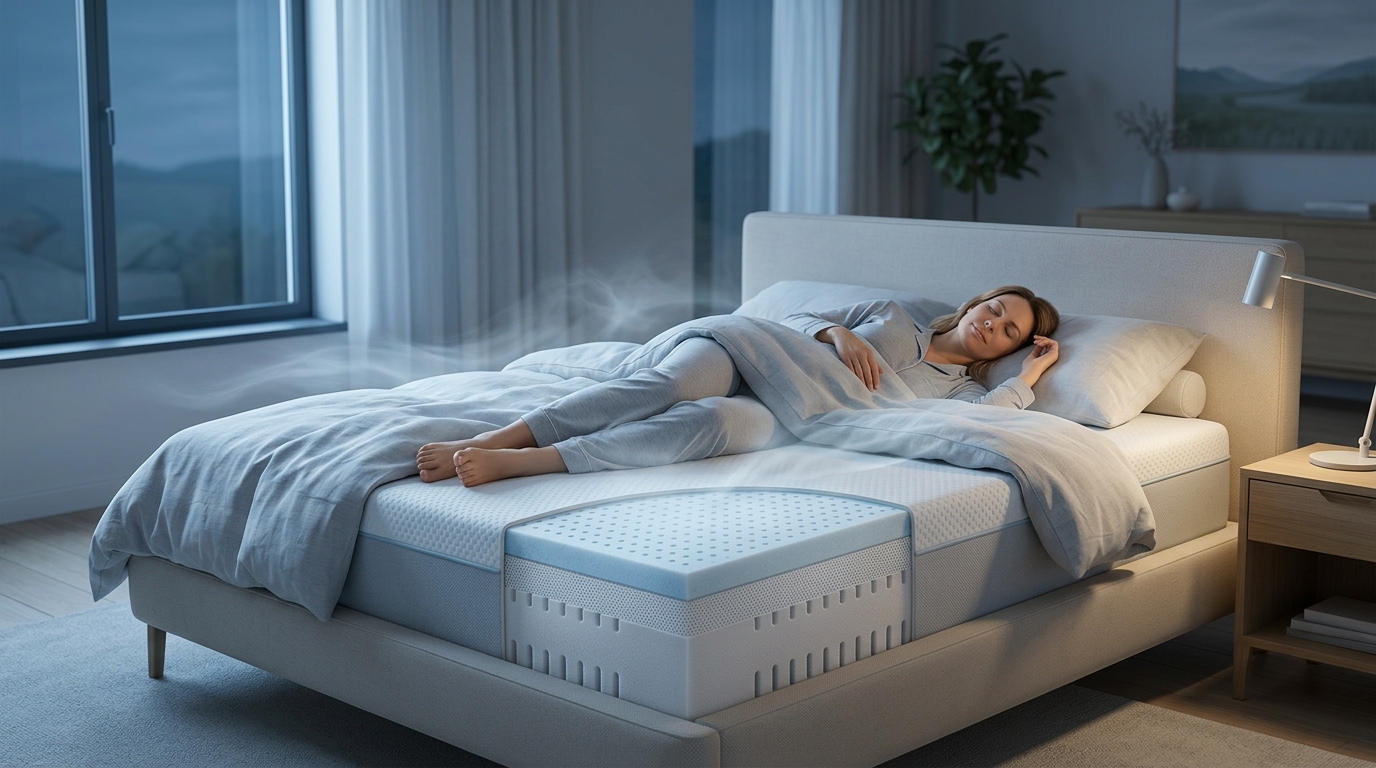
In a Hot Climate, Foam Mattress Choice Gets More Complicated
Most mattress advice online is written for a Northern European or American bedroom. Here in the Algarve, a bedroom can still be holding the day's heat at midnight in August, and the calculation changes.
Warm ambient temperatures reduce how much heat your body can shed into the mattress. Air conditioning helps but many of us don't run it all night. Natural cross-ventilation, shutters closed during the day, breathable cotton or linen bedding and a breathable protector all do measurable work before the mattress is even involved.
On the mattress side, open-cell foams, breathable knit covers and hybrid constructions with a spring layer generally handle heat better than dense closed-cell memory foam. None of them guarantees cool sleep in a 29°C room anyone claiming otherwise is selling.
Foam Mattress for Hot Sleepers in Portugal
If you run hot and you're furnishing a home here, I'd steer you toward a hybrid or an open-cell foam with a breathable cover rather than a deep traditional memory foam even if the memory foam feels better in a showroom in March.
How to Make a Foam Mattress Sleep Cooler
- Improve airflow around and under the bed; avoid solid storage bases if heat is your issue
- Switch to breathable natural-fibre bedding
- Replace a plastic-backed waterproof protector with a breathable one
- Manage the room: shutters by day, cross-ventilation at night, a fan on low
- Choose construction designed for temperature regulation from the start
What Most People Get Wrong When Buying a Foam Mattress
- Mistake 1 Choosing by price alone. Value is cost divided by years of comfortable sleep, not the number on the ticket.
- Mistake 2 Choosing the firmest option because firm sounds supportive. It isn't the same thing.
- Mistake 3 Looking only at the top comfort layer. The support core determines whether the bed lasts.
- Mistake 4 Ignoring your sleeping position. The single most predictive factor, skipped constantly.
- Mistake 5 Ignoring heat retention, which is a serious error in a warm climate.
- Mistake 6 Testing for five minutes and calling it done. Showrooms are cool, you're dressed, and you're upright ten minutes later. Use the trial period.
- Mistake 7 Believing every "orthopaedic" or "cooling" claim. "Orthopaedic" has no regulated definition in mattress retail. Ask what the construction actually does.
Real-Life Use Cases: Who May Benefit From a Foam Mattress?
These are anonymised composites of conversations we have regularly the decision process, not promised outcomes.
A Side Sleeper Who Wakes With Shoulder Pressure
Position first: dedicated side sleeper, average build. Complaint: shoulder numbness. Direction: medium comfort layer with genuine contouring, firm support core, plus a lower pillow to match the new shoulder drop. Two adjustments, not one.
A Couple With Different Sleep Schedules
One up at six, one until eight. Motion isolation becomes the priority, then edge support, then a firmness both can live with. Going up a size did more than any single feature.
A Hot Sleeper Who Loves the Feel of Memory Foam
The compromise is construction-based: a hybrid with a memory foam comfort layer over a spring core, and a breathable cover. They keep most of the feel and lose most of the heat.
Someone Replacing a 10-Year-Old Mattress
Ten years of body impressions reset the comparison. Anything new feels firm at first. Your body has also changed in a decade don't assume last time's choice is this time's choice.
How to Test a Foam Mattress Without Fooling Yourself
- Test your normal sleeping position. Everyone lies on their back in a showroom and almost nobody sleeps that way.
- Check shoulder and hip pressure. Side sleepers: stay put for several minutes, not seconds.
- Test movement. Roll over. Sit up. Get out. Is it effortful?
- Test partner movement. Lie down together and have one person move deliberately.
- Check edge support. Sit on the side as you would when dressing, then lie near the edge.
- Think about your actual bedroom conditions, not the air-conditioned shop floor.
- Read the trial and warranty terms before paying: trial length, return cost, foundation requirements, and what counts as a valid sagging claim.
Mattress Toppers vs Replacing the Mattress
A topper changes surface comfort. That's a genuine and cheap fix when a structurally sound mattress is simply a bit too firm, or when you want to test whether you like a foam feel before committing.
A topper cannot fix a sagging or collapsed mattress. You'd be laying a soft layer over a dip, which follows the dip. If the support core has failed, replacement is the only real answer spending on a topper first usually means spending twice.
Adjustment, Lifespan and Off-Gassing
How Long Does It Take to Get Used to a Foam Mattress?
Commonly two to four weeks, sometimes up to six. Your body adapted to the old bed, including its faults, and needs time to unlearn that. Mild stiffness that eases week by week is adaptation. Sharp pain or worsening discomfort is not that's a sign the mattress is genuinely unsuitable, and it's what the trial period exists for.
How Long Should a Foam Mattress Last?
Quality foam mattresses commonly give several years of good service, with higher-density constructions generally lasting longer but I won't quote you a universal number, because usage, body weight, base quality and care all change it.
Watch for body impressions that don't recover, visible sagging, or waking up sore when you didn't used to. Note also that a warranty term is a defect guarantee, not a promise of comfort for that many years.
What About Off-Gassing and the New-Mattress Smell?
New foam can release a temporary manufacturing odour, most noticeable in the first days after unboxing. Ventilate the room well and follow the manufacturer's unboxing instructions and it usually fades quickly. Smell and safety are separate questions: ask about certifications if that's your concern, rather than judging by scent.
AI and Modern Mattress Shopping: How to Research Without Getting Misled
People now arrive in the showroom with an AI-generated shortlist. That's fine as long as you know what the tool can and cannot do. AI organises information. It does not lie on the bed for you.
Use AI to Build a Comparison Checklist
Ask it to line up firmness, construction layers, cooling features, motion isolation, warranty, trial length and dimensions across your shortlist. Then verify every specification against the manufacturer's own documentation AI tools sometimes generate plausible-sounding specs that don't exist.
Use AI to Turn Sleep Preferences Into Buying Criteria
Feed it your real inputs: side sleeper, runs hot, sharing a bed, wants a medium feel with strong pressure relief. Let it translate that into what to look for. Just don't let it invent product specifications on your behalf.
Use Sleep Apps But Don't Let One Score Choose Your Mattress
Consumer trackers are useful for spotting patterns over weeks: restlessness, wake-ups, timing. They're far less reliable at sleep staging than they appear, and none of them is a medical measurement. Watch trends, ignore single-night scores.
Where Automation Genuinely Helps
Price tracking, stock and delivery alerts, storing warranty documents and receipts somewhere you'll find them in year four, and side-by-side spec comparison. What it shouldn't do is make the buying decision for you because a price dropped.
Evidence vs Marketing: How to Judge "Better Sleep" Claims
Four tiers of information, in ascending order of reliability: manufacturer claims (marketing), consumer reviews (useful for durability patterns, unreliable for comfort), structured expert testing (useful, but that reviewer isn't your body), and controlled or field research (strongest, and rarest).
The 2023 field study of 25 adults reporting improved sleep measures after switching to memory foam is real supporting evidence and it's a small field study whose own authors called for more research. Earlier work has produced different results depending on the mattresses and conditions.
So: foam may help. "Science proves memory foam is better" is not a statement anyone can honestly make. Comfort advice is not medical advice, and persistent pain or fatigue deserves a clinician, not a mattress.
Pros and Cons of Foam Mattresses for Better Sleep
| Pros | Cons |
| Strong pressure relief at shoulders and hips | Potential heat retention in denser foams |
| Close contouring to body shape | Some models feel restrictive or "stuck" |
| Excellent motion isolation for couples | Edge support varies widely by model |
| Silent sleep surface no creaks | Some sleepers simply prefer bounce |
| Wide range of firmness options | Quality and durability vary by construction |
| Often a strong fit for side sleepers | Initial odour may occur |
Quick Decision Guide: What Should You Prioritise?
| Your profile | Prioritise |
| Side sleeper | Pressure relief with controlled contouring |
| Back sleeper | Balanced support, limited hip sinkage |
| Stomach sleeper | Stronger support, minimal midsection sinkage |
| Combination sleeper | Responsiveness with balanced contouring |
| Couple | Motion isolation and edge support |
| Hot sleeper | Temperature-regulating construction |
| Genuinely unsure | Medium feel plus a proper trial period |
Foam Mattress for Better Sleep Frequently Asked Questions
Can a foam mattress really improve sleep quality?
It may. A well-matched foam mattress can reduce pressure points, absorb partner movement and support your spine, which often improves sleep comfort. Research is limited and results vary by person, so treat it as a comfort improvement rather than a guaranteed sleep cure.
Is memory foam good for a good night's sleep?
For many people, yes particularly side sleepers and couples. If you dislike a hugging feel or run very hot, a hybrid or latex may suit you better. It depends on individual fit.
What type of foam mattress is best for better sleep?
There's no universal winner. Memory foam leads on pressure relief and motion isolation, hybrids on airflow and movement, latex on responsiveness and durability.
Is a firm or soft foam mattress better for sleep?
Neither by default. Side sleepers usually need softer contouring; stomach sleepers usually need firmer support; back sleepers often sit between the two.
What firmness is best for side sleepers?
Soft to medium suits many side sleepers, with heavier sleepers often preferring medium-firm. The aim is shoulder and hip pressure relief without the waist losing contact.
Is memory foam good for back sleepers?
It can be, provided sinkage is controlled. Back sleepers want the lumbar curve filled without the hips dropping usually medium to medium-firm with a strong support core.
Do foam mattresses sleep hot?
Some do. Dense traditional memory foam retains more heat; open-cell foams, breathable covers and hybrid constructions manage temperature better. Bedding, protector and room temperature matter too.
Are foam mattresses good for couples?
Often yes, thanks to motion isolation. Check edge support, which is the weaker point of many all-foam designs, and consider going up a size.
Does memory foam reduce partner movement?
Yes slow-response foam absorbs energy locally rather than transmitting it across the bed, so movement on one side is much less noticeable on the other.
Why does my foam mattress feel too soft?
Check the firmness ordered, the bed base for sagging, whether you're still in the break-in period, and whether your body weight suits that model. A persistent dip suggests unsuitable construction.
Why does my memory foam mattress feel too hot?
Check dense comfort foam, room temperature, heavy bedding, a plastic-backed protector, a non-breathable cover and poor ventilation usually in that order.
How thick should a foam mattress be?
Most adult mattresses sit around 20–30cm, but layer proportions and support-core quality matter far more than total depth.
How long does it take to adjust to memory foam?
Typically two to four weeks. Discomfort that eases weekly is adjustment; discomfort that worsens suggests the wrong mattress.
How long should a foam mattress last?
It depends on construction, density, use and care. Watch for non-recovering body impressions and sagging rather than relying on a fixed number of years.
The Bottom Line: Choose the Foam Mattress Around Your Sleep, Not the Marketing Label
If you take one thing from this guide, take this: the right foam mattress for better sleep is the one whose construction matches how you actually sleep not the one with the best packaging or the highest price.
Work through it in order: sleep position, body build, firmness range, pressure relief needs, support core, temperature, motion isolation, full layer construction, and finally the trial and warranty terms.
Your next three steps: write down your single biggest sleep complaint, identify your dominant sleeping position honestly, then ask any retailer for the full layer specification before you compare prices. If they can't give you that, you've learned something useful.
And be realistic. A good mattress removes obstacles to sleeping well. Your pillow, your bedroom temperature and your routine still have to do their share.
About This Guide
Written from hands-on experience in bed and mattress retail in the Algarve, where we advise Portuguese and UK expat customers on mattress selection daily. The guidance here draws on manufacturer specifications, in-store product handling, recurring customer feedback and published independent research, and we distinguish between those sources in the text where it matters.
We sell mattresses, so treat this as informed retail guidance rather than independent testing. It is comfort advice, not medical advice if you have persistent pain or a suspected sleep disorder, please speak to a healthcare professional. Product specifications should always be verified against the current manufacturer documentation before purchase.