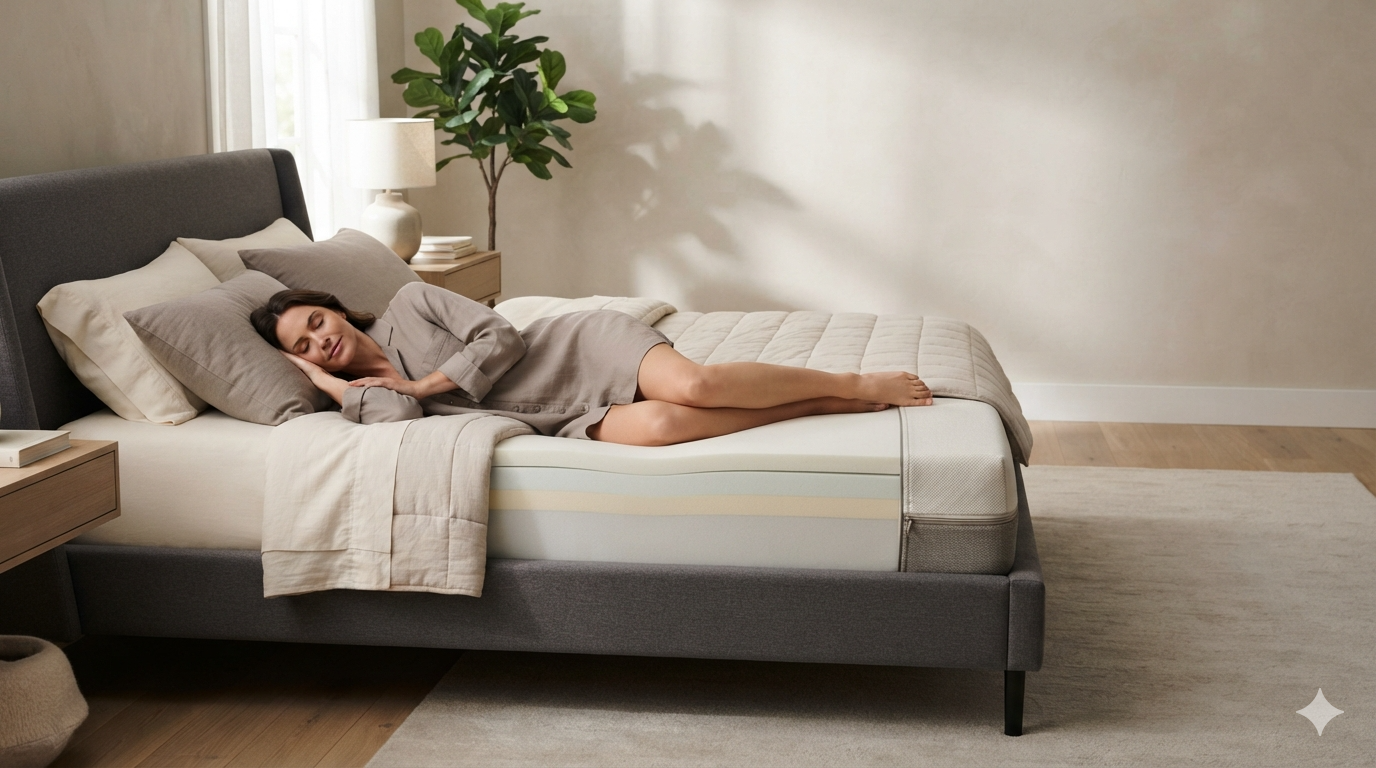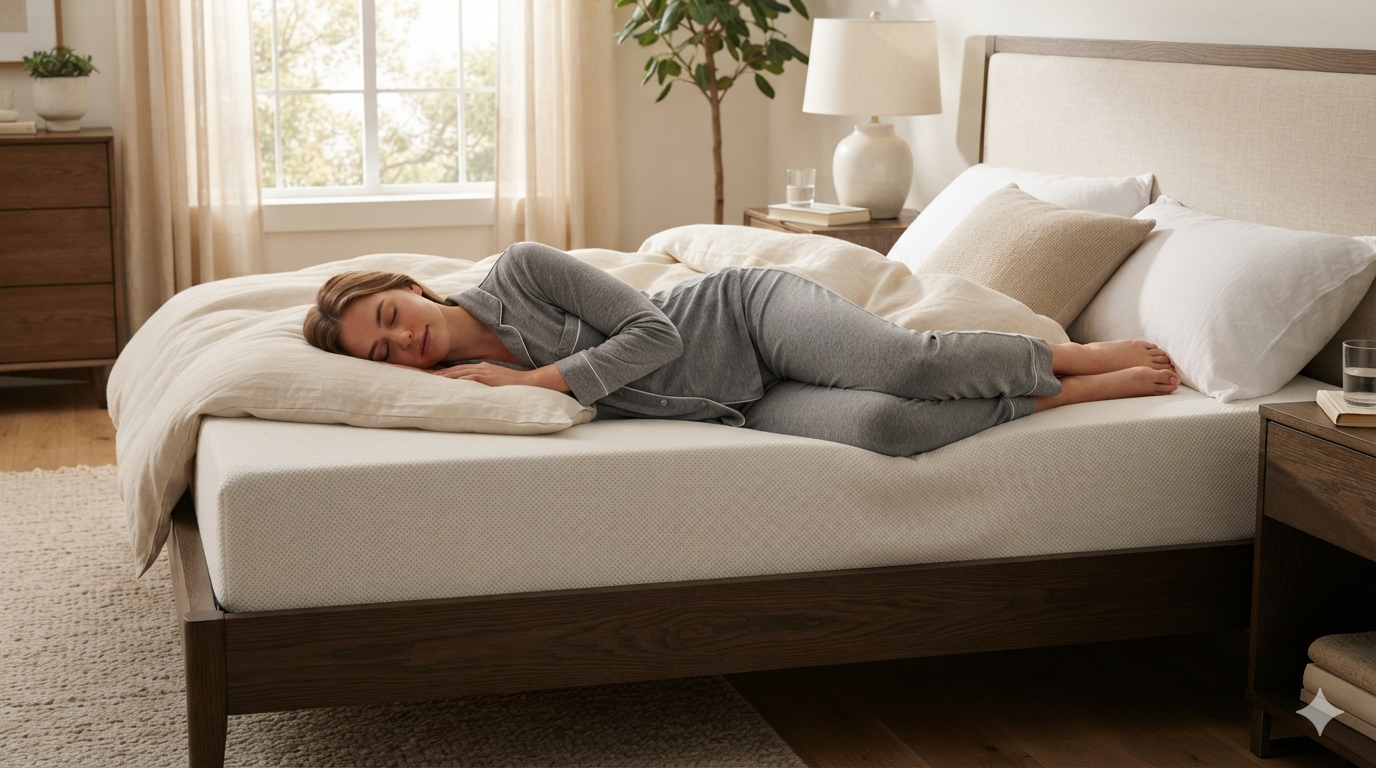
You wake up every morning with a stiff shoulder, a numb arm, or that dull ache in your hip that takes twenty minutes of moving around to shake off. You're a side sleeper, and despite spending real money on what looked like a decent mattress, nothing has actually changed. The truth is, finding a truly comfortable foam mattress for side sleepers is more nuanced than most reviews let on — and the majority of buyers get it wrong on the very first decision they make: firmness.
I've spent years sleeping on, testing, and writing about foam mattresses across different firmness levels, densities, and price points. This guide is everything I wish I'd known before wasting money on mattresses that looked great on paper and felt wrong within a week.
Key Takeaways
- Side sleepers need pressure relief at the shoulder and hip above all else — firmness is secondary
- Medium to medium-soft (4–6 on a 10-point scale) is the sweet spot for most side sleepers
- Foam density matters more than brand name for long-term support quality
- Your pillow height directly affects spinal alignment regardless of how good your mattress is
- Cooling technology is not optional if you sleep warm — traditional memory foam will overheat you
- Always use the full trial period — your body needs 2–4 weeks to properly evaluate a new sleep surface
Table of Contents
- Why Side Sleepers Struggle More With Mattress Comfort
- In My Experience, Most Side Sleepers Choose a Mattress That's Too Firm
- What Makes a Foam Mattress Comfortable for Side Sleepers
- Memory Foam vs Hybrid Foam Mattresses for Side Sleepers
- What Most People Get Wrong About Mattress Firmness
- The Best Foam Mattress Materials Explained Simply
- A Good Mattress Still Feels Wrong Because of the Pillow
- Cooling Foam Mattresses for Hot Side Sleepers
- Step-by-Step: How to Choose the Right Foam Mattress
- Best Foam Mattresses for Different Types of Side Sleepers
- Foam Mattress Problems Nobody Talks About
- Pros and Cons of Foam Mattresses for Side Sleepers
- Comparison Table Section
- Real-Life Use Cases Most Reviews Ignore
- AI Tools and Sleep Technology
- Most Beginners Ignore These Buying Mistakes
- Featured Snippet Quick Answers
- The Final Buying Framework Smart Side Sleepers Use
Why Side Sleepers Struggle More With Mattress Comfort Than Most People Realize
Side sleeping is the most popular sleep position — roughly 60–70% of adults default to it. And yet most mattresses are designed, marketed, and reviewed with a vague "all-position" claim that quietly ignores what side sleeping actually does to your body over seven or eight hours.
When you sleep on your side, your body weight concentrates at two primary contact points: the shoulder and the hip. These are bony prominences that can't compress like soft tissue — so the mattress has to accommodate them. If it doesn't, pressure builds, circulation gets restricted, and you wake up numb, stiff, or aching in exactly the spots you were lying on.
Quick answer: A good foam mattress for side sleepers should balance pressure relief, contouring, and spinal support — cushioning the shoulder and hip enough to relieve concentrated load while still keeping the spine level from neck to tailbone.
The frustrations most side sleepers describe are remarkably consistent:
- Waking up with a numb arm or tingling fingers (shoulder compression)
- Stiffness in the shoulder or hip that takes 15–30 minutes to ease
- Lower back pain caused by the hip sinking too deeply and rotating the spine
- Overheating, particularly around the torso and hip contact areas
- That "sinking too far in" feeling where getting comfortable and getting supported feel mutually exclusive
I've personally tested foam mattresses at firmness levels from 3 to 8 over multiple weeks, specifically from a side sleeping position. The difference in shoulder pressure alone between a medium-soft and a medium-firm mattress is immediately obvious — and the difference in lower back alignment between a medium and a plush mattress takes about five days to notice, but it's real and significant.
In My Experience, Most Side Sleepers Choose a Mattress That's Too Firm
Why "Firm = Better Support" Is Usually Wrong for Side Sleepers
This is the single most persistent mattress myth, and it costs side sleepers a lot of money and a lot of bad sleep. The idea that firmer equals more supportive comes from a legitimate place — back sleepers and stomach sleepers often do better on firmer surfaces. But side sleepers are different.
For a side sleeper on a firm mattress, the shoulder and hip hit a resistant surface and can't sink in enough to allow the spine to be level. The shoulder gets pushed upward, the waist drops down, and the spine takes on a lateral curve that — held for seven hours — creates real pain. Firm mattresses distribute pressure poorly for side sleepers because they don't contour around the body's protruding points.
Quick answer — Best firmness range for side sleepers: Medium-soft to medium (4–6 on a 10-point scale) works for most side sleepers. Lighter sleepers can go softer (3–4); heavier sleepers should lean toward medium to medium-firm (5–6) to prevent excessive sinkage that misaligns the spine in the opposite direction.
The Hidden Difference Between Support and Hardness
Support is about what happens to your spine. Hardness is about how the surface feels. These are genuinely different things, and conflating them is where most buyers go wrong. A high-density medium foam can provide excellent lumbar support while still being soft enough to cushion the hip and shoulder. A low-density firm foam can feel hard and resistant while providing zero meaningful structural support — it just pushes back uniformly rather than responding to your body's shape.
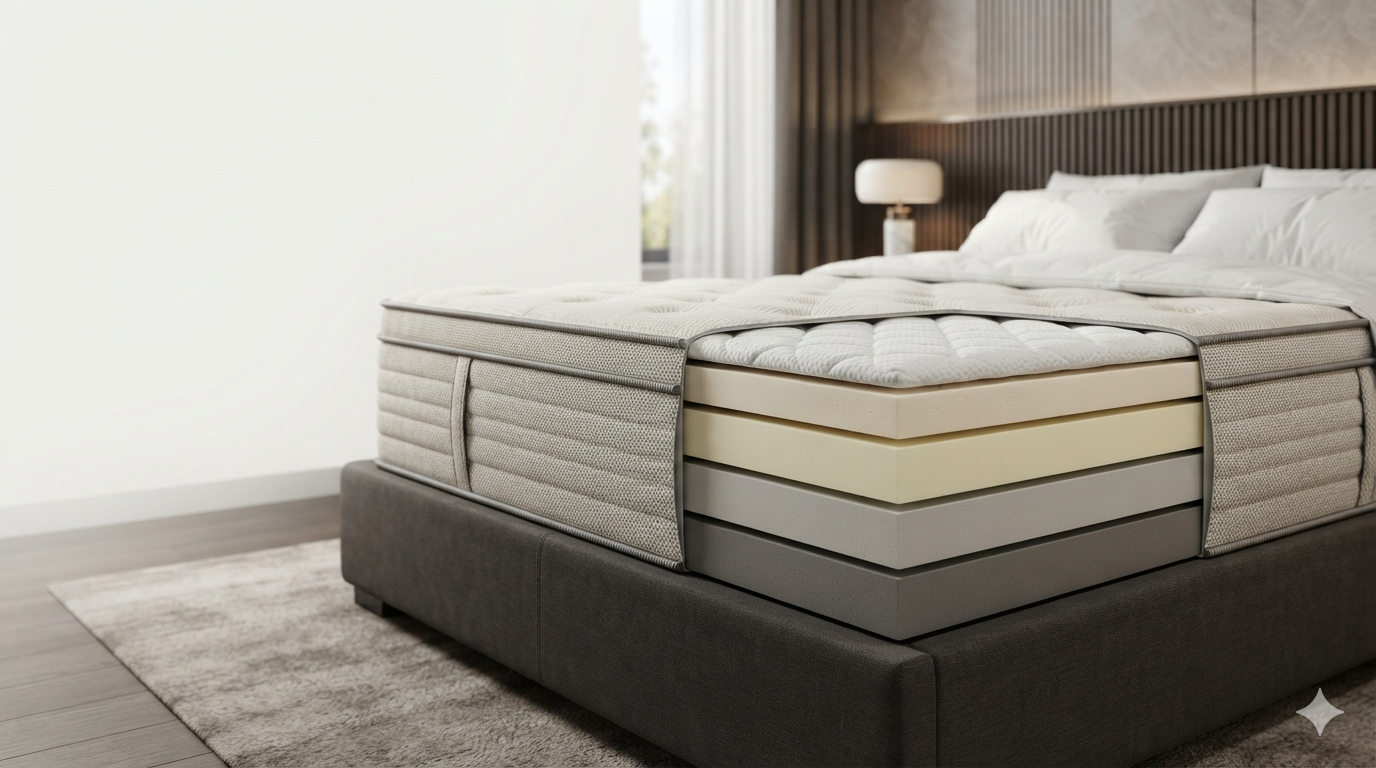
What you want is a mattress with a softer, contouring comfort layer (2–4 inches) over a firmer, high-density support base. The surface responds to the shoulder and hip; the base keeps the spine from collapsing. That layered architecture is what "supportive" actually means for side sleeping.
Honestly, I Made This Mistake Too When Buying My First Foam Mattress
My first real mattress purchase was a firm memory foam option because I'd read repeatedly that firm mattresses were "better for your back." Three weeks in, I had shoulder pain I'd never had before and was waking up at 5am to stretch because lying still had become uncomfortable. I returned it, moved to a medium, and the shoulder pain disappeared within a week. The lesson cost me a return shipping hassle and two months of bad sleep — hopefully this section saves you both.
What Makes a Foam Mattress Comfortable for Side Sleepers?
Pressure Relief Is the #1 Factor
Everything else is secondary to this. Contouring foam — whether traditional memory foam, gel foam, or adaptive poly-foam — needs to yield enough at the shoulder and hip to redistribute that concentrated body weight across a larger surface area. Zoned support systems, where the foam is softer in the shoulder and hip zones and firmer at the lumbar and leg zones, are the most effective engineering solution for side sleepers currently available.
Adaptive memory foam (slow-response foam that molds under heat and pressure) does this most precisely. It creates a custom impression that matches your specific body shape rather than just softening uniformly.
Cooling Technology Matters More Than Most Reviews Admit
Side sleepers have more body surface in contact with the mattress than back sleepers, which means more heat transfer into the foam. Traditional memory foam's dense structure traps that heat and radiates it back, which disrupts sleep quality and accelerates foam degradation over time. Cooling options worth prioritizing:
- Open-cell foam: Structural airflow through the foam itself — the most reliable passive solution
- Gel-infused foam: Absorbs heat temporarily — effective for light-to-moderate hot sleepers
- Copper-infused foam: Continuously conducts heat away with added antimicrobial benefit
- Phase-change material covers: Actively regulate surface temperature — best for serious hot sleepers
Motion Isolation for Couples
Memory foam's motion isolation is genuinely one of its strongest advantages, and for couples where one partner is a side sleeper and the other is a restless mover, it matters enormously. When one person shifts position at 3am, the foam absorbs that movement rather than transmitting it across the surface. Innerspring mattresses transfer motion freely — you feel every shift, roll, and adjustment your partner makes. For side sleepers who are lighter sleepers, this difference directly affects sleep quality.
Edge Support Is Often Ignored Until It Becomes a Problem
Foam mattresses traditionally have weaker edges than hybrid or innerspring options. For side sleepers, this matters in two scenarios: if you sleep near the edge (common when sharing a bed), the lack of edge support creates a subtle tilt that affects spinal alignment. And if you sit on the edge of the bed to get up in the morning — particularly relevant for seniors or those with knee issues — poor edge support makes that transition harder. Reinforced perimeter foam or an encased coil edge (in hybrids) addresses this directly.
Also read: Memory Foam Mattress Guide 2026: What Most People Get Wrong Before Buying One
Memory Foam vs Hybrid Foam Mattresses for Side Sleepers
Memory Foam Mattress Benefits
- Deep contouring that precisely matches shoulder and hip shape
- Excellent pressure redistribution — the best currently available in consumer mattresses
- Superior motion isolation — ideal for couples or light sleepers
- No noise — no coil squeaking when changing positions
- Typically more affordable at the same support quality level
Hybrid Foam Mattress Benefits
- Coil base creates genuine downward airflow — sleeps significantly cooler
- More responsive — easier to change positions without feeling "stuck"
- Better edge support from encased coil perimeter
- Better long-term durability — coils maintain support structure longer than foam bases
- Generally better for heavier side sleepers where pure foam compresses excessively
Which One Is Better for Shoulder and Hip Pain?
For pure pressure relief at the shoulder and hip, all-foam memory mattresses still have a slight edge due to their deeper contouring. For hot sleepers or heavier side sleepers, hybrids win on airflow and support longevity. The honest answer: if you sleep cool and are average weight, a quality memory foam mattress handles shoulder and hip pressure slightly better. If you sleep hot or weigh over 200 lbs, a hybrid's construction advantages outweigh the minor pressure relief difference.
| Feature | Memory Foam | Hybrid Foam |
| Firmness Feel | Soft to medium-firm options | Medium to firm options |
| Cooling | Moderate (needs gel/open-cell) | Very Good (coil airflow) |
| Bounce / Responsiveness | Low — slow response | Moderate — easier to move |
| Motion Isolation | Excellent | Good |
| Durability | 7–10 years | 8–12 years |
| Price Range | $500–$2,500 | $800–$3,500 |
| Best For | Pressure relief, couples, light sleepers | Hot sleepers, heavy sleepers, active movers |
What Most People Get Wrong About Mattress Firmness
Best Firmness by Body Weight
- Under 130 lbs: Medium-soft (3–5) — lighter bodies don't compress foam enough to activate support on firmer surfaces; too firm creates pressure without contouring
- 130–200 lbs: Medium (5–6) — the sweet spot for most average-weight side sleepers; enough give for hip and shoulder relief, enough support for lumbar alignment
- Over 200 lbs: Medium to medium-firm (6–7) — heavier bodies compress foam more deeply; going too soft results in the hip sinking past the waist, which rotates the lumbar spine out of alignment
Why Heavy Side Sleepers Need Different Foam Construction
It's not just about firmness — it's about what's underneath the comfort layer. For side sleepers over 200 lbs, the support base needs to be high-density foam (1.8 PCF or higher) or a coil system that won't compress fully under concentrated hip weight. Sagging in the hip zone is the most common failure mode for heavier side sleepers on budget mattresses, and it creates exactly the spinal misalignment that causes morning back pain.
Plush vs Medium Foam Mattresses
| Feature | Plush (2–4) | Medium (5–6) |
| Shoulder Pressure Relief | Excellent | Very Good |
| Spinal Alignment | Risk of over-sinkage for heavy sleepers | Balanced for most body weights |
| Cooling | Lower (more body contact) | Better airflow potential |
| Best For | Lightweight side sleepers, shoulder pain | Average-weight side sleepers, back pain prevention |
The Best Foam Mattress Materials Explained Simply
Traditional Memory Foam
The original viscoelastic foam — slow-response, heat-activated, excellent at pressure redistribution. The main drawback is heat retention in its traditional closed-cell form. High-quality traditional memory foam (4+ PCF) still offers the best pressure relief available for side sleepers when heat isn't a concern or when combined with cooling covers.
Gel Memory Foam
Gel beads or gel swirling through the foam absorb surface heat effectively for most of the night. For moderate hot sleepers, gel memory foam is a meaningful upgrade over traditional foam without sacrificing the pressure relief properties that make memory foam good for shoulder and hip pain. The Nectar Premier and Casper Original both use this well.
Plant-Based and Eco Foam
Plant-based foams replace a portion of petroleum-based materials with plant-derived oils (typically soy or castor). The result is lower VOC off-gassing, faster off-gassing dissipation after unboxing, and a slightly more responsive feel than traditional memory foam. For eco-conscious buyers or those sensitive to chemical smells, plant-based foam (like that used in Leesa and Avocado mattresses) is a legitimate functional upgrade, not just a marketing label.
Fiberglass-Free Foam Mattresses
This has become a growing concern — and rightly so. Some budget foam mattresses use fiberglass as a fire barrier woven into inner layers. When the cover is removed or wears, fiberglass particles can escape into the sleep environment. Reputable manufacturers use alternative fire barriers (wool, silica, or treated fabrics). Always check that any foam mattress you consider explicitly states "fiberglass-free." This isn't alarmism — it's a genuine quality and safety differentiator worth verifying before purchase.
I've Seen This Happen Many Times: A Good Mattress Still Feels Wrong Because of the Pillow
How Pillow Height Affects Spinal Alignment
The mattress handles spinal alignment from the shoulders down. The pillow handles it from the shoulders up. If your pillow is too flat, your neck drops toward the mattress and the cervical spine angles downward — creating neck and upper back tension that gets blamed on the mattress. Too thick, and your head is pushed up at an angle, creating the same problem in reverse.
For side sleepers, the ideal pillow fills the gap between your ear and your shoulder — maintaining the cervical spine as a natural extension of the thoracic spine. This distance varies by shoulder width, which is why a standard medium pillow works for some people and is completely wrong for others.
Best Pillow Types for Foam Mattress Users
- Memory foam pillows: Contouring support, good for consistent side sleepers — choose medium-high loft
- Adjustable fill pillows (shredded foam or latex): Best overall — tune the loft precisely to your shoulder width
- Cooling gel pillows: Ideal for hot sleepers — addresses the same heat buildup problem at the head that affects the mattress
Side Sleeper Sleep Setup Checklist
- Mattress: medium to medium-soft with zoned pressure relief at shoulder and hip
- Pillow: loft height matched to shoulder width — adjustable fill preferred
- Sleeping posture: hips stacked, not rotated; knees slightly bent
- Knee support pillow: placed between knees to prevent hip rotation and lumbar twist
- Bed frame: slatted or solid base compatible with foam — avoid slats wider than 3 inches apart
Also read: How to Make Your Bed Feel Like a Luxury Hotel: The Ultimate Guide to Five-Star Sleep

Cooling Foam Mattresses for Hot Side Sleepers
Why Some Foam Mattresses Trap Heat
Dense memory foam with a closed-cell structure is essentially an insulator. Side sleepers have more body surface in contact with the mattress than back sleepers — more contact means