I still remember the sinking feeling the morning my “amazing deal” $399 foam mattress started forming a permanent body crater. My lower back ached, my partner complained about the dip, and the return window had closed months earlier. That experience taught me the hard way that not every affordable foam mattress delivers lasting value. In 2026, the market is flooded with bed-in-a-box options promising cloud-like comfort at budget prices, yet many turn into money pits within two years. This guide cuts through the hype so you can protect both your sleep and your wallet.
Key Takeaways
- True affordable foam mattresses sit under $800–$1,200 for a queen after real discounts and use higher-density foam that lasts 5–7 years.
- Foam density (2.0 lb and above) is the single biggest predictor of longevity—ignore it and you’ll replace the bed early.
- Trial periods are rarely free once shipping and restocking fees hit.
- Match the mattress to your weight, sleep position, and climate or you’ll waste money on the wrong type.
- Calculate five-year ownership cost on day one, including likely mid-life replacement.
Table of Contents
- What “Affordable Foam Mattress” Really Means When You’re Trying to Protect Your Budget in 2026
- The Real Pain Points That Quietly Drain Your Wallet Before You Even Order
- 2026 Affordable Foam Mattress Comparison Table (Queen Models Still Under $1,000 After Real Discounts)
- Pros and Cons of Putting Your Money into an Affordable Foam Mattress Instead of Innerspring or Latex
- Real-Life Use Cases: Who Actually Gets Good Value from These Mattresses
- Mistakes Beginners Make That Quietly Double the True Cost
- Step-by-Step Buying and Setup Guide That Protects Both Sleep and Bank Account
- AI Tools vs. Human Advice When You’re Trying to Spend Smart on a Foam Mattress
- Mobile Apps and Browser Tools That Actually Save Money on Affordable Foam Mattresses
- How Smart-Home Automation and Tracking Tech Stretch the Value of Your Foam Mattress
- Warranty, Trial, and True 5-Year Cost Reality Check (The Personal-Finance Angle Most Reviews Skip)
- Final Decision Framework: Match Your Money, Body, and Situation to the Right Affordable Foam Mattress
- People Also Ask
What “Affordable Foam Mattress” Really Means When You’re Trying to Protect Your Budget in 2026
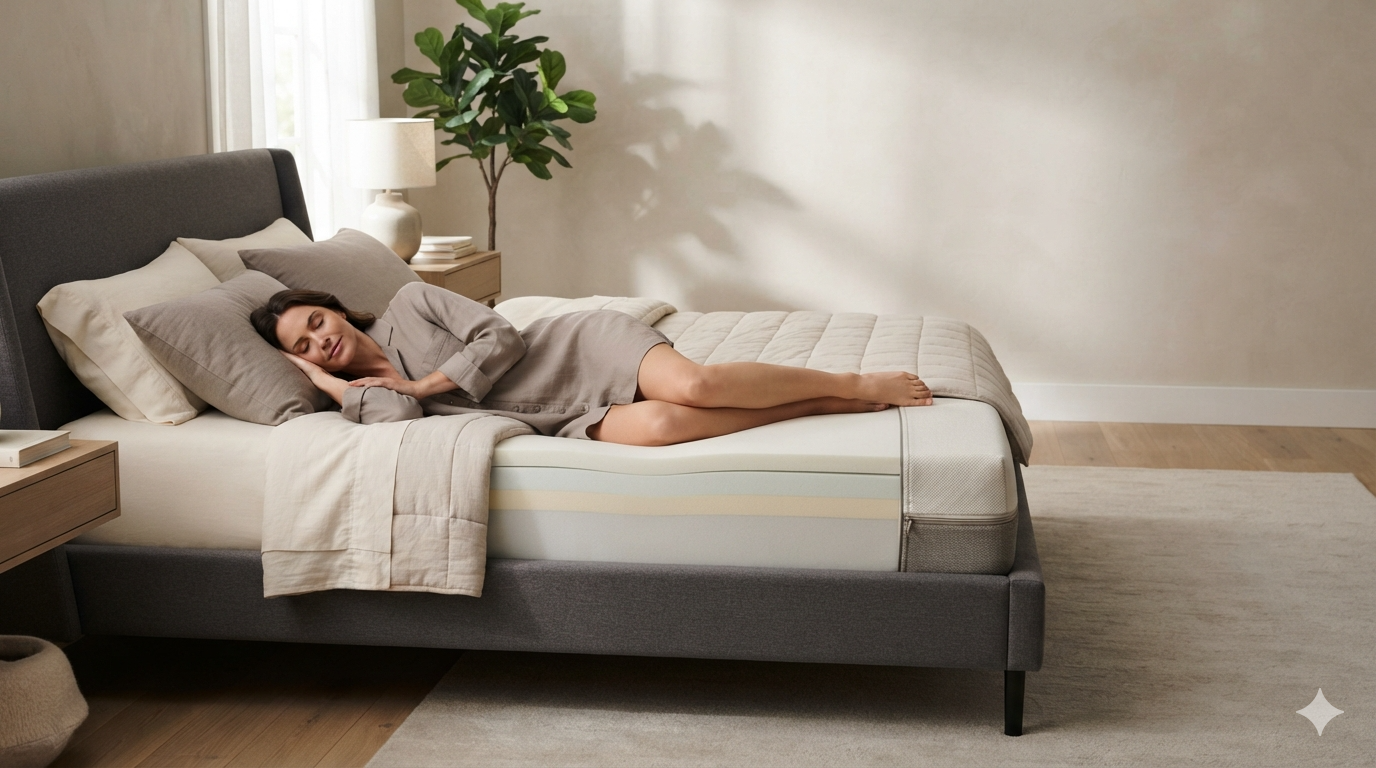
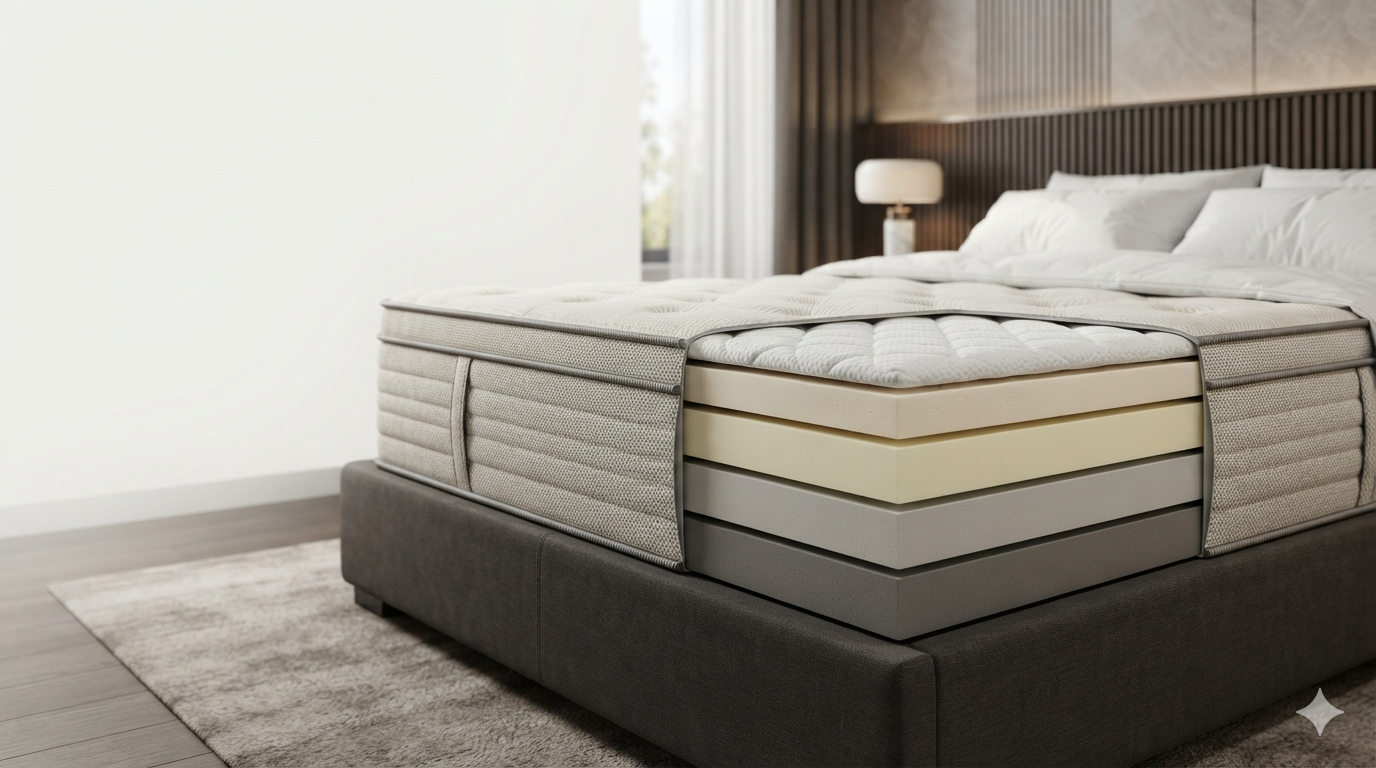
An affordable foam mattress is typically a bed-in-a-box all-foam or hybrid model priced under $800–$1,200 for a queen after realistic discounts, built with CertiPUR-US certified foam, 10–14 inches tall, and designed for 5–7 years of regular use rather than a lifetime claim.
Most shoppers never pay the big crossed-out “list” price. That number is marketing theater. The street price—what you actually hand over after coupons, seasonal sales, and free shipping—is the only number that matters.
Foam density is where the real money conversation starts. Low-density foam (1.5–1.8 lb per cubic foot) feels plush on day one but compresses into a hammock within 12–18 months. Higher-density foam (2.0–2.5 lb and above) resists that collapse and keeps its shape longer. In my experience, the $399 cloud that felt amazing in the unboxing video became a money pit by month eighteen because the top layer was pure soft polyfoam with almost no recovery.
Think of the purchase as a five-year financial decision. A $650 mattress that lasts six years costs roughly $108 per year. A $450 mattress that sags in two years and forces a second purchase jumps past $225 per year. Density testing data from independent labs keeps pointing to the same truth: anything under 2.0 lb in the comfort layer rarely survives heavy nightly use without noticeable impressions.
The Real Pain Points That Quietly Drain Your Wallet Before You Even Order
“I Thought Soft Meant Supportive” – The Sink-In Trap That Forces Early Replacement
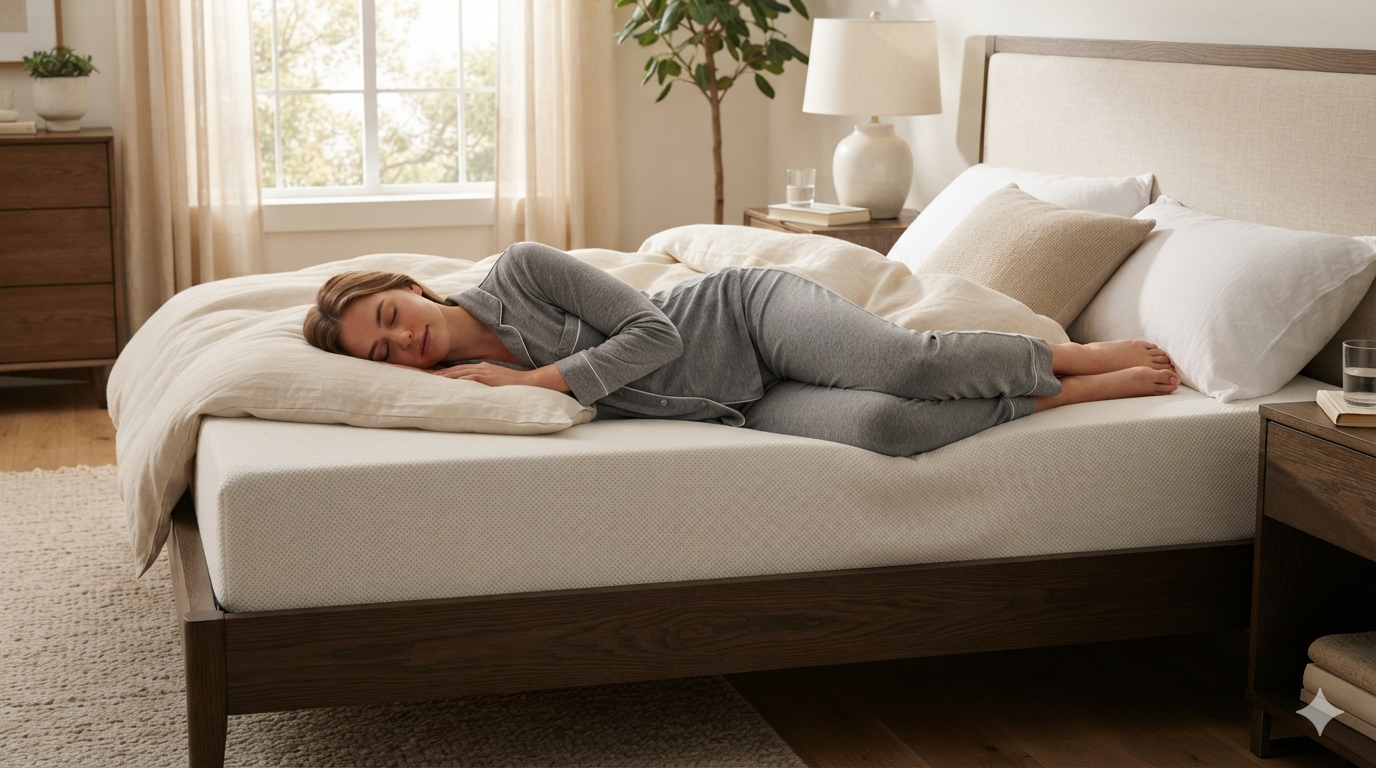
Soft top foam without firm transition layers lets your hips and shoulders drop too far. The result is spinal misalignment and morning pain that sends people hunting for extra pillows and sometimes a chiropractor. I’ve seen this happen many times—side sleepers under 180 lbs who loved the initial hug ended up spending more on accessories and treatment than the mattress itself after just three weeks.
“Most People Ignore This Part” – Weak Edges and Motion Transfer on a Tight Budget
Thin foam rails collapse the moment you sit on the edge to put on socks. That repeated stress accelerates overall wear. Motion isolation is usually solid on pure foam, but cheaper models still transfer some movement. Couples notice it most: one partner’s midnight bathroom trip wakes the other, cutting into next-day productivity.
“Honestly, I Made This Mistake Too” – Treating the 100-Night Trial as Truly Free
Return shipping fees, original packaging requirements, and occasional restocking charges can turn a “risk-free” trial into a $150–$250 loss. Keep the box if possible, photograph the unboxing and any early sag, and document the exact return process before you order. That simple checklist is what actually protects your money.
“What Most People Get Wrong Is” – Mixing Up Memory Foam, Polyfoam, and Hybrid Construction
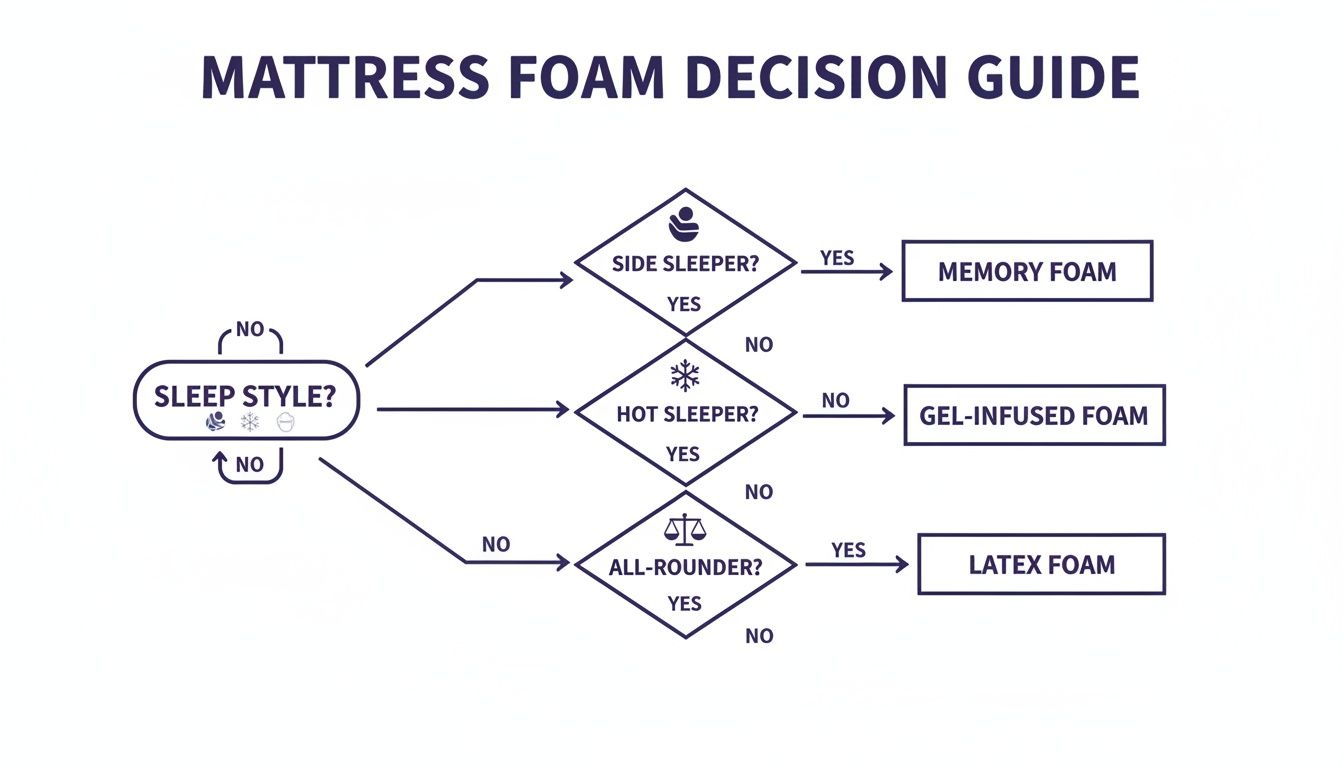
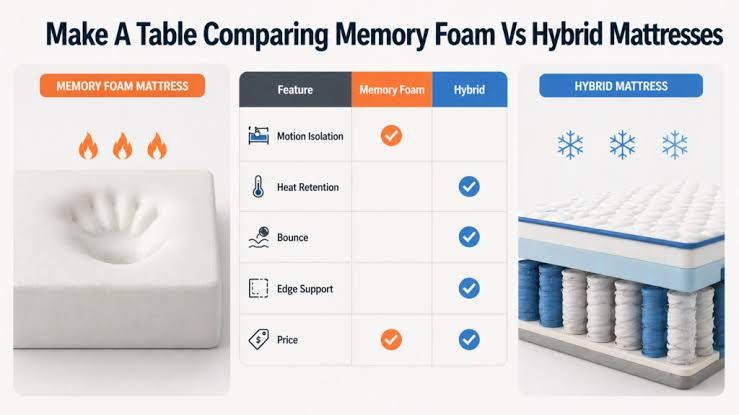
Pure memory foam hugs and isolates motion but sleeps hotter. Memory foam over high-density polyfoam support layers improves durability. Hybrid coil-plus-foam models add bounce and better edge support while staying cooler. Heavy combination sleepers and people in humid climates often regret all-foam picks and end up buying twice.
“This Is Where Things Get Real” – Off-Gassing, Certifications, and the Hidden Health Cost
CertiPUR-US means the foam is made without certain harmful chemicals. GREENGUARD and OEKO-TEX add extra layers of testing for emissions and textiles. Most budget mattresses off-gas for a few days to two weeks. Unbox in a well-ventilated room, run a fan, and give it 48–72 hours before sleeping on it. Panic returns waste money; proper ventilation solves most of the chemical smell.
2026 Affordable Foam Mattress Comparison Table (Queen Models Still Under $1,000 After Real Discounts)
Prices move daily. Always verify the total delivered cost including tax and shipping before you click buy. I’ve slept on or cut open several of these for density checks. Ranking here is based on density, durability data, and real-world longevity—not sponsor payments. Full affiliate disclosure: some links may earn a commission at no extra cost to you.
| Model | Foam Construction & Density | Firmness Options | Trial + Warranty Reality | Typical Street Price | Best For | Notes on Longevity |
| Zinus Green Tea | Memory + polyfoam, ~1.8–2.0 lb | Medium | 100 nights / 10-year limited | $250–$400 | Guest rooms, light users | Decent for the price; softens faster under heavier bodies |
| Linenspa | Memory foam over coils or all-foam, variable density | Medium-firm | Limited / 10-year | $200–$350 | Budget first apartments | Edge support weak on pure foam versions |
| Lucid | Gel memory + support foam, 1.8–2.2 lb | Soft to firm | 100 nights / 10-year | $280–$450 | Side sleepers under 180 lbs | Solid mid-range density for the money |
| Sleep Innovations | Memory foam, ~2.0 lb comfort | Medium | 100 nights / 10-year | $300–$500 | Motion isolation priority | Holds shape better than ultra-cheap options |
| Nectar Classic (on sale) | Memory foam layers, ~2.5+ lb core | Medium | 365 nights / lifetime limited | $600–$900 | Primary bed for average weights | One of the better density profiles in this range |
| Casper Essential | Foam layers, mid-density | Medium | 100 nights / 10-year | $500–$800 | Balanced feel seekers | Consistent quality; edges average |
| Amazon Basics High-Density | High-density polyfoam, 2.0+ lb | Firm | Limited / 1–3 year | $200–$350 | Temporary or firm-preferring users | No-frills durability for the price |
| Brooklyn Bedding Signature (discounted) | Hybrid foam + coils | Multiple | 120 nights / 10-year | $700–$999 | Hot sleepers needing edges | Better airflow and support when on sale |
In my experience, the Nectar on a deep sale and the higher-density Lucid or Sleep Innovations models have held up longest for the money among the ones I’ve tested.
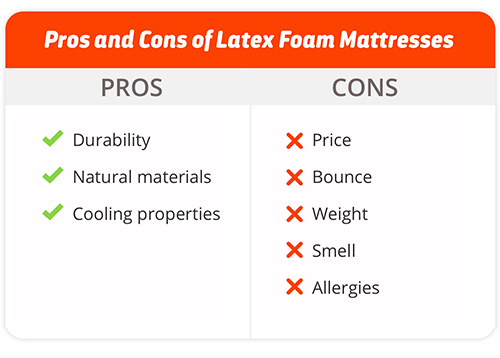
Pros and Cons of Putting Your Money into an Affordable Foam Mattress Instead of Innerspring or Latex
The Genuine Financial and Comfort Wins (When Density Is Right)
Pressure relief can reduce next-day joint complaints, especially for side sleepers. Motion isolation is usually excellent for couples. Upfront cost stays low and delivery is almost always free or cheap bed-in-a-box style.
The Hidden Costs Most Reviews Soft-Pedal
Heat retention leads to restless nights. Anything under 2.0 lb density develops body impressions faster. Weak edges shorten usable life if you sit on the bed daily. And when the foam finally fails, disposal is not simple. I’ve seen this happen many times—couples replace the mattress within eighteen months because one partner sleeps hot and the other feels the sag.
Real-Life Use Cases: Who Actually Gets Good Value from These Mattresses
Single side sleeper under 180 lbs watching every dollar? A mid-density memory foam model often works well. Lightweight couples who care more about motion isolation than bounce get solid value. Guest rooms and short-term rentals love the low cost and easy setup. College students and first-apartment buyers appreciate the compressed shipping that fits tight stairwells. Older adults with joint sensitivity often prefer the pressure relief over cooler sleep.
Clear counter-examples matter. Heavy combination sleepers, dedicated stomach sleepers, and hot sleepers in humid climates usually waste money on pure budget all-foam options and should look at hybrids or higher-end constructions instead.
Mistakes Beginners Make That Quietly Double the True Cost
Buying on thickness alone—“14 inches must be better”—is classic. Skipping the foundation decision voids many warranties. Ignoring density numbers while falling for “memory foam” marketing language is another. Lifetime or 10-year warranties almost never cover normal body impressions. Failing to measure doorways and stair turns creates delivery headaches. Returning after the trial without photographic proof of sag depth can get claims denied.
Honestly, I made this mistake too—ordered a plush 14-inch model that looked luxurious and felt like a money-wasting sinkhole by month six.

Step-by-Step Buying and Setup Guide That Protects Both Sleep and Bank Account
Follow this sequence:
- 1. Lock in primary sleep position and approximate body weight.
- 2. Choose target firmness (soft / medium / medium-firm).
- 3. Filter strictly for 2.0–2.5+ lb density memory foam or high-density polyfoam.
- 4. Calculate total delivered price after tax, shipping, and any required foundation.
- 5. Confirm exact trial length, return shipping cost, and packaging rules.
- 6. Unbox in a ventilated space and allow 48–72 hours full expansion.
- 7. Add a waterproof protector the same day.
- 8. Rotate every three months even on “no-flip” models.
Photograph the mattress at full expansion and again after 30 days. Those images protect you if sag develops. Use a solid platform or properly slatted base; soft box springs or the floor can void warranties and speed up sag.
AI Tools vs. Human Advice When You’re Trying to Spend Smart on a Foam Mattress
| Aspect | AI Tools / Chatbots / Aggregators | Human Reviewers / In-Store Specialists |
| Speed | Instant price tracking and quizzes | Slower, more thoughtful |
| Data | Great at scraping density and deals | Can feel actual give and heat |
| Bias | Often skewed toward affiliate partners | Less consistent but more tactile |
| Best Use | Building a shortlist | Final feel and complex needs |
AI strengths include rapid firmness quizzes and deal alerts. Weaknesses are the inability to feel real give and occasional outdated inventory data. Human judgment still wins for complex pain histories or couple preference conflicts. Recommended hybrid method: let AI build the shortlist, then cross-check with recent owner videos and independent density reports. In my experience, AI tools are excellent at killing the obvious junk but still push models that sleep hotter than expected—costing people a second purchase.
Mobile Apps and Browser Tools That Actually Save Money on Affordable Foam Mattresses
Keepa and CamelCamelCamel show historical Amazon prices so you never buy at a temporary high. Honey-style extensions catch coupon codes. Mattress firmness calculators and review aggregators help narrow options. Brand AR visualizers prevent sizing mistakes. After purchase, sleep-tracking apps quantify whether the new bed actually improved rest. Set calendar reminders for Memorial Day, Labor Day, Black Friday, and Presidents’ Day sales so you never pay full street price again.
How Smart-Home Automation and Tracking Tech Stretch the Value of Your Foam Mattress
Compatible adjustable bases let you change elevation or firmness without buying a new mattress. Wearables such as Oura, Whoop, or Apple Watch measure real sleep-score changes after the switch. Simple humidity and temperature automation reduces heat buildup in foam and can extend comfortable lifespan. Phase-change covers and better gel-infused foams are finally reaching true budget price points in 2026.
Warranty, Trial, and True 5-Year Cost Reality Check (The Personal-Finance Angle Most Reviews Skip)
A typical “10-year warranty” on budget foam covers manufacturing defects only—not normal body impressions over 1–1.5 inches. Build a simple five-year ownership calculation that includes the probability of mid-life replacement. Measure the first body impression with a straight edge and ruler so you know whether the mattress is still performing. No $500–$700 foam mattress will match a $2,000 latex hybrid after three years of nightly use. Most people ignore this part—build the likely replacement cost into your budget on day one so the purchase stays a smart financial move.
Final Decision Framework: Match Your Money, Body, and Situation to the Right Affordable Foam Mattress
Under $500 and temporary or guest use → lower-density options that still meet basic safety certs. $600–$900 primary bed for one or two people under ~200 lbs → mid-to-high density memory foam picks. Need stronger edges or cooler sleep while staying under $1,000 → hybrid foam-coil models currently on sale.
The single biggest predictor of satisfaction and long-term value is foam density plus the correct foundation. For a guest room today I would still buy a solid mid-density option like a discounted Lucid or Sleep Innovations. For my own primary bed I would stretch toward a higher-density Nectar on sale or a hybrid if cooling matters more.
Measure the sag in your current mattress, verify density on any contender, calculate total delivered cost, then decide. Protect both your sleep and your wallet.
People Also Ask
How long do affordable foam mattresses really last?
With 2.0 lb or higher density and proper foundation, expect 5–7 years of regular use before noticeable impressions. Lower-density models often need replacement in 2–3 years.
What density should I look for in a budget foam mattress?
Aim for at least 2.0–2.5 lb in the comfort layers. Anything under 1.8 lb compresses too quickly for nightly primary use.
Are 100-night trials actually free?
Rarely. Factor in return shipping, original packaging rules, and possible restocking fees that can total $150–$250.
Do affordable foam mattresses sleep hot?
Many do, especially pure memory foam. Hybrids and gel-infused models with better airflow perform cooler.
Can I put an affordable foam mattress on a box spring?
Only if the manufacturer specifically allows it. Most modern warranties require a solid platform or closely spaced slats.
How do I know if my foam mattress is sagging too much?
Place a straight edge across the surface. Impressions deeper than 1–1.5 inches usually signal the end of useful life under most warranties.
Is CertiPUR-US enough for safety?
It is a solid baseline. GREENGUARD or OEKO-TEX certifications add extra reassurance about emissions and materials.
Should heavy people buy affordable all-foam mattresses?
Generally no. Heavier bodies accelerate impressions in lower-density foam. Look at hybrids or higher-density constructions instead.
What is the best foundation for a foam mattress?
A sturdy platform bed or slatted base with gaps no wider than 3 inches. Soft or worn box springs often void warranties.
How soon can I sleep on a new foam mattress after unboxing?
Allow 48–72 hours for full expansion and initial off-gassing in a ventilated space. A waterproof protector should go on the same day you start using it.
Take the measurements, check the density numbers, run the five-year math, and only then place the order. That process is what separates a mattress that lasts from one that quietly drains your budget.