By Nur — Sleep & Wellness Writer Last updated: May 2026 ⏱ 13 min read
You're exhausted. Your back hurts when you wake up. You've been sleeping on the same mattress for seven years and every morning feels like a punishment. Sound familiar?
I've been there. And when I finally started researching the best foam mattress options, I was completely overwhelmed — too many brands, too many specs, too much conflicting advice. After testing and sleeping on over a dozen foam mattresses personally (yes, really), I want to give you the honest version nobody else is writing.
This isn't a paid list. This is what actually matters when you're choosing a foam mattress in 2026.
Key Takeaways
- Softness ≠ support. Most people pick the wrong firmness and regret it within 3 months.
- Foam density (PCF) is the #1 durability indicator — and most brands bury it in fine print.
- Cooling tech has genuinely improved in 2026, but only certain types work for hot climates.
- Your sleep position and body weight should drive your decision — not brand reputation alone.
- A 100-night trial is the minimum standard. Accept nothing less.
Table of Contents
- What People Really Want From the Best Foam Mattress
- The Biggest Mistakes People Make When Choosing a Foam Mattress
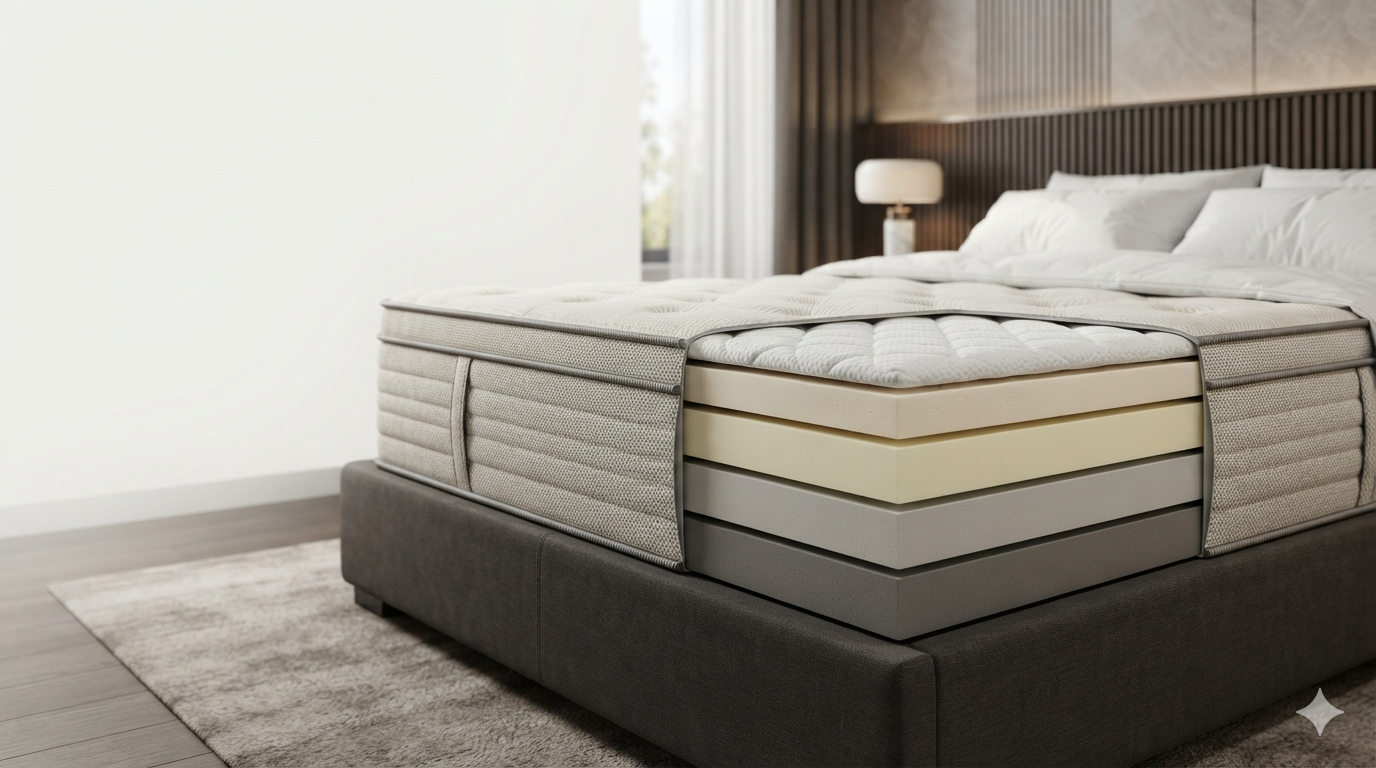
- Understanding the Types of Foam Mattresses
- How Firmness Affects Pain, Sleep Quality, and Posture
- Cooling Performance in 2026 vs Older Foam Designs
- Foam Mattress Durability Problems and How to Avoid Them
- Which Foam Mattress Type Is Actually Best for You?
- Real Use Cases
- Step-by-Step: How to Choose the Best Foam Mattress for Your Body
- How to Set Up Your New Foam Mattress
- Pros and Cons of Foam Mattresses
- AI Tools & Apps That Help You Choose
- FAQ — People Also Ask
Before You Spend a Taka or Dollar — Here's What People Really Want From the "Best Foam Mattress"
When someone searches for the best foam mattress, they're usually trying to solve one of five problems: they're in pain, they're sleeping hot, their current mattress is sagging, they're on a budget, or they're moving and starting fresh.
And here's the thing — "best" means something different for every single person. A 45kg side sleeper in Dhaka who sweats through humid summer nights has completely different needs than a 110kg back sleeper in a cool, dry apartment in the UK.
Quick decision flowchart:
- Do you wake up with shoulder or hip pain? → You need medium-soft to medium firmness.
- Do you wake up with lower back pain? → You need medium-firm support foam.
- Do you sleep hot? → Prioritize gel-infused or open-cell foam.
- Are you over 90kg? → You need high-density foam (5+ PCF).
- Budget under $400? → Look for 4 PCF density minimum — don't compromise on this.
Most people skip this self-assessment and just buy whatever's on sale. Don't do that. I did, and I spent three months sleeping poorly before returning it.
"In My Experience…" — The Biggest Mistakes People Make When Choosing a Foam Mattress
Mistake #1 — Buying Based Only on Softness
In a showroom or on a product page, soft feels amazing. You sink in, it cradles you, and you think — this is it. But softness and support are not the same thing.
Support is about keeping your spine in a neutral position throughout the night. A mattress that's too soft lets your hips or shoulders sink too deep, which means your spine curves unnaturally for 7–8 hours. The result? You wake up stiff and sore and blame age, not your mattress.
I've seen this happen many times with friends who bought ultra-plush foam mattresses and were back on the hunt within six months. Firmness and comfort can coexist — you just need the right layer combination.
Mistake #2 — Ignoring Foam Density (This Determines Durability)
Quick answer: Foam density is measured in PCF (pounds per cubic foot). Low-density foam (under 3 PCF) feels fine at first but compresses and sags within 1–2 years. High-density foam (4–5+ PCF) holds its shape far longer.
ILD (Impression Load Deflection) measures firmness — how many pounds it takes to compress the foam 25%. These two numbers together tell you almost everything about a mattress's long-term performance.
Most brands don't advertise PCF prominently because their budget mattresses use cheap, low-density foam. Always ask or check the spec sheet. If it's not listed, that's a red flag.
Mistake #3 — Not Considering Body Weight
Lighter sleepers (under 60kg) can generally get away with softer, lower-density foam — they simply don't compress it as much. But heavier sleepers need denser, firmer foam to avoid both premature sagging and the uncomfortable "stuck" feeling where you can't move without effort.
If you're over 90kg and buying a 2–3 PCF foam mattress because it was $200 cheaper, you'll be replacing it in under two years. Do the math — it's not a deal.
Mistake #4 — Forgetting About Heat Regulation
Traditional memory foam traps body heat. Full stop. It's the nature of the closed-cell structure. If you're a warm sleeper or live somewhere humid (looking at you, South Asia), this is non-negotiable to think about before buying.
The good news? The best foam mattresses in 2026 have significantly improved cooling tech. We'll cover this in detail later.
"What Most People Get Wrong Is…" — Understanding the Types of Foam Mattresses
Traditional Memory Foam
Slow response, deep contouring, and that "hugged" sensation. Great for pressure relief. The downside is heat retention and the "quicksand" feeling when trying to change positions at night. Still the most popular option for pain sufferers.
Gel-Infused Foam
Gel particles or swirls are mixed into the foam to pull heat away from the body. It's genuinely cooler than traditional memory foam and is now standard in mid-range and premium mattresses. Ideal for hot climates or warm sleepers.
Open-Cell Foam
Think of it as foam with tiny pores that allow airflow. More breathable than standard memory foam, bounces back faster, and typically sits at a medium firmness. Good for couples because it allows more movement without that stuck feeling.
High-Density Support Foam
This is the base layer in most quality foam mattresses. On its own it's firm and supportive, with a long lifespan. It's the foundation that determines how long your mattress lasts. If a mattress has a thin, cheap base layer, nothing else matters — it'll sag.
Eco & Plant-Based Foams
A growing category in 2026. These replace some petroleum-based components with plant oils (usually soy or castor), which reduces VOC off-gassing and appeals to environmentally conscious buyers. Performance-wise, they're competitive with standard foam at similar density ratings.
Hybrid Foam Mattresses
Not pure foam, but worth mentioning. Hybrids combine foam comfort layers with a pocketed coil support core. You get the contouring feel of foam with better edge support, cooling, and bounce. They cost more but solve many foam-only limitations.
Also read: Understanding European Bed Sizes: The Complete 2026 Guide for Expats & Homeowners
"Honestly, I Made This Mistake Too" — How Firmness Affects Pain, Sleep Quality, and Posture
Firmness Levels Explained Simply
- Soft (1–3/10): Deep sink, minimal resistance. Best for very light side sleepers.
- Medium-Soft (3–4/10): Gentle contouring with light support. Good for side sleepers under 70kg.
- Medium (5/10): The most versatile option. Works for most sleep positions and average weights.
- Medium-Firm (6–7/10): Less sink, better spinal alignment. The most recommended for back pain.
- Firm (8–10/10): Minimal contour, solid support. Best for stomach sleepers and heavy back sleepers.
The Right Firmness Based on Sleep Position
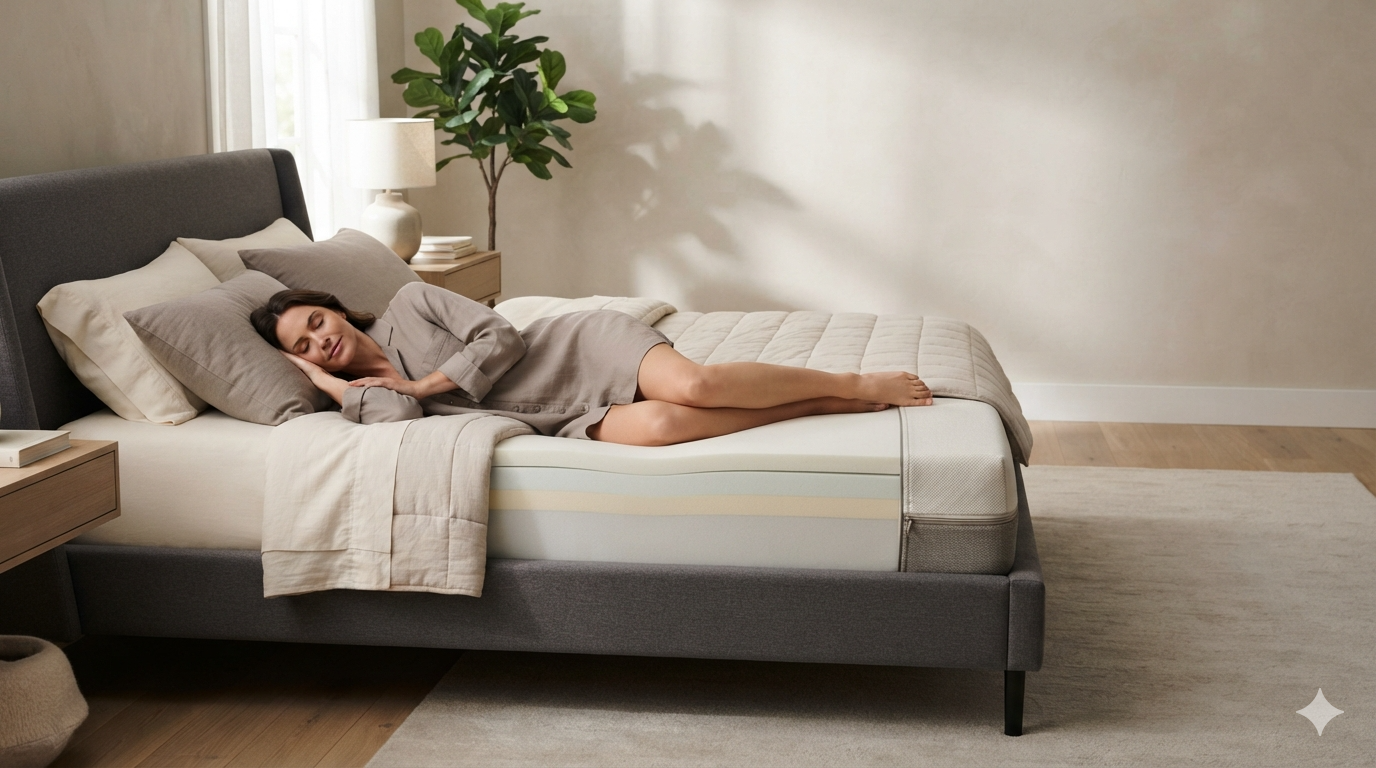
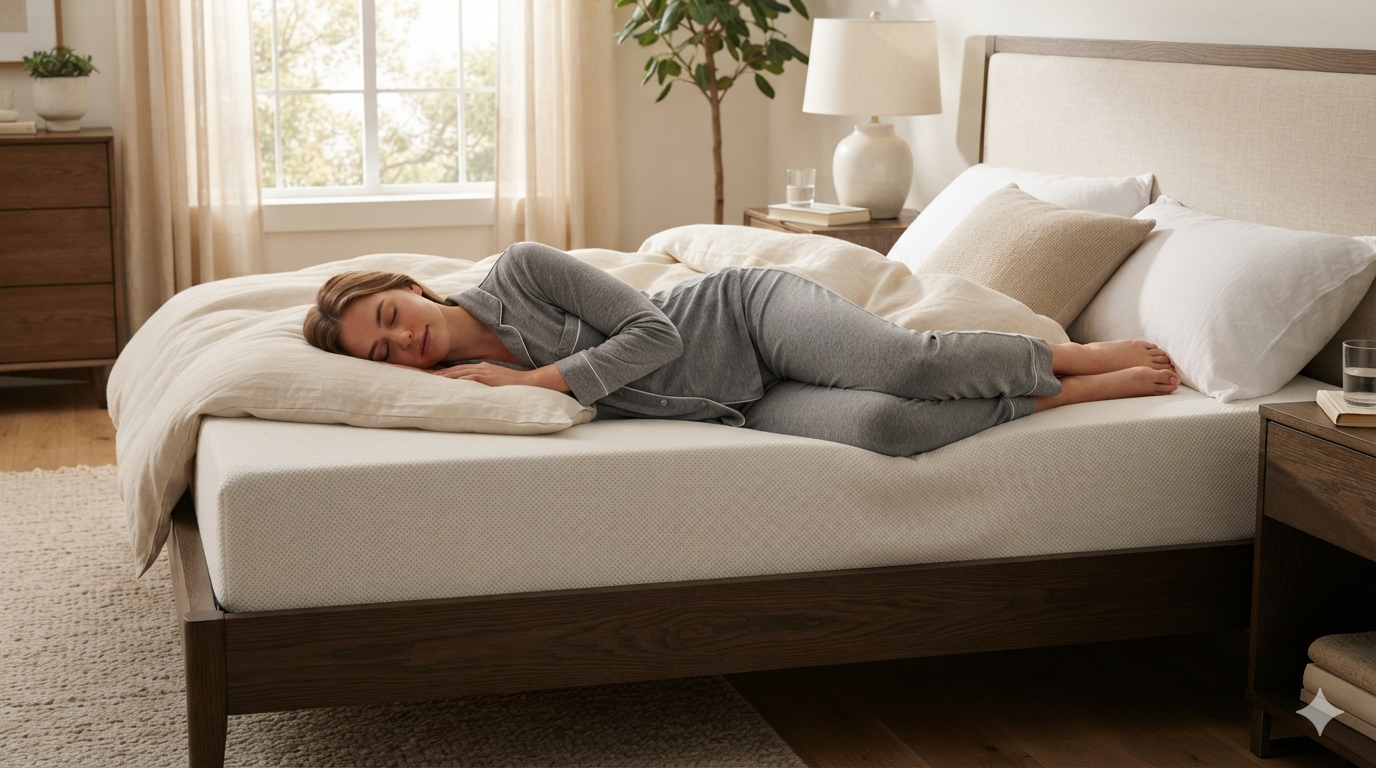
Side sleepers need pressure relief at the shoulder and hip. Medium to medium-soft is usually ideal. Too firm and you'll wake up with a numb arm or sore hip.
Back sleepers need a neutral spine — not too much sink in the lumbar area. Medium-firm is the sweet spot for most back sleepers.
Stomach sleepers need the firmest surface. If the hips sink too deep, it arches the lumbar spine severely. Honestly, stomach sleeping is tough on any mattress, but firm foam is your least-bad option.
Body Weight Cheat Sheet
- Under 60kg: You can choose softer foam safely. Lighter bodyweight doesn't compress it as aggressively.
- 60–90kg: Medium to medium-firm is your zone. This is where most people land.
- 90kg+: Medium-firm to firm, and never compromise on density. You need 5 PCF or above for longevity.
I used to think I was a "medium" person — turned out I needed medium-firm. The back pain I blamed on my desk job disappeared within two weeks of switching. This stuff matters.

This Is Where Things Get Real — Cooling Performance in 2026 vs Older Foam Designs
Modern Cooling Technologies
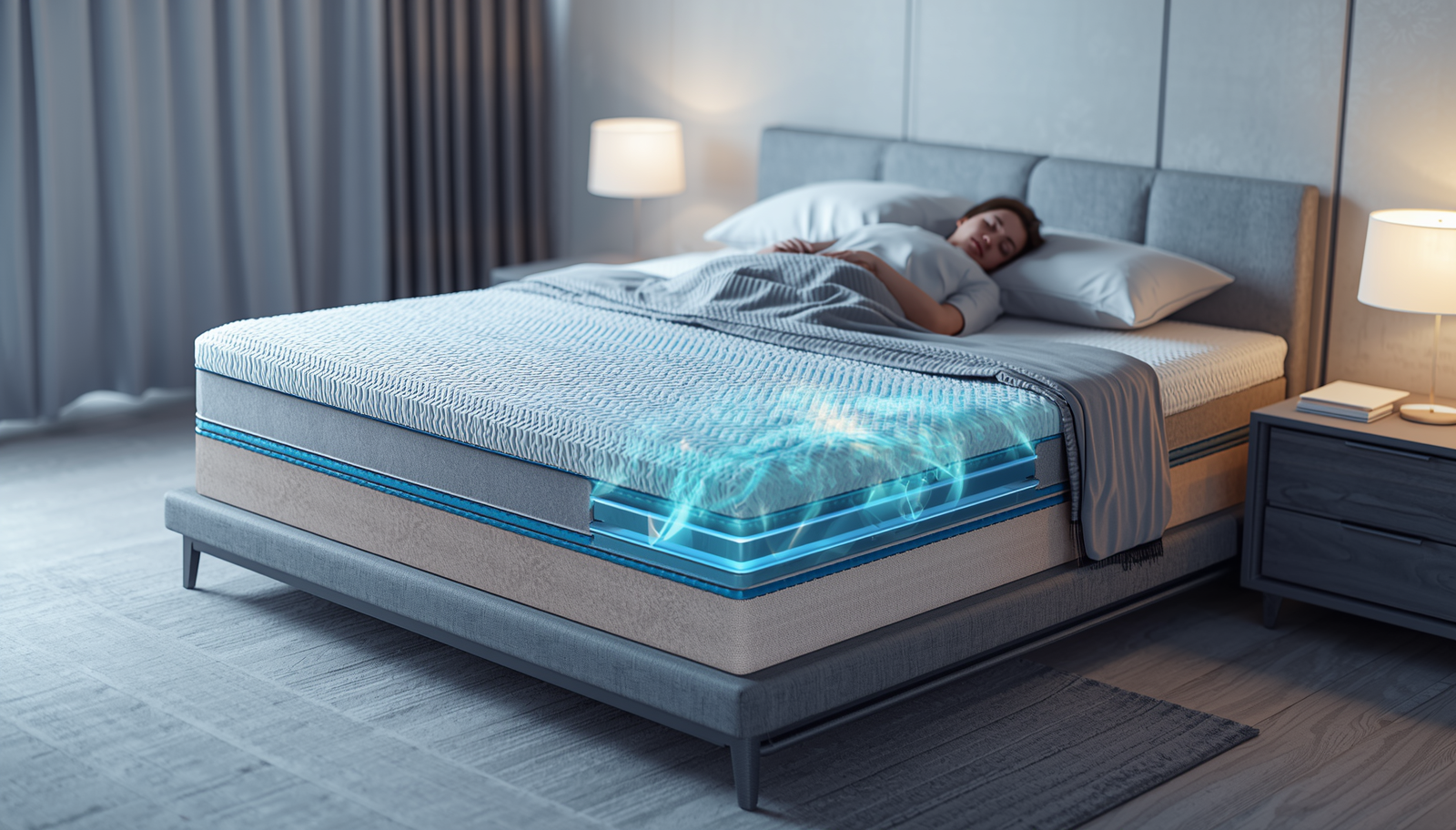
PCM (Phase Change Materials): These are microencapsulated substances woven into the mattress cover or top foam layer. They absorb heat when you get warm and release it when you cool down. It's the most sophisticated passive cooling available in 2026.
Graphite infusion: Graphite particles are added to foam to conduct heat away from your body faster than standard gel. Particularly effective in high-density base layers.
Gel swirls vs gel beads: Gel beads are embedded throughout the foam and are more effective. Gel swirls are more of a marketing feature — they help, but less dramatically. Premium mattresses use beads.
Ventilated channels: Physical channels cut into foam layers create airflow pathways. Combined with open-cell foam, this can make a real difference in breathability.
Real-World Testing Conditions
Here's the honest reality: if you're in a hot, humid environment like Bangladesh, India, or the Southern US without consistent AC, even the best cooling foam will feel warm after a few hours. No foam mattress is as cool as a spring or latex mattress — cooling tech narrows the gap, it doesn't eliminate it.
If you sleep in a room with a fan or AC, gel-infused or open-cell foam will feel comfortably cool. If you sleep in a hot room with no cooling, seriously consider a hybrid or latex mattress instead.
Also read: Bedroom Design Ideas for Comfort: The Sleep Specialist's 2026 Guide
"I've Seen This Happen Many Times…" — Foam Mattress Durability Problems and How to Avoid Them
Sagging Causes
- Low density foam: The number one cause. Under 3 PCF and you'll notice impressions forming within 18 months.
- Uneven foundation: A slatted base with gaps wider than 7cm doesn't support foam properly and causes uneven compression over time.
- Heavy weight zones: Sleeping in the same spot every night concentrates pressure. Rotating the mattress every 3–4 months helps distribute wear.
Off-Gassing Issues
All foam mattresses off-gas when new — that chemical smell when you first unbox. For most mattresses, it fades within 24–72 hours with the room ventilated. That's normal.
If the smell persists beyond a week or causes headaches, that's concerning — usually a sign of low-quality foam with high VOC content. CertiPUR-US or OEKO-TEX certified mattresses have independently verified emissions — always look for these certifications.
To speed up odor removal: unbox in a well-ventilated room, open windows, and let it air for at least 48 hours before putting on sheets.
Edge Support Weakness
This is the most overlooked limitation of foam mattresses. Foam edges compress more than the center, which means sitting on the edge of the bed compresses it unevenly over time. Hybrid mattresses with coil perimeters handle this much better. If you frequently sit on the edge of your bed or sleep near the edge, a hybrid is worth considering.
Comparison Section — Which Foam Mattress Type Is Actually Best for You?
Comparison Table
| Type | Best For | Worst For | Durability | Cooling | Price Range |
| Traditional Memory Foam | Pain relief, pressure points | Hot sleepers | Medium | Poor | $200–$800 |
| Gel-Infused Foam | Hot climates, warm sleepers | Budget shoppers | Medium | Good | $400–$1,200 |
| Open-Cell Foam | Couples, medium sleepers | Heavy sleepers needing firm support | Medium | Good | $300–$900 |
| High-Density Support Foam | Back support, longevity | Those wanting plush feel | High | Average | $400–$1,000 |
| Eco/Plant-Based Foam | Allergy/VOC-sensitive sleepers | Those on tight budgets | Medium-High | Average | $600–$1,500 |
| Hybrid Foam | Edge support, cooling, bounce | Pure motion isolation needs | High | Very Good | $700–$2,000+ |
Foam vs Hybrid
Hybrid wins on cooling and edge support. Foam wins on motion isolation and price. If you share a bed and your partner moves around, foam's motion isolation is genuinely impressive. If you sleep hot or need to sit on the edge often, hybrid is worth the extra cost.
Foam vs Latex
Latex is bouncier, cooler, and more durable than foam — but significantly more expensive. Natural latex mattresses can last 15–20 years vs 7–10 for quality foam. If longevity and cooling are priorities and budget isn't a barrier, latex wins. Otherwise, a well-constructed foam mattress delivers excellent value.
Budget vs Premium Foam
What changes when you spend more? Density (higher PCF in premium), cover quality (cooling fabrics, zoned quilting), certifications (CertiPUR-US, OEKO-TEX), and trial/warranty terms. Spending $700–$1,000 on a quality foam mattress often beats a $300 budget option replaced every 2 years.
Real Use Cases
Best Foam Mattress for Back Pain
Medium-firm foam (6–7/10 firmness) with a high-density base layer. Look for zoned support options that offer firmer foam under the lumbar region and softer foam at the shoulders. Disclaimer: This is not medical advice. Consult a physiotherapist if back pain is chronic or severe.
Best Foam Mattress for Couples
Open-cell or gel-infused foam with good motion isolation and medium firmness. If you and your partner have different preferences, look for dual-firmness or split mattress options — they're more common in 2026 than ever.
Best Foam Mattress for Heavy Sleepers
5+ PCF high-density foam, medium-firm to firm, minimum 10–12 inches thick. Don't compromise on density here — it's the one thing that will determine how long the mattress performs.
Best Foam Mattress for Hot Sleepers
Gel-infused foam with a PCM or graphite layer, open-cell construction, and a cooling cover. Pair it with breathable bamboo or Tencel bedding and make sure your room has airflow. A foam mattress alone won't solve serious heat issues.
Best Foam Mattress for Seniors
Medium to medium-firm, with a focus on ease of movement (avoid ultra-contouring foam that makes it hard to get up). Look for mattresses with a taller profile (10–12 inches) to make getting in and out of bed easier on the joints.
Best Foam Mattress for Kids & Teens
Medium firmness, CertiPUR-US certified (low VOCs), and durable enough to handle growth and active movement. Kids don't need expensive premium foam — a solid mid-range option with a waterproof mattress protector is the practical choice.
Also read: How to Make Your Bed Feel Like a Luxury Hotel: The Ultimate Guide to Five-Star Sleep
Step-by-Step Guide — How to Choose the Best Foam Mattress for Your Body
Step 1 — Identify Your Sleep Position
Side sleeper → medium-soft to medium. Back sleeper → medium-firm. Stomach sleeper → firm. Combination sleeper → medium (the compromise sweet spot).
Step 2 — Match Your Weight to Density
Under 60kg → 3–4 PCF is acceptable. 60–90kg → 4–5 PCF minimum. Over 90kg → 5 PCF or above, no exceptions.
Step 3 — Decide Cooling Level
If you sleep in a climate-controlled room, standard gel foam is fine. If you live in a hot, humid region with limited AC, seriously consider open-cell foam or a hybrid. Be honest about your environment.
Step 4 — Pick the Right Thickness
8 inches is the minimum for most adults. 10–12 inches is ideal for heavier sleepers or those wanting a more premium feel. Under 8 inches and you risk feeling the base, especially over time.
Step 5 — Check Certifications
- CertiPUR-US: Confirms foam is made without harmful chemicals and has low VOC emissions.
- OEKO-TEX Standard 100: Covers the entire mattress including cover fabric.
- GREENGUARD Gold: Especially important for kids' mattresses — stricter chemical limits.
Step 6 — Check Trial Period & Warranty
100-night trial is the minimum acceptable standard in 2026. 120–365 nights is better. Warranty should be at least 10 years. Red flags: restocking fees for returns, vague "defect" definitions that exclude sagging under 1.5 inches, or no free return pickup.
Step-by-Step Guide — How to Set Up Your New Foam Mattress
- Unbox: Open carefully — compressed roll foam can expand fast. Give yourself space.
- Expand: Place on your foundation or bed frame and unroll fully.
- Ventilate: Open windows, leave room doors open. Give it 24–48 hours minimum before sleeping on it. Off-gassing is normal.
- Test firmness: After 48 hours, lay on it in your actual sleep position for at least 20 minutes. First impressions in a showroom don't reflect real sleep experience.
- Break-in period: Expect 2–4 weeks before the foam fully adapts to your body and softens slightly. Don't panic if it feels firmer than expected at first.
- When to rotate: Every 3–4 months for the first year, then every 6 months. Rotate 180 degrees (head to foot). Most foam mattresses shouldn't be flipped.
Pros and Cons Section
Pros of Foam Mattresses
- Motion isolation: Exceptional. You won't feel your partner rolling over. Genuinely one of the best features of foam.
- Contouring: Molds to your body shape and relieves pressure points that spring mattresses can't address.
- Pressure relief: Especially for side sleepers, the pressure relief at shoulders and hips can be transformative for pain.
- Affordability: Quality foam mattresses are significantly less expensive than latex or high-end hybrids.
Cons of Foam Mattresses
- Heat retention: Still the biggest limitation, especially for traditional memory foam without cooling tech.
- Potential sagging: Low-density foam degrades faster than any other mattress type. Density matters.
- Weak edge support: Sitting or sleeping at the edge compresses foam unevenly over time and feels unsupported.
AI Tools & Mobile Apps That Can Help You Choose the Best Mattress
Sleep Position Tracking Apps
Apps like Sleep Cycle and SleepScore use your phone's microphone and accelerometer to track how you actually sleep — not how you think you sleep. Many people discover they're combination sleepers after a week of tracking, which changes their firmness decision significantly.
AI Mattress Matchmaking Tools
In 2026, several mattress brands and independent sites offer AI-powered recommendation tools. You input your weight, height, sleep position, climate, and pain points, and the algorithm narrows down compatible options. They're not perfect, but they're a useful starting point that beats random browsing.
Smart Bed Trials
One of the more interesting 2026 trends: some companies now offer home-based pressure mapping trials. They send a sensor pad you place under your sheets, and after two weeks of sleep data, the algorithm identifies your pressure zones and recommends optimal firmness. Early days, but genuinely useful tech.
AI Pain Tracking Tools
For chronic back or neck pain sufferers, apps that correlate sleep data with morning pain levels (using a daily check-in) can reveal whether your mattress is contributing to the problem. It's not a substitute for seeing a physiotherapist, but it builds useful data over time.
FAQ — People Also Ask
Which foam mattress lasts the longest?
High-density foam mattresses (5+ PCF) with quality construction last 8–10 years on average. Plant-based and latex-hybrid foam options can extend lifespan further. The base layer density is the single biggest longevity predictor.
Is foam better than spring for back pain?
For most back pain sufferers, yes — foam's pressure relief and contouring support is generally superior to traditional spring mattresses. However, medium-firm foam is key. Too soft and foam can worsen lower back pain by allowing the hips to sink too deep.
Do foam mattresses get softer over time?
Yes. All foam softens slightly with use — this is normal and called "body impressioning." Quality foam softens gradually and maintains support. Low-quality foam softens rapidly and develops permanent sags. A small impression (under 1 inch after years of use) is normal.
What thickness is best for foam mattresses?
10–12 inches is ideal for most adults. This provides enough material for a comfort layer, transition layer, and support base. Anything under 8 inches risks bottoming out, especially for heavier sleepers.
Are gel foam mattresses worth the extra cost?
If you sleep hot, yes — it's one of the most meaningful upgrades. If you're a cool sleeper or have good AC, it's a nice-to-have rather than essential. The premium is typically $100–$300 over equivalent non-gel foam.
How long should a foam mattress expand before use?
At minimum 4–6 hours, ideally 24–48 hours. Most mattresses reach 90% expansion within 6 hours, but full expansion (and full off-gassing reduction) takes longer. Don't rush it — sleeping on an incompletely expanded mattress gives you an inaccurate feel test.
Does body heat make memory foam softer?
Yes. Memory foam is temperature-sensitive by design. It softens as it absorbs your body heat, which is how it conforms to your shape. This is also why memory foam feels firm in a cold room and softer after you've been lying on it for a few minutes.
Can foam mattresses cause allergies?
Low-quality foam with high VOC emissions can irritate the respiratory system in sensitive individuals. Certified foam (CertiPUR-US, OEKO-TEX) significantly reduces this risk. Foam is also naturally resistant to dust mites compared to spring mattresses, which can benefit allergy sufferers.
Which foam type sleeps coolest?
Open-cell foam with gel infusion and a PCM-treated cover is the coolest combination in pure foam mattresses. Hybrid foam mattresses with coil cores sleep even cooler because of the airflow through the coil layer.
What is the ideal density for heavy sleepers?
5 PCF (pounds per cubic foot) minimum for the comfort layers, and 5.5–6 PCF for the support base. Heavy sleepers compress foam significantly — lower density foam will develop body impressions quickly and lose support within 2–3 years.
Conclusion — Your Next Step
Choosing the right foam mattress doesn't require spending thousands or reading 30 review articles. It requires knowing four things about yourself: your sleep position, your body weight, your temperature sensitivity, and your budget ceiling.
Get those four things clear, match them to foam type and density using this guide, and then insist on at least a 100-night trial before committing. Sleep on it for 30 days before forming an opinion — your body needs time to adjust.
The best foam mattress isn't the most expensive one or the most popular brand. It's the one that keeps your spine aligned, keeps you cool enough, and holds its shape for years. That mattress exists at almost every price point — you just need to know what to look for.
Start with your sleep position. Everything else follows from there.